
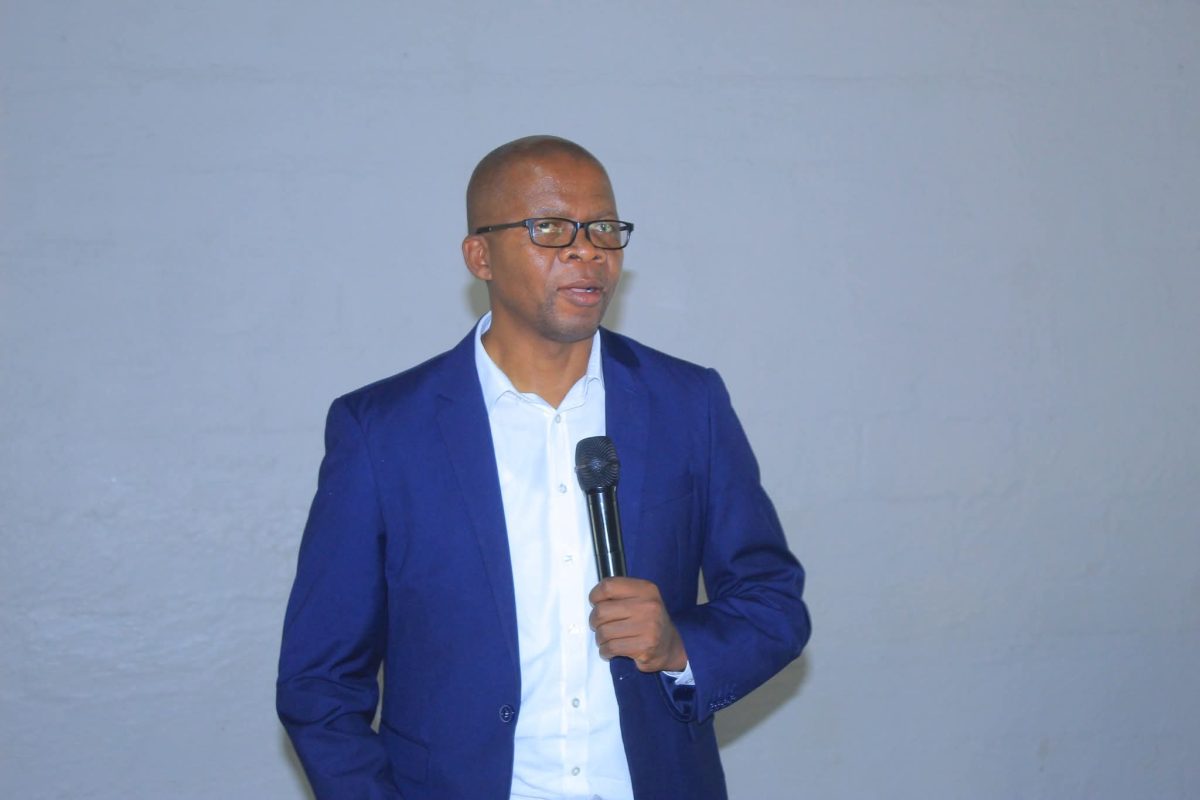
Malkerns Town Council Chief Executive Officer Cinsela Dlamini making his remarks at the Malkerns Farmer’s Seminar.
BY SIBUSISIWE NDZIMANDZE | JOURNALIST
MALKERNS — Farmers in Eswatini are being urged to move beyond maize and beans and start producing high-value crops that already have a formal market.
This was one of the key messages at the Malkerns Farmers Seminar held at Princess Pholile Hall, where farmers were encouraged to focus on crops that can reduce imports and supply local industry.
Soyabean stood out as one of the biggest opportunities.
Eswatini needs about 40,000 metric tonnes of soyabean every year for livestock feed manufacturing. But only about 25 percent of that is produced locally. The rest is imported, mainly from South Africa.
This has created a major gap in the local market.
The importance of soyabean is growing because Eswatini already has a ready buyer. Eswatini Oil Mills in Matsapha, which officially opened in April 2024, processes soyabean into products such as cooking oil and soya meal.
However, local production is still too low. This means the company continues to rely heavily on imported beans to keep operating.
Speaking at the seminar, Bongani Mvubu of Malkerns Research Station said farmers must stop planting without a market in mind.

(L-R) Bongani Mvubu from Malkerns Research Station receiving a token of appreciation from Malkerns Town Council Officer.
He said they should focus on crops such as soyabean, barley, saffron and coffee, where demand already exists and buyers are available.
Mvubu said this shift could help farmers make better returns while also helping the country reduce its import bill.
He said farmers should begin to see agriculture as a business and not just a tradition.
While Mvubu was presenting, a student from the University of Eswatini’s Luyengo campus, Thabiso Dlamini, raised concern about lack of capital.
He said many young people want to go into farming, but they are held back by shortage of money.
In response, Mvubu said farmers should make use of support programmes already available.
He pointed to institutions and projects such as FAO and FINCLUDE, which offer support in areas such as training, inputs and finance.
“Farmers must stop producing blindly and start focusing on crops that already have a market, while also taking advantage of support programmes like FAO and FINCLUDE that are there to help them grow,” said Mvubu.
Malkerns Town Council Chief Executive Officer Cinsela Dlamini said the seminar was organised to connect farmers with real opportunities.
“This seminar is a deliberate intervention to unlock the economic potential of our farmers by connecting them to markets, knowledge and the right institutions,” said Dlamini.
The message from the seminar was simple.
Eswatini has a growing need for crops such as soyabean and other high-value commodities that are still being imported. For local farmers, this presents a real opportunity.
Instead of planting only what they are used to, farmers are now being encouraged to plant what the market is already asking for.

A participant from Royal Eswatini Police Service (REPS) partaking in the question-and-answer session.