


BY PHESHEYA KUNENE
MALKERNS — The Malkerns Town Council is set to host its first Farmers’ Seminar tomorrow at Princess Pholile Hall, bringing together farmers, agribusiness players and policymakers in a targeted effort to address structural constraints limiting agricultural productivity and market participation in the area.
“This seminar is a deliberate intervention to unlock the economic potential of our farmers by connecting them to markets, knowledge and the right institutions,” said Cinsela Dlamini.
“For too long, many of our farmers have been producing without structured market access, and that is what we are determined to change.”
The seminar, positioned as part of the town’s broader Local Economic Development strategy, is designed to equip both existing and aspiring farmers with practical knowledge, market intelligence and institutional linkages necessary to transition from subsistence farming to commercially viable agribusiness.
Recent estimates indicate that over 70 percent of Eswatini’s farmers operate at subsistence level, with fewer than 20 percent consistently supplying formal markets, highlighting the scale of the structural gap the seminar seeks to address.
At its core, the initiative reflects a growing recognition that Eswatini’s agricultural challenge is not merely one of production, but of coordination, access and capability. Organisers have identified persistent gaps including limited market access, inadequate knowledge of modern farming techniques and weak integration with government support systems.
“We are shifting the conversation from production alone to profitability and sustainability,” added Dlamini. “Farmers must be empowered not just to grow crops, but to understand markets, meet standards and compete effectively.”
A representative from the council indicated that the seminar aims to place farming at the centre of Malkerns’ economic activity while strengthening its contribution to national food security, noting that the town’s agricultural identity must evolve into a more structured and competitive ecosystem.
For smallholder and emerging farmers, the expected benefits are immediate and practical. The programme places strong emphasis on market access, guiding farmers on produce standards, pricing strategies, packaging and compliance requirements needed to supply formal markets such as supermarkets and export channels. This is particularly critical in a sector where many producers remain locked out of high-value markets due to inconsistent quality and fragmented supply.
Data from local agricultural stakeholders suggests that post-harvest losses in smallholder farming systems can reach up to 30 percent, largely due to poor handling, lack of storage and weak market linkages, further underscoring the need for interventions of this nature.
“Addressing issues like post-harvest losses and quality consistency is central to improving farmer incomes,” Dlamini said.
“Through this seminar, we are equipping farmers with practical tools to reduce losses and maximise value.”
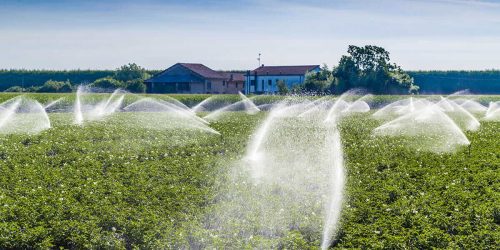
Beyond markets, the seminar will address productivity constraints through sessions on climate-smart agriculture, efficient irrigation systems and crop improvement. Farmers are expected to gain practical, cost-effective techniques aimed at improving yields while safeguarding environmental sustainability, an increasingly important consideration amid rising climate volatility.
An agricultural extension specialist involved in the seminar noted that productivity gains must now be aligned with resilience, emphasising that irrigation efficiency and climate-smart practices are becoming essential rather than optional in modern farming systems.
The inclusion of stakeholders from government departments, research institutions and agribusiness firms is expected to add practical value, offering farmers direct access to support programmes, financing options and technical expertise. This is aimed at bridging the long-standing gap between policy frameworks and on-the-ground implementation.
“We are bringing all key players under one roof because agriculture cannot thrive in isolation,” said Dlamini. “Collaboration is critical if we are to build a competitive and inclusive agricultural sector in Malkerns.”
Equally notable is the seminar’s deliberate focus on inclusivity. By targeting youth, women, students and aspiring farmers, the council is seeking to broaden participation in agriculture while addressing demographic challenges such as an ageing farming population.
From a broader perspective, the seminar aligns with regional trends towards value chain integration, climate resilience and technology adoption. However, smallholder farmers often remain on the margins due to limited access to information, finance and infrastructure.
By focusing on knowledge transfer and market integration, the Malkerns Farmers’ Seminar seeks to intervene at these critical pressure points. Farmers will not only be exposed to improved production methods, but also to strategies that enhance their ability to compete in structured markets.
A local farmer preparing to attend the seminar said the platform offers an opportunity to better understand how to access larger markets and improve returns, noting that production alone has not always translated into profitability.
The council has indicated that the success of the seminar will be measured beyond attendance, with follow-up mechanisms planned to track how farmers apply the knowledge gained and integrate into formal value chains.
“Our goal is not just to host an event, but to see tangible transformation in how our farmers operate,” Dlamini said. “We want to see more farmers entering formal markets, increasing their incomes and contributing meaningfully to the local economy.”
As Malkerns positions itself as an agro-driven economic hub, the seminar represents more than a one-day engagement. It reflects a broader effort to recalibrate agriculture at a local level, linking farmers to markets, knowledge and institutions in a more coordinated and sustainable manner.
If effectively sustained, such initiatives could play a pivotal role in transforming agriculture from a subsistence activity into a competitive sector capable of driving rural incomes, employment and long-term economic growth.