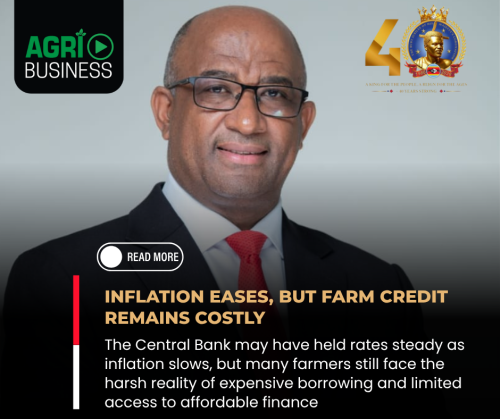


BY SANELE SIBIYA | ECONOMIST

Eswatini’s inflation trend may have strengthened the case for a rate cut, but rising geopolitical tensions, oil price volatility and the threat of imported inflation made caution the more likely path for the Central Bank.
“Inflation may be easing at home, but the global environment remains unstable. In such conditions, caution is not hesitation. It is prudence.”
The Central Bank of Eswatini’s decision to keep the policy rate unchanged at 6.75 per cent reflects a careful balancing act between supporting domestic demand and shielding the economy from emerging external risks.
On the surface, domestic conditions appeared to support a cut. Inflation eased from 2.0 per cent in January to 1.9 per cent in February, continuing a downward trend that points to a disinflationary environment. In simple terms, price pressures at home have been softening, while demand in the economy appears to be weakening. Under ordinary conditions, such a backdrop would strengthen the argument for lower interest rates to encourage borrowing, investment and spending.
But monetary policy in Eswatini does not operate in isolation. As a small and import-dependent economy, the country remains highly exposed to global shocks. That is where the current moment becomes more complicated.
Escalating geopolitical tensions in the Middle East have once again placed energy and trade markets under pressure. The renewed instability around the Strait of Hormuz, one of the world’s most critical oil transit routes, has lifted Brent crude above the US$100 per barrel mark. This is not just an oil story. It is a wider inflation risk story.
The Strait of Hormuz carries a significant share of global oil flows and plays a central role in global trade. Any disruption there quickly feeds into higher fuel prices, rising shipping costs and more expensive imports. For countries like Eswatini, that has direct consequences. Higher fuel costs raise transport expenses, while higher shipping and aviation charges increase the landed cost of goods. Fertiliser prices are also vulnerable, given the region’s importance in the supply of energy-linked industrial inputs.
That is why the Central Bank’s caution makes sense.
The global economy is currently confronting what economists call a supply-side shock. This is an important distinction. Monetary policy is designed mainly to manage demand, not to fix disruptions in oil routes, shipping lanes or global commodity supply chains. A rate cut cannot bring down the price of crude oil. What it can do, however, is add more demand into an economy at a time when imported inflation risks are already building. That is the danger policymakers are trying to avoid.
In theory, the combination of low domestic inflation and soft regional inflation should have created room for a more accommodative stance. South Africa’s inflation has also eased closer to the 3 per cent level, strengthening the argument for a softer monetary position within the Common Monetary Area framework. Eswatini’s own inflation reading is now below the lower bound of its target range, which would ordinarily make a case for easing stronger.
Yet central banking is not only about present numbers. It is also about forward-looking risk assessment.
The concern now is that imported inflation may soon override the comfort provided by lower domestic inflation readings. Rising oil prices, shipping disruptions and broader uncertainty in global markets could begin filtering through into local prices. Once that happens, the inflation picture can change quickly. In that context, holding the rate steady is less a sign of policy hesitation and more a reflection of prudent risk management.
Globally, central banks are already shifting back towards a more cautious tone. If current tensions persist, policymakers may have to maintain restrictive settings for longer. In Eswatini’s case, this means the current hold could eventually give way to tighter policy if fuel, freight and import costs begin rising more sharply.
For Emaswati, the immediate effect is straightforward: there will be no change in the prime lending rate for now. Borrowers with prime-linked loans will continue paying the same interest, while returns on savings instruments will remain largely unchanged until the next monetary policy review.
But the bigger message lies beyond the current decision.
Households and businesses should not take the hold as a signal that all is well. Rather, they should view it as a warning that global conditions remain fragile. If geopolitical tensions continue and imported costs rise further, price pressures will likely intensify across the economy. That means consumers may need to manage spending more carefully, while businesses should prepare for a more expensive operating environment in the months ahead.
The expectation many had was for relief through a rate cut. Instead, the Central Bank has chosen caution. Given the balance of risks, that decision is understandable.
Inflation may be easing at home, but the global environment remains unstable. In such conditions, caution is not hesitation. It is prudence.
If you want, I can also give you a shorter website version with tighter paragraphs for easier CMS publishing.