

BY PHESHEYA KUNENE
MBABANE – For Eswatini’s farmers, electricity is no longer a background cost, it is fast becoming a defining one, and the latest tariff increase signals a deeper squeeze on an already fragile cost structure.
The Eswatini Energy Regulatory Authority (ESERA) has revised the 2026/27 electricity tariff increase to 11.74 per cent, down from the initially approved 13.61 per cent, following a E200 million government intervention aimed at cushioning households and businesses. The adjustment takes effect on April 1, setting a new cost baseline across the economy, including the country’s energy-intensive agricultural sector.
At face value, the intervention signals relief. In practice, it reveals a more complex reality: farming in Eswatini is becoming structurally more expensive.
A COST CHAIN REACTION
Electricity tariffs do not operate in isolation. For farmers, they intersect with diesel prices, transport logistics, irrigation systems, and the gradual shift towards mechanisation and renewable energy.
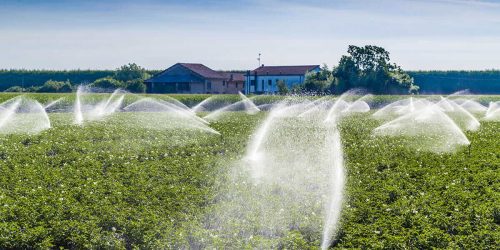
For those reliant on grid power, particularly in irrigation-intensive operations, the increase translates directly into higher production costs. Pumps, cold storage facilities, and processing equipment all depend on electricity, and even a marginal increase compounds over time.
For others, especially livestock farmers and those in remote areas, the burden is less direct but no less significant. Rising electricity costs feed into the broader energy market, often pushing up diesel prices through transport and distribution channels.
This dual exposure, to both electricity and fuel, creates a cost squeeze that is difficult to absorb.
FARMERS FEEL THE PRESSURE
Speaking on behalf of farmers, Tammy Dlamini, Chief Executive Officer of ESNAU, said the tariff adjustment, even with government cushioning, will have tangible consequences on production and profitability.
Dlamini said the increase comes at a time when farmers are already contending with high input costs and climate-related uncertainties.
“Electricity is no longer just a utility for farmers, it is a core input,” she said. “Whether it is irrigation, storage, or processing, energy costs now sit at the heart of agricultural production. An increase of this nature, even when reduced, inevitably raises the cost of farming.”
She added that the impact would be uneven, with smallholder farmers more vulnerable due to limited capacity to absorb rising costs or invest in alternative energy solutions such as solar.
“Larger commercial operations may pivot to solar over time, but for many farmers, that transition requires upfront capital that is simply not accessible,” she said.
REGULATOR DEFENDS BALANCE
For Skhumbuzo Tsabedze, Chief Executive Officer of ESERA, the revised tariff represents a carefully calibrated compromise between sustainability and affordability.
Tsabedze said the government’s intervention was designed not only to provide immediate relief, but also to smooth future increases.
“This partial utilisation ensures immediate relief to consumers, while the remaining allocation will be used to cushion future tariff shocks,” he said, emphasising the need to maintain the financial viability of the Eswatini Electricity Company (EEC).
The underlying pressures, however, remain structural. Rising costs of imported electricity and renegotiated power purchase agreements continue to drive tariff adjustments, leaving limited room for long-term price suppression.
AN ECONOMIC PERSPECTIVE
Economist Sanele Sibiya noted that while the intervention mitigates the immediate shock, it does not eliminate the underlying cost pressures facing the economy.
“This is essentially a smoothing mechanism, not a reversal,” Sibiya said. “Energy costs are rising globally, and Eswatini, as a net importer of electricity, cannot fully insulate itself.”
He added that for agriculture, the implications extend beyond direct electricity usage.
“Energy is embedded in the entire value chain, from production to transport to market access,” he said. “An increase in tariffs feeds into higher food production costs, which ultimately affect both farmers and consumers.”
FROM THE FIELD
In Siphofaneni, where livestock farming relies heavily on daily transport, the impact is already being felt.
Sipho Mdluli, a feedlot farmer who uses trucks and vans to move cattle and feed, said rising energy costs are tightening margins in ways that are difficult to offset.
“Every day we are on the road, moving feed, moving cattle, going to markets,” he said. “When electricity goes up, diesel follows. When diesel goes up, everything becomes more expensive. It is a chain.”
Mdluli said the cumulative effect is forcing farmers to rethink operations, often at the expense of growth.
“You start cutting costs where you can, but there is a limit. At some point, it affects the quality of what you produce,” he said.
A SHIFT TOWARDS ALTERNATIVES?
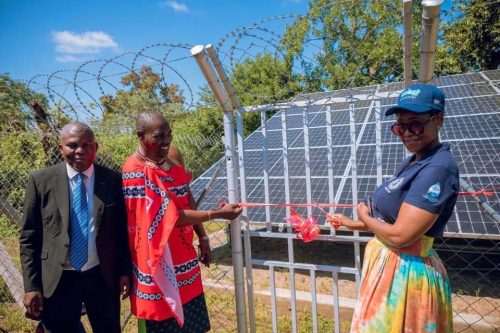
The tariff increase may accelerate interest in alternative energy sources, particularly solar. Yet the transition is uneven and capital-intensive.
While some commercial farmers are beginning to invest in solar-powered irrigation and backup systems, the majority remain tied to the grid, constrained by upfront costs and limited access to financing.
This creates a dual-speed agricultural economy: one gradually adapting to rising energy costs, and another struggling to keep pace.
THE BROADER IMPLICATION
The government’s E200 million intervention has softened the immediate blow, reducing the tariff increase to 11.74 per cent. But it has not altered the trajectory.
Energy costs in Eswatini are rising, and agriculture, as both a consumer and a casualty of energy pricing, sits at the centre of that shift.
The question now is not whether farmers will adapt, but how, and at what cost.
For many, the answer will depend not just on tariffs, but on access to capital, innovation, and policy support in the months ahead.