


BY SIKHONA SIBANDZE | JOURNALIST
SIDVOKODVO — Eswatini is positioning itself to tap into the growing global turmeric industry valued at about E90 billion, with stakeholders encouraging farmers to venture into organic turmeric production as a new export opportunity.
The move comes as international demand for turmeric continues to rise, driven by increasing consumer preference for natural ingredients used in food products, herbal medicine, cosmetics and health supplements.
Industry estimates show that the global turmeric market is currently valued at approximately USD 4.9 billion, about E90 billion, in 2025 and is projected to grow to around USD 8.4 billion by 2035. Analysts say the sector is expanding by more than five to six percent annually as demand grows across the food, nutraceutical, pharmaceutical and beauty industries.
Agricultural stakeholders say this growing market presents a strategic opportunity for Eswatini farmers to diversify crop production, access export markets and reduce the country’s reliance on imported turmeric products.
Currently, Eswatini spends about E2.2 million each year importing turmeric and turmeric-based products, indicating an existing domestic market that local producers could potentially supply. The opportunities around turmeric production were highlighted during the Eswatini Organic and Medicinal Herbs and Spices Project field day held at Macwele Farm in Sidvokodvo, where farmers, agripreneurs, cooperatives, government officials and private sector stakeholders gathered to explore the commercial potential of the crop.

Speaking during the event, Eswatini International Promotion Authority Manager for Domestic Trade Promotion Siphesihle Nkabinde said turmeric production could unlock both domestic and export opportunities for local farmers.
“There is a huge need for farmers to venture into turmeric production because Eswatini spends money importing turmeric products, about E2.2 million per year,” said Nkabinde. “That shows there is already a market. The opportunity is for local farmers to produce and supply it.” Nkabinde said developing the turmeric value chain could contribute to rural economic growth while supporting the country’s efforts to diversify its agricultural exports.
Organisation of Women in International Trade Eswatini President Duduzile Nhlengetfwa also encouraged farmers to consider turmeric as a viable commercial crop, noting that global demand for the spice continues to grow.
She urged farmers to organise themselves into groups or cooperatives to produce at volumes capable of meeting export market requirements.
“Turmeric is a crop with strong export potential, and we want to see farmers in Eswatini taking advantage of that opportunity,” said Nhlengetfwa. “If farmers organise themselves and produce at scale, they can supply both local and international markets.”

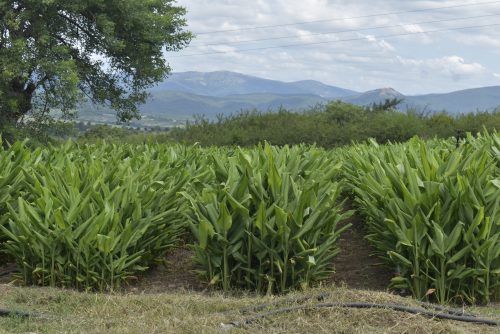
During field demonstrations, host farmer Bheki Macwele shared practical insights into turmeric production and explained that the crop requires careful preparation before planting. According to Macwele, farmers must prepare compost for about three months to allow organic material to decompose and enrich the soil. After the preparation period, turmeric rhizomes are planted on top of the compost beds where the crop begins its growth cycle.
Macwele planted his first turmeric crop in October last year and the plants are now about four months old. “Turmeric takes about nine months to mature before harvesting,” he said.
Despite the relatively long growing period, Macwele said the crop has strong commercial potential when properly managed. He explained that one hectare planted with about 150,000 seedlings can produce up to 40 tonnes of turmeric at harvest.
However, he acknowledged that starting a turmeric enterprise requires significant investment, particularly during the establishment phase. “Our biggest challenges were lack of water and high production costs because we did not have funding,” Macwele said. He said he plans to gradually expand his production with a long-term goal of reaching 20 hectares under turmeric cultivation.
“I encourage farmers to venture into turmeric farming because it is profitable, but they must understand that it requires significant investment at the beginning,” he said.
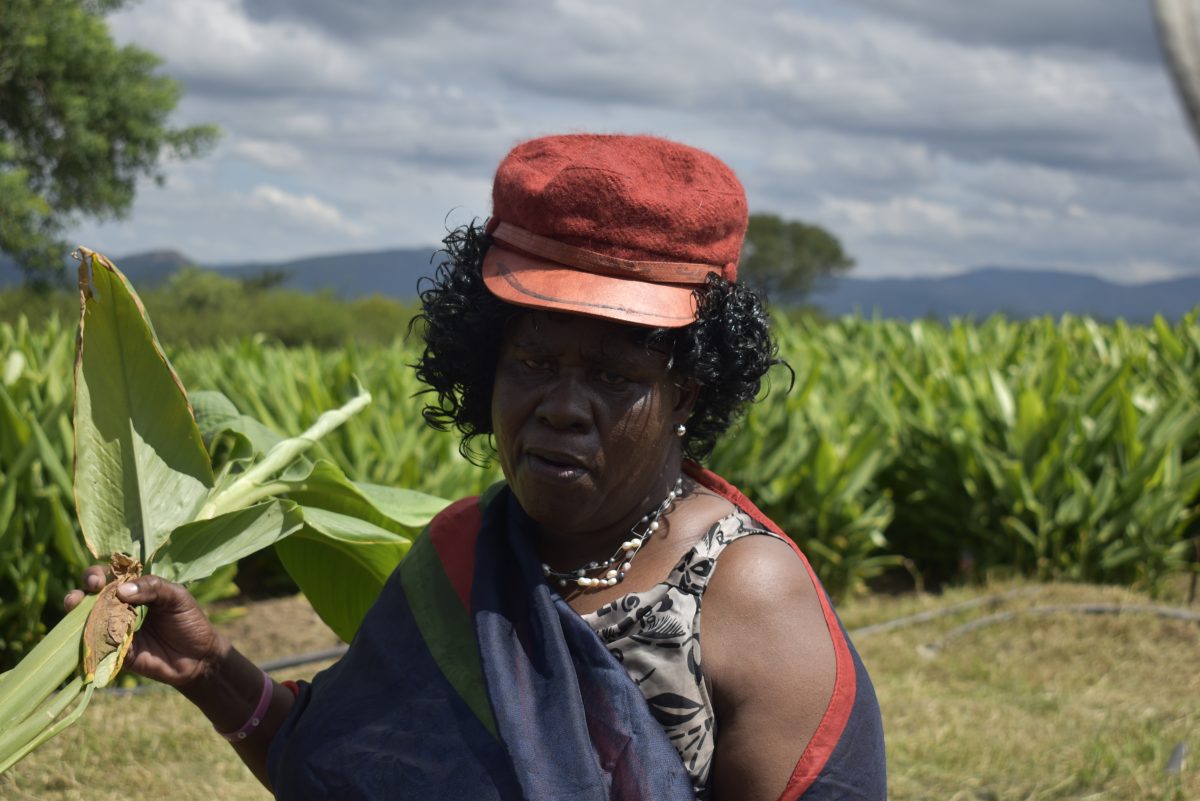
Another challenge highlighted during the field day was the limited availability of turmeric planting material in Eswatini. Many farmers currently source seed rhizomes from neighbouring countries, particularly Zimbabwe, which increases the cost of establishing new farms.
Macwele said once his crop is harvested, part of it will be reserved to supply planting material locally so that more farmers can venture into turmeric production without the high costs associated with importing seed rhizomes.
Stakeholders at the event said that with proper farmer organisation, organic certification and strong market linkages, turmeric could emerge as one of Eswatini’s new high-value export crops. For farmers who attended the field day, the message was clear. While turmeric production requires patience, investment and technical knowledge, the expanding global demand for organic turmeric presents an opportunity for Eswatini to position itself in the international spice market while creating new income streams for local producers.