

BY PHESHEYA KUNENE
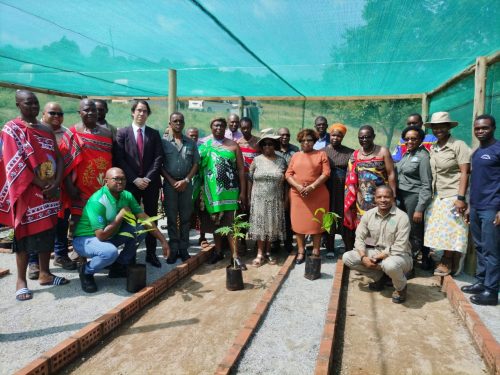
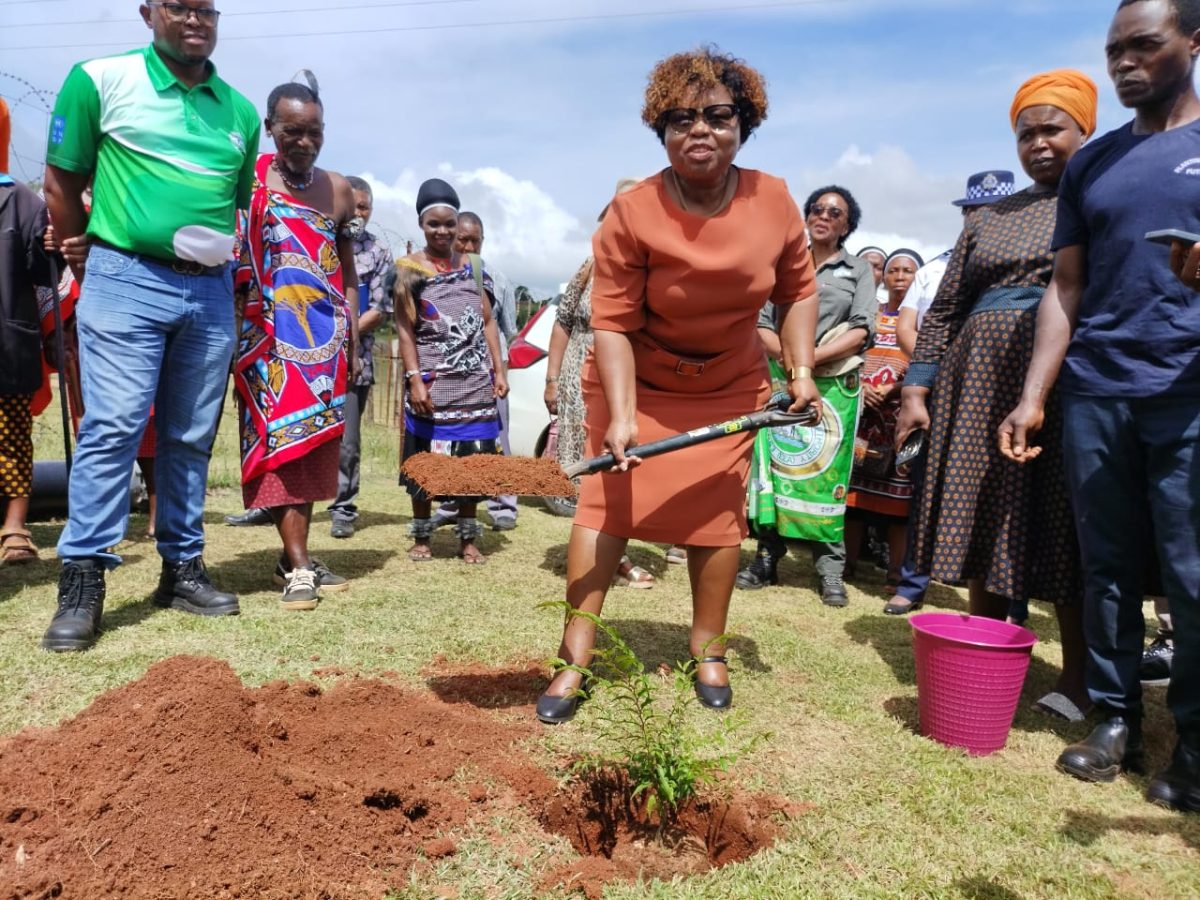
HHUKWINI – Eswatini’s national campaign to plant 15 million trees by 2030 moved from policy into practice today as Government handed over the Hhukwini Planting Trees for the Future project to the community and opened a new E2 million call for proposals aimed at funding community led environmental and climate resilience projects across the country.
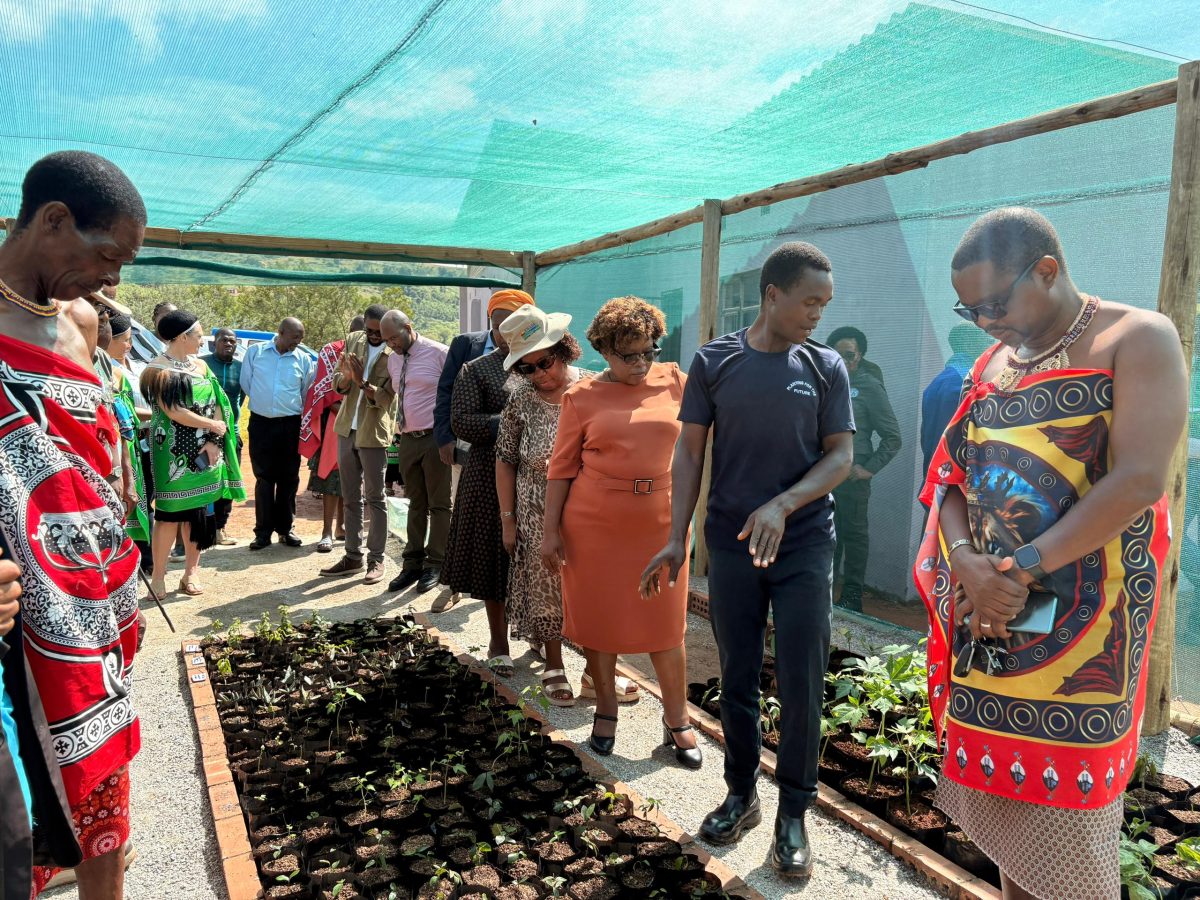
The handover event at Hhukwini Inkhundla drew the Regional Administrator for Hhohho, traditional leadership, the Ministry of Tourism and Environmental Affairs, the Eswatini Environment Fund Board of Trustees, the Eswatini Environment Authority, EWADE through SAPEMP, community members, youth groups and the media.
At the centre of the day’s programme was a simple message. The national tree planting drive will be judged by what it changes for farmers and rural communities, especially those whose livelihoods depend on livestock, crops and the health of the land.
Tourism and Environmental Affairs Minister Jane Mkhonta Simelane said the Hhukwini project was proof that climate action can be built around livelihoods when communities are placed at the centre and supported with financing and accountable institutions.
“This project epitomizes our collective dedication to the stewardship of the land that sustains us,” she said.
“Environmental protection is concerned with empowerment of every individual, granting access to resources, skills and partnerships required for the care of our land, the restoration of ecosystems and the assurance of sustainable livelihoods.”
She said land degradation is already hitting agricultural productivity and water sources, and warned that the country cannot afford slow action.
“Severe land degradation is no longer a remote menace. It is an unfolding national crisis,” she said.
“The cost of inaction will be unforgiving, demanding urgent, coordinated and sustained action to rehabilitate degraded land and safeguard productive landscapes.”
The Minister announced Government has allocated E2 million under the Eswatini Environment Fund 2025 2026 call for proposals, which opens today and closes on 16 April 2026. She urged communities, civil society organisations and institutions to apply with projects that deliver real impact.
She also announced the Environment Fund will work with EWADE under the Smallholder Agricultural Productivity Enhancement and Market Access Project, SAPEMP, as part of an approach that blends environmental restoration with improved livelihoods and smallholder productivity.
WHY THIS MATTERS FOR FARMERS AND LIVESTOCK
For farmers, the value of the 15 million trees campaign is not in the number. It is in what trees do to land and animals in a farming economy increasingly disrupted by drought, floods, soil erosion and rising temperatures.
In livestock areas, trees change the environment cattle live in. Shade reduces heat stress, improves animal comfort and protects grazing systems that are degraded by heat and overuse. In practical terms, healthier grazing environments mean animals can maintain better condition and farmers can reduce losses during extreme weather.
Trees also help restore pastures by improving soil structure and supporting the return of ground cover. When the land carries more vegetation, it holds moisture longer, regenerates faster after grazing and becomes less prone to erosion. Over time, that means communal rangelands can produce more stable grazing and reduce pressure on fragile areas.
For crop farmers, trees are a land rehabilitation tool. Restoration planting stabilises soils, reduces runoff and helps keep rainfall where it falls. In many chiefdoms, heavy rains now wash soil off fields and into gullies, leaving behind poor fertility and low yields. Re establishing vegetation cover through trees and associated restoration measures reduces the force of runoff and improves infiltration, giving crops a better chance in erratic seasons.
Trees also protect water sources. Restored catchments support springs and streams and reduce siltation, which affects irrigation and domestic supply. In drought years, any improvement in water retention at landscape level is a direct gain for food security and livestock survival.

A START UP SEED FOR RURAL LIVELIHOODS
What makes the Hhukwini model stand out is that the programme is designed not only to plant trees but to build local capacity to keep planting, keep maintaining, and generate income from it.
The Eswatini Environment Authority said today’s handover demonstrated what happens when policy is translated into action at community level, supported by financing that reaches the ground.
“Today’s gathering is more than a ceremonial handover. It is a demonstration of what is possible when communities, institutions and partners unite around a shared commitment to environmental sustainability,” the Authority said.
“Environmental stewardship begins at community level, and it is through initiatives such as this that we see policies translated into practical action.”
The Authority said the Environment Fund is the instrument that allows programmes to move beyond frameworks and directly support community driven initiatives that promote land restoration, climate resilience, biodiversity protection and sustainable development.
The practical benefit is that farmers and rural households are not being asked to participate with empty hands. They are being offered a pathway that includes financing, training, seedlings and technical guidance, effectively a start up package for green livelihoods.
In communities where youth unemployment is high, a nursery is not a symbol. It is a local enterprise. Seedling production, orchard development and restoration work can become income streams, while also supporting the national campaign target. If properly managed, it creates local suppliers of seedlings for chiefdom projects, homesteads, schools and farmers establishing orchards, windbreaks and woodlots.
Roy Vilane, Chairperson of the Environment Fund Board of Trustees, said the Fund exists to ensure environmental solutions are locally driven and owned by communities.
“Through the Fund, we aim to ensure that environmental solutions are locally driven and that communities themselves take a leading role in safeguarding the environment for present and future generations,” Vilane said.
He said in the previous funding cycle the Fund supported 11 projects across the country, including five on water management, three on land management, two on waste management and one on climate change, demonstrating growing community participation in protecting natural resources.
SAPEMP GREEN CHALLENGE FUND TO SUPPORT FARMER INNOVATION
EWADE’s SAPEMP confirmed today that the Eswatini Environment Fund has been identified as the Fund Manager for the SAPEMP Green Challenge Fund, a financing mechanism designed to support innovative green enterprises and solutions among women, youth and resource poor beneficiaries within SAPEMP areas.
Speaking on behalf of SAPEMP representative Musenge Chikopa, Knowledge Management and Communications Officer Nokulinda Mazibuko Motsamai said the handover represented a tangible investment in sustainability and livelihoods.
“Tree planting is not simply about restoring landscapes. It is about protecting water sources, improving soil health, strengthening food security and safeguarding the livelihoods of rural communities in the face of climate change,” she said.
For farmers, this is important because it links environmental action to financing and practical innovations that can scale. It also means restoration is being positioned as part of agricultural productivity and market access, rather than as an isolated environmental programme.
GOVERNMENT PRESENCE PRAISED IN RURAL AREAS
Hhukwini MP Alec Lushaba welcomed the project, praising Government and the Environment Authority for decentralising services and bringing programmes directly to communities.
“We are very happy as the people of Hhukwini to see Government visiting us and introducing such projects,” Lushaba said. “The people must not only see Ministers and Government officials on TV or listen to their speeches on radio, they must see the Government visiting and introducing projects to them.”

THE REAL TEST FOR THE 15 MILLION TREE CAMPAIGN
As positive as the message was today, the national campaign will face one practical test that farmers know well. Survival and maintenance.
Trees must live past the planting day. That requires water planning, protection from livestock, aftercare and correct species selection for grazing lands, homesteads, orchards and catchments. It also requires local ownership so the work does not collapse when project teams leave.
For Hhukwini, the handover means responsibility is now in the hands of the community, supported by partners and institutions that say they will continue expanding such initiatives across the country.
For Eswatini’s farmers, the campaign offers a rare combination of practical benefits. Better grazing and shade for cattle. Restored land and healthier soils. Stronger water retention. New local enterprises built around nurseries and tree based livelihoods. And a financing window that can help communities move from intention to action.
If the E2 million call funds strong projects and if communities protect the seedlings and build nurseries into enterprises, the 15 million trees target will not only be a climate pledge.
It will be a farmer support programme measured in greener grazing lands, restored fields, protected water and rural livelihoods that grow season after season.