

BY PHESHEYA KUNENE | EDITOR
MANZINI — Goat theft is escalating into a major threat to Eswatini’s livestock sector, with farmers across multiple regions reporting repeated losses that are draining household incomes, undermining herd growth, and weakening rural livelihoods.
Farmers and agriculture stakeholders say what once appeared as sporadic theft has increasingly taken on the hallmarks of organised crime: animals disappearing in clusters, thefts timed for night hours or grazing periods, and quick resale through informal channels that make recovery difficult. Goats have become a prime target because they are easier to move than cattle, are in steady demand, and can be sold quickly.
Farmers report mounting losses
In Shiselweni, Lubombo and parts of Manzini, farmers say thefts often occur when animals are left on communal grazing land or in kraals that are not secured for night shelter.
Rodney Dlamini, a farmer from Mankayane, said the thefts have hit his enterprise hard after he lost more than 20 goats in a series of incidents he believes were coordinated.
“I invested heavily into building my herd over several years. Losing more than 20 goats is not just emotional but financially crippling. The estimated loss exceeds E100 000, and recovering from such a setback is extremely difficult,” Dlamini said.
He said goat farming had become his main source of income and a safety net for his household, including reinvestment into agricultural production. Farmers and industry voices warn that similar losses are being absorbed quietly across the country, particularly by smallholders who have no insurance cover and limited ability to replace stolen stock.
Police acknowledge crisis, intensify operations

The Royal Eswatini Police Service (REPS) has acknowledged the severity of livestock theft, describing it as both a national security concern and an economic threat for rural communities.
Deputy Police Information and Communications Officer, Assistant Superintendent Nosipho Mnguni, said REPS is escalating operations aimed at dismantling networks behind stock theft.
“The number of stolen livestock across the country remains worrisome and raises serious cause for concern. However, the Royal Eswatini Police Service is determined to deal with this scourge, as demonstrated through previous campaigns aimed at developing strategies that reduce livestock crime,” Mnguni said.
She said police have strengthened intelligence-led investigations, increased rural patrols and intensified collaboration with communities and other security structures, particularly in areas where cross-border smuggling is suspected.
“Our continuous collaboration with communities and sister forces reflects how seriously we are addressing this crime. Preventative measures remain ongoing and we are hopeful that in the foreseeable future, this crime will significantly decline,” she added.
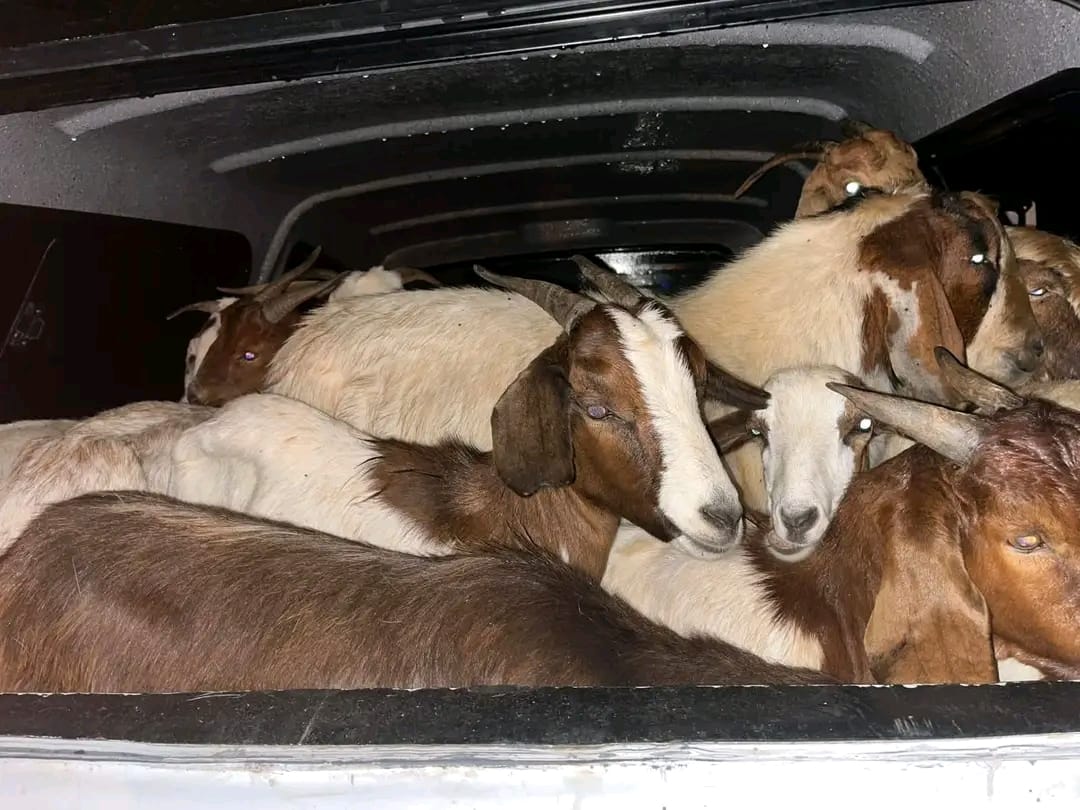
Police sources say the trend is being driven by organised groups that operate across communities, using vehicles and coordinated accomplices to move animals or carcasses quickly. In one recent incident, two suspects linked to multiple stock theft cases were fatally wounded following a high-speed pursuit after intelligence suggested their vehicle was transporting carcasses of allegedly stolen goats—an episode authorities say reflects how dangerous and organised the syndicates can be.

ESNAU CEO warns of long-term damage
The Eswatini National Agricultural Union (ESNAU) CEO, Tammy Dlamini, said livestock theft is destroying years of farmer investment and weakening the resilience of rural households.
“Goat farming represents long-term savings and financial security for rural households. When livestock is stolen, farmers lose their economic safety net and their ability to sustain agricultural production,” Dlamini said, a goat farmer himself.
Dlamini warned that the growing threat is also discouraging new entrants into the sector, particularly young farmers who struggle to rebuild after losses.
“We are witnessing declining confidence within goat farming. Without stronger intervention mechanisms, the sector risks losing both experienced and emerging farmers,” Dlamini said.

Border vulnerabilities and informal markets
Agricultural stakeholders and security agencies have raised concern that stolen goats are increasingly being moved through informal slaughter networks or smuggled across borders, where tracing ownership becomes difficult.
Security reports indicate that nearly 130 goats were intercepted within a single month during attempted smuggling into neighbouring South Africa, with interceptions reported in areas including Goboyane, Chibidze and Manyiseni. Stakeholders say the incidents point to coordinated transport systems and accomplices operating under cover of darkness.
Farmers say the illegal trade also distorts local markets, with stolen animals often sold at cut prices, undercutting legitimate producers and weakening confidence in formal market systems.
Economic pressure on rural livelihoods
Beyond individual losses, agriculture observers warn the theft trend risks broader economic damage. Livestock supports thousands of households, contributes to meat supply chains, and sustains connected activity such as veterinary services, feed supply, transport and informal trading.
Repeated theft reduces herd sizes, slows production and discourages investment—factors that can tighten household food security and reduce the ability of families to cope with shocks. Farmers also note the cultural importance of goats in ceremonies and community life, meaning theft carries social costs alongside financial damage.
Calls for coordinated response
The crisis has prompted calls for stronger coordination between farmers, police and agriculture authorities, with emphasis on rural policing, faster case follow-up, stronger border monitoring and improved livestock identification systems.
The Ministry of Agriculture has acknowledged public concern but has not yet issued a comprehensive policy position. Ministry Communications Officer Nomvuselelo Dlamini said consultations with relevant structures are ongoing and that a formal response will be shared once engagements are concluded.
For farmers like Rodney Dlamini, the issue is no longer viewed as petty crime. It is an escalating threat that determines whether farmers can rebuild herds, protect income, and keep livestock farming viable in rural Eswatini.
As goat theft continues to rise, stakeholders warn that without decisive intervention—backed by enforcement, community cooperation and stronger prevention measures—one of the country’s most accessible livestock enterprises may remain under siege.