

BY SIBUSISIWE NDZIMANDZE | JOURNALIST
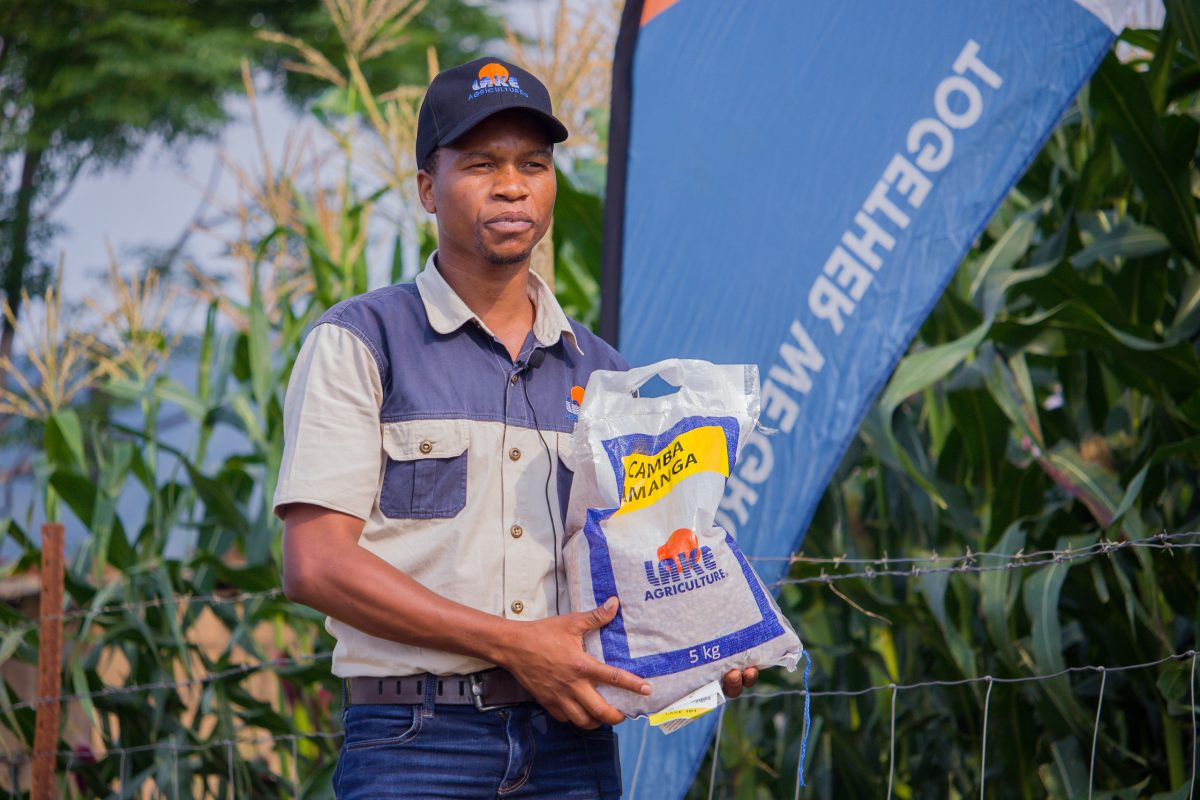
NTONDOZI – As the bean planting season sets in, farmers are being encouraged to make informed decisions on bean variety selection, soil preparation, fertiliser use and crop protection in order to improve yields and reduce production costs. Speaking from demonstration fields in Ntondozi, Dumsani Mbingo of Lake Agriculture shared practical guidance on available bean varieties and the correct agronomic practices farmers can apply this season to achieve better productivity and quality grain.
Lake Agriculture is a seed company that develops, produces and supplies maize and bean seed for both small-scale and commercial farmers. It was formed by seed industry professionals with the aim of serving the small-scale seed sector in Africa, and operates breeding and seed production programmes that deliver certified seed and agronomy support to farmers.
The company operates from Malkerns, Mdutjane and eTsala, supplying certified bean seed to farmers through agro-dealers nationwide. Mbingo said Lake Agriculture is placing strong emphasis on farmer education during this critical planting period.
“Since it is bean planting season, we are explaining to farmers the bean seed varieties we have and how they perform,” he said.
Bean Seed Varieties Available at Lake Agriculture
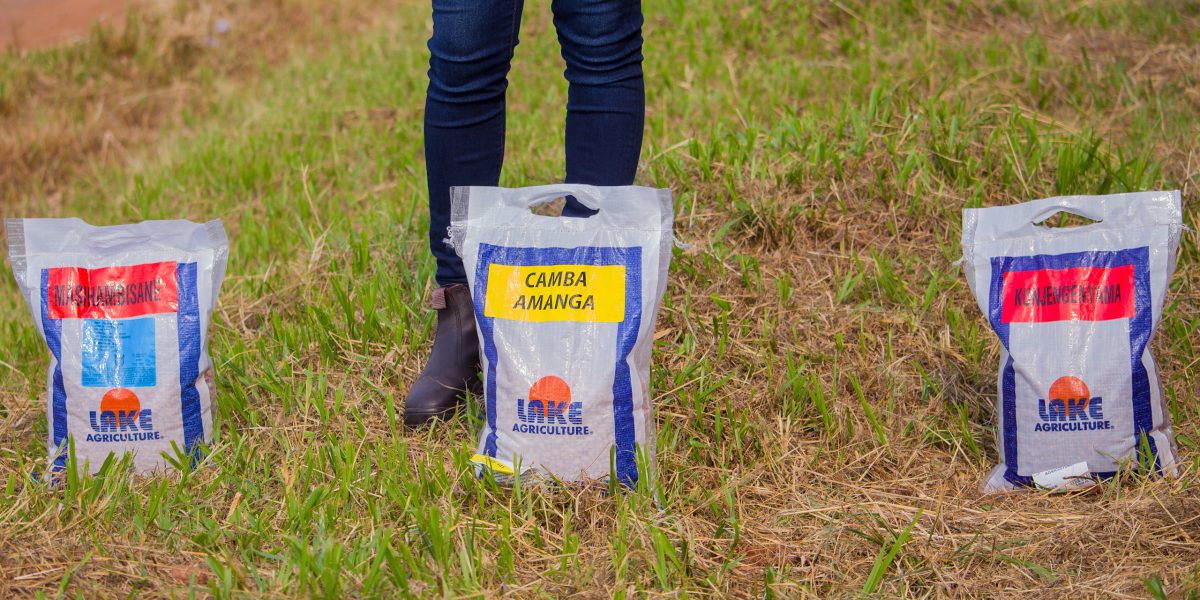
Mbingo said Lake Agriculture currently offers three bean seed varieties, each suited to different production needs, maturity periods and market preferences.
He explained that Lake 101, commonly known as Camba Manga, is an ultra-quick, red-speckled bean variety that has gained wide acceptance among farmers across Eswatini. The name Camba Manga emerged when farmers initially doubted that a bean variety could mature so quickly, but the crop proved its performance once planted.
Lake 101 begins flowering at about 28 days after planting and reaches maturity between 85 and 90 days, producing yields of up to two tonnes per hectare. The variety has large, attractive red-speckled grains that are appealing to the market. Mbingo advised farmers to closely monitor their fields as the crop approaches maturity, noting that when the pods change from pink to a tan colour and the leaves begin to yellow, the beans are ready for harvesting.
After harvesting, he said the beans should be dried outside in direct sunlight, where the pods naturally open, reducing labour and post-harvest losses. He added that Lake 101 is also fast-cooking, usually ready within an hour, even when cooked on a hotplate.
“It is a trusted variety and can be grown as a commercial crop,” Mbingo said.
Mbingo further explained that Lake 102, locally known as Kunjengenyama, is a medium-maturity bean variety valued for its nutritional benefits. The variety matures in about 110 days and produces solid red grains, which are not speckled. It is rich in iron and zinc, making it highly nutritious.
He said the local name Kunjengenyama reflects the variety’s richness, as the beans are considered nutritious enough to substitute meat when consumed. The variety produces good yields and is suitable for both household consumption and commercial markets.
Mbingo also highlighted Lake 9200, branded Masihambisane, as a new, high-yielding bean variety recently introduced by Lake Agriculture and now available in stores. The variety starts flowering 40 to 45 days after planting and matures at around 110 days, with yield potential of up to 2.2 tonnes per hectare.
Lake 9200 produces large, red-speckled beans and has good resistance to leaf diseases, making it suitable for farmers seeking higher yields and improved crop resilience. Mbingo said that compared to Lake 101, Lake 9200 offers higher yield potential and strong market appeal due to its grain size and appearance. He added that the variety also cooks quickly and is well accepted by consumers.
Mbingo noted that farmers have already heard about Masihambisane through radio adverts and that demand is growing. Lake Agriculture is encouraging agro-dealers to stock this variety to meet farmer demand.
He further observed that at Ntondozi, Lake Agriculture planted Lake 101 the previous week, and early emergence was already visible, demonstrating the variety’s fast establishment.
Land Preparation Guide
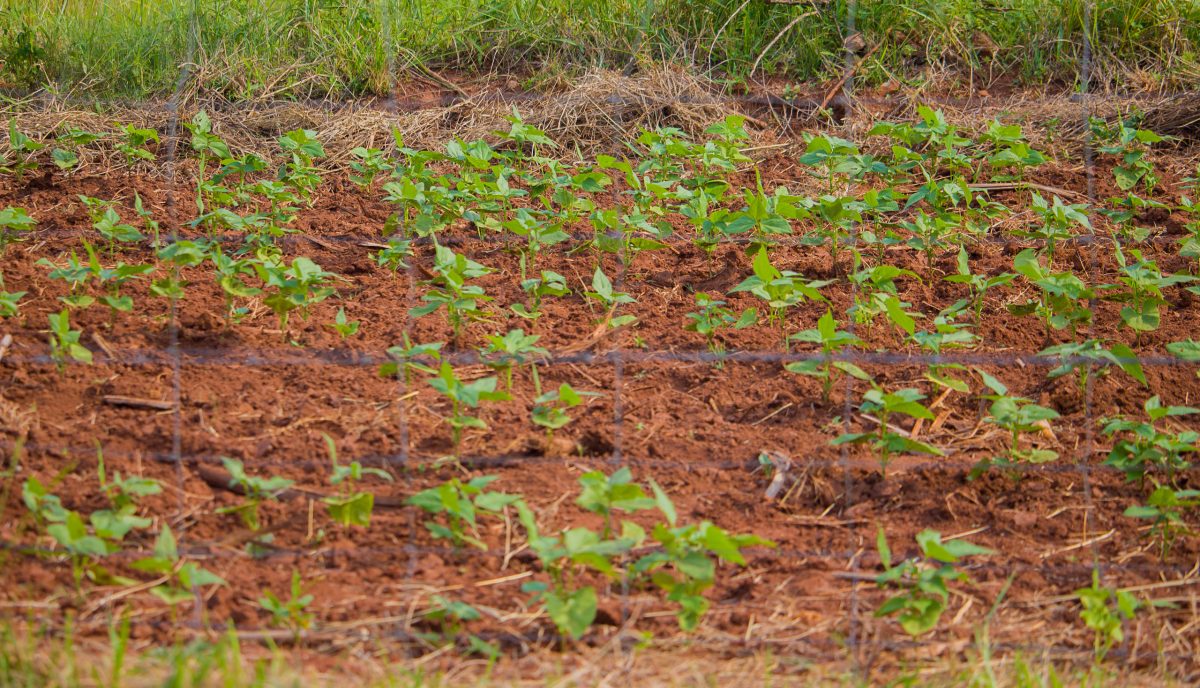
Mbingo advised farmers to prepare their land to a fine tilth, noting that beans do not perform well in rough or cloddy soils. He explained that proper land preparation supports good germination and strong early plant growth, allowing the crop to establish evenly. Planting, he said, can be done either by hand or using a planter, as long as the soil is well prepared to support healthy crop development.
Seed Rate and Spacing
Mbingo advised farmers to observe the correct seed rate and spacing to achieve optimal bean yields. He said farmers should plant at a rate of 70 kilograms per hectare, with an inter-row spacing of 45 centimetres and an intra-row spacing of 10–11 centimetres, noting that proper spacing allows plants to grow uniformly and maximises production per hectare.
Fertiliser Application
Mbingo strongly encouraged farmers to conduct soil testing before planting, explaining that this helps determine the correct fertiliser type and quantity, thereby reducing unnecessary costs while improving yields. He recommended fertiliser application rates of 250 kilograms per hectare for 2:3:2 (22) and 150 kilograms per hectare for 2:3:2 (37), while superphosphate may be used depending on soil test results.
“Soil testing is crucial so that farmers apply the correct amount of fertiliser and avoid unnecessary expenses,” Mbingo said.
Weed, Pest and Disease Management
On weed control, Mbingo advised farmers to use Bacuneer, a pre-emergence herbicide, which should be applied within three days after planting. He said the herbicide suppresses weed growth while allowing beans to emerge and grow freely.
For post-emergence weed control, Mbingo said farmers can use Basagran or Hornet, which are effective in controlling weeds that emerge after crop establishment.
For insect control, Mbingo recommended the use of cypermethrin to control biting insects such as grasshoppers. He said protective spraying should begin about two weeks after planting to prevent pest damage before it affects crop performance.
Fungicide Programme
To prevent and manage fungal diseases, Mbingo advised farmers to use a structured fungicide programme. He said copper oxychloride can be used to prevent fungal infections and leaf rust, while mancozeb or Dithane helps prevent premature leaf drying. Bravo is recommended during the flowering stage, and Amistar Top can be used as a curative fungicide when disease symptoms are already present.
He further advised that routine fungicide spraying every two weeks should be maintained and encouraged farmers to practice crop rotation to reduce disease build-up in the soil.
Where Farmers Can Buy Lake Agriculture Bean Seeds
Mbingo said Lake Agriculture bean seeds are available through agro-dealers across Eswatini, including Farm Chemicals, Khuba Traders, Build It (Mbabane and Nhlangano), SAS, Buy Cash, Vilakati Farm Services, TWK and SAAB Distributors, as well as other small and medium agro-dealers nationwide.
With correct bean seed selection, proper soil testing and disciplined crop management, Mbingo said farmers can achieve good yields, quality grain and improved income during the bean planting season.
For more information, contact:
Dumsani Mbingo – +268 7853 8911
Mandla Zikalala – +268 7638 9561