BY: SIKHONA SIBANDZE | JOURNALIST
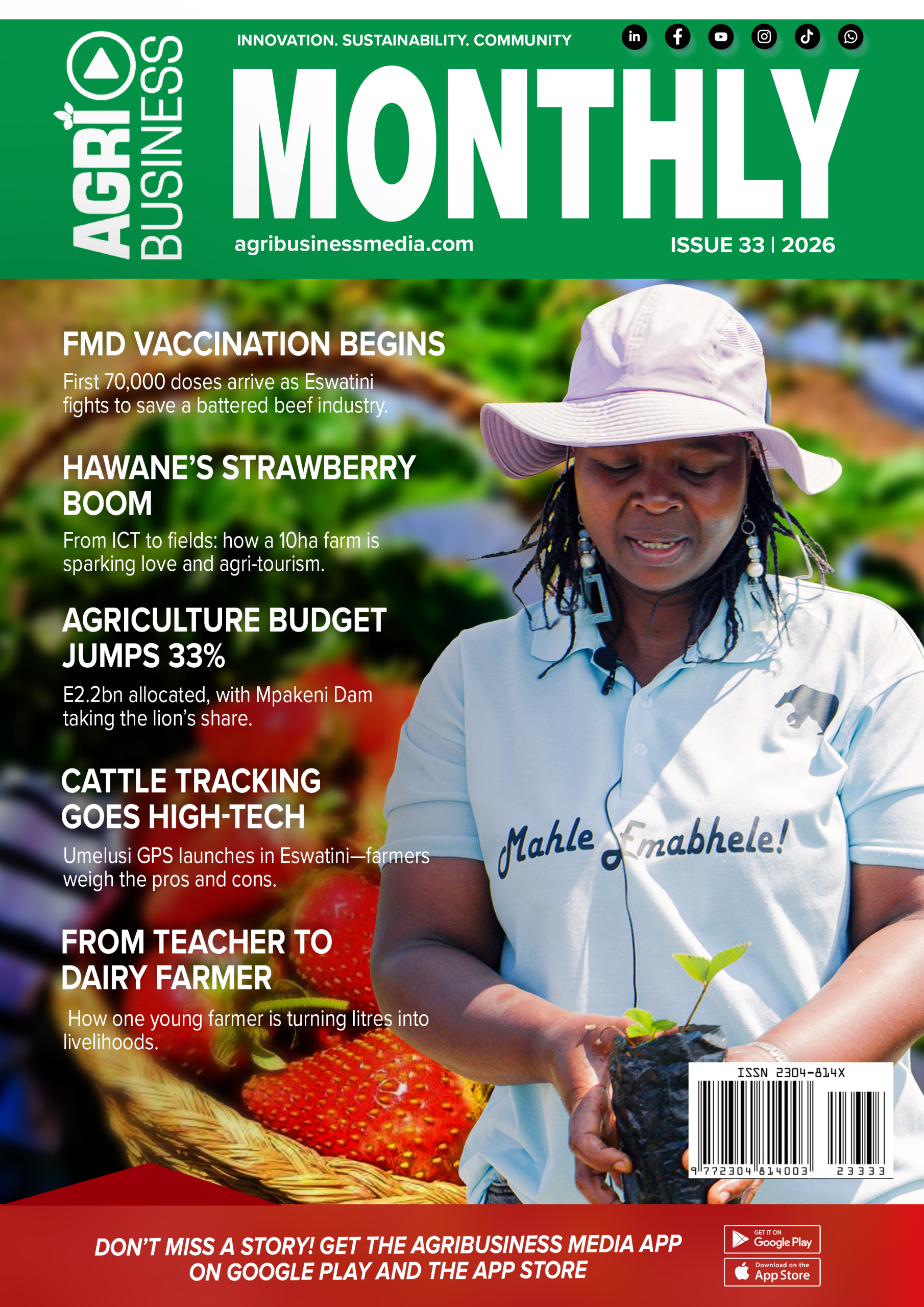
MBABANE — The Ministry of Agriculture has confirmed a new detection of Foot-and-Mouth Disease (FMD) at kaZombodze Emuva, raising fresh concern in a beef industry still recovering from the market and export disruptions linked to last year’s outbreaks.
The update comes as the sector continues to deal with the ripple effects of the outbreak first announced on 12 May 2025 in the Shiselweni region, where veterinary authorities detected suspicious symptoms at Sikhwebezi dip tank in Mkhwakhweni, prompting quarantine measures and an emergency response.
Speaking during a press briefing at the Ministry of Agriculture yesterday, Principal Secretary Sydney Simelane said laboratory tests are underway to determine which SAT-type is responsible for the kaZombodze Emuva detection, whether SAT 1, SAT 2, or SAT 3. He noted that Eswatini is currently managing all three SAT types in the country.
Why this detection matters for farmers and the beef value chain
Repeated FMD detections pose a serious threat to confidence in Eswatini’s beef supply chain, particularly for export markets that require strong, verifiable animal-health assurances. Simelane pointed to how quickly animal-health events can trigger trade consequences. In June 2025, the European Union suspended Eswatini’s authorisation to export fresh beef and game meat after FMD was confirmed in Shiselweni, underscoring the high stakes for a sector reliant on market access and reputation. At home, outbreaks also translate into movement restrictions, disruptions to livestock marketing, and rising compliance costs for both communal and commercial producers.
From Shiselweni to wider pressure points
Authorities first confirmed FMD in Shiselweni in mid-May 2025. Later, the disease pressure extended to parts of Lubombo, where additional dip tanks and farms were quarantined as animal-health concerns surfaced in the region.
The Ministry has repeatedly warned that non-compliance with movement controls and weak on-farm biosecurity can accelerate spread, especially when cattle mix at shared grazing areas, watering points, and along livestock routes.
“Borders don’t stop cattle”: cross-border risk remains a major driver
Simelane said one of Eswatini’s biggest vulnerabilities is the reality that livestock movement does not stop at political boundaries. Cattle regularly move across neighbouring areas, and where mixing occurs, the risk of transmission increases. “FMD can spread when a healthy animal grazes on contaminated pasture, including grass previously grazed by an infected animal. This makes uncontrolled movement and shared grazing systems a persistent challenge, particularly in border-adjacent communities,” he said.
Government plan: vaccinate every cow, but funding is the constraint
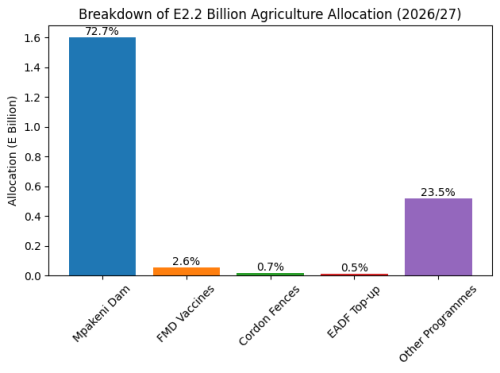
The Ministry’s stated direction is a nationwide vaccination campaign aimed at protecting the national herd and restoring market confidence, including confidence required for beef exports. However, Simelane said the scale of the programme comes with major financial demands. The Ministry estimates it requires E62 million to vaccinate the national herd and complete the full operational rollout.
What farmers should do now
While tests continue to confirm the SAT type behind the kaZombodze Emuva detection, the Ministry is urging farmers to take practical steps immediately:
- Comply with movement restrictions and any permitting requirements in your area, especially around quarantine zones.
- Report suspected cases promptly to veterinary officers and dip tank authorities.
- Strengthen biosecurity by limiting animal mixing, controlling visitor access, disinfecting equipment, and avoiding introductions of animals with unknown health status.
- Participate in vaccination programmes whenever they are rolled out, as vaccination remains the cornerstone of containment and recovery of market confidence.
The bottom line
The detection of FMD at kaZombodze Emuva is a reminder that Eswatini’s beef industry remains in a high-risk period. With export markets highly sensitive to animal-health status, and rural livelihoods closely tied to cattle production and trade, the Ministry’s push to vaccinate every cow is increasingly being framed as an economic necessity. But for it to succeed, it will require urgent funding, strict compliance, and strong cooperation from farmers across the country.