BY SIBUSISO MNGADI | EDITOR-IN-CHIEF
The Royal Eswatini Sugar (RES) Corporation has released its condensed interim results for the six-month period ending 30 September 2025, revealing a profit attributable to owners of E603.4 million. This represents an 8.3% decrease from the E658.0 million recorded during the same period in the previous year. While the corporation faced significant agricultural and technical challenges, the reporting period was marked by a historic strategic pivot into the retail liquor market.
The corporation’s core agricultural operations were impacted by environmental factors, with the volume of cane crushed falling by 4.3% to 2.3 million tonnes. This decline was attributed to a smaller harvested area and a drop in cane yields to 97.7 tonnes per hectare, down from 101.9 tonnes per hectare the previous year. These yields were specifically hampered by storm damage that occurred in March 2024 and a delayed start to the harvesting season.
However, high levels of industrial efficiency partially mitigated these losses. Despite lower raw cane tonnage, total sugar production only saw a marginal 1.0% decrease because sucrose yields improved to 13.77 ts/ha. This efficiency ensures that RES remains a top-tier producer in the region, even as global sugar prices and a strengthening local currency create challenging export conditions.
The Launch of Spotted Horse Rum
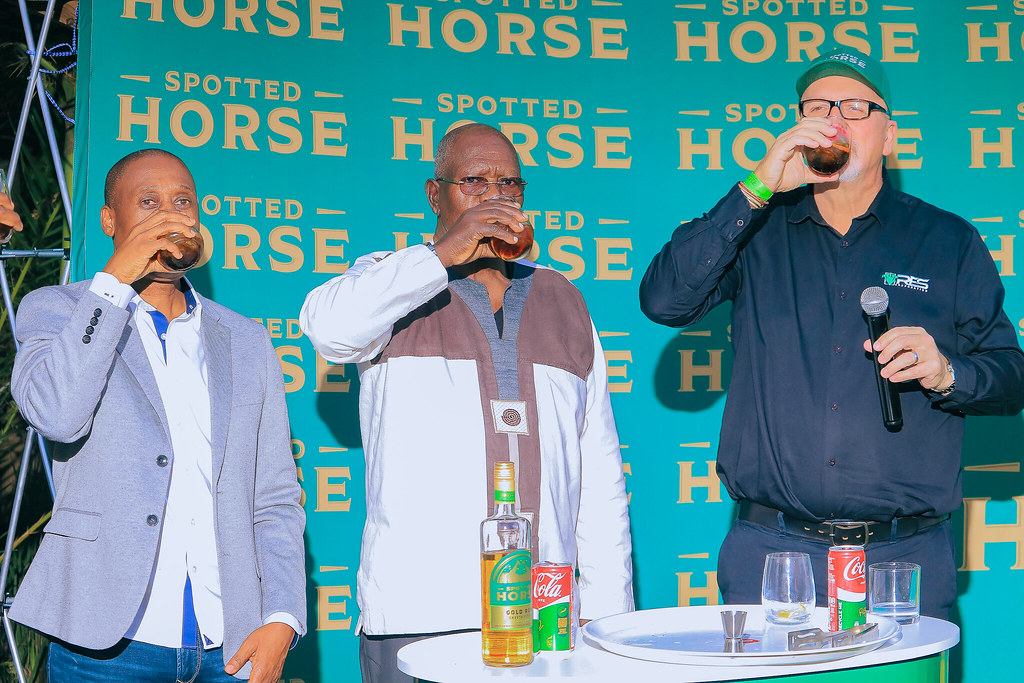
A defining highlight of this period was the official launch of Spotted Horse Rum on 15 August 2025. The introduction of this flagship product is a critical component of the corporation’s “Simama Wenabe +2B 2030” strategy, which targets a net profit of E2 billion by 2030.
Within the context of this strategy, Spotted Horse represents the “New Shoots” (Kwenaba) pillar, which focuses on product diversification and high-value downstream opportunities. By moving into branded retail alcohol, RES aims to move beyond its traditional reliance on bulk commodity sugar and ethanol exports. This pivot is designed to provide financial sustainability and “green revenue” by extracting maximum value from molasses, a primary by-product of the sugar milling process.
Ethanol Performance and Technical Hurdles
The launch of the rum brand comes during a difficult stretch for the ethanol segment, which saw a 34.8% drop in production to 12.2 million litres. This decrease was caused by a delayed production start to build molasses stocks and was exacerbated by technical constraints involving a 30-megawatt turbo alternator set at the Simunye Mill early in the season. Additionally, ethanol sales volumes decreased by 19.3% due to challenging market dynamics, including the liquidation of certain customers in the SACU market.
Financial Position and Future Outlook
Overall turnover for the period decreased by 2.1% to E3.34 billion, as the achievement of higher prices could not fully compensate for lower sales volumes across sugar and ethanol. Finance costs rose by 4.3%, driven by inflationary pressures and high interest rates. Despite these pressures, the corporation maintains a strong balance sheet with E6.3 billion in total assets, supported by ongoing investments in new land expansion and mill efficiency projects.