
BY SIBUSISO MNGADI | EDITOR-IN-CHIEF
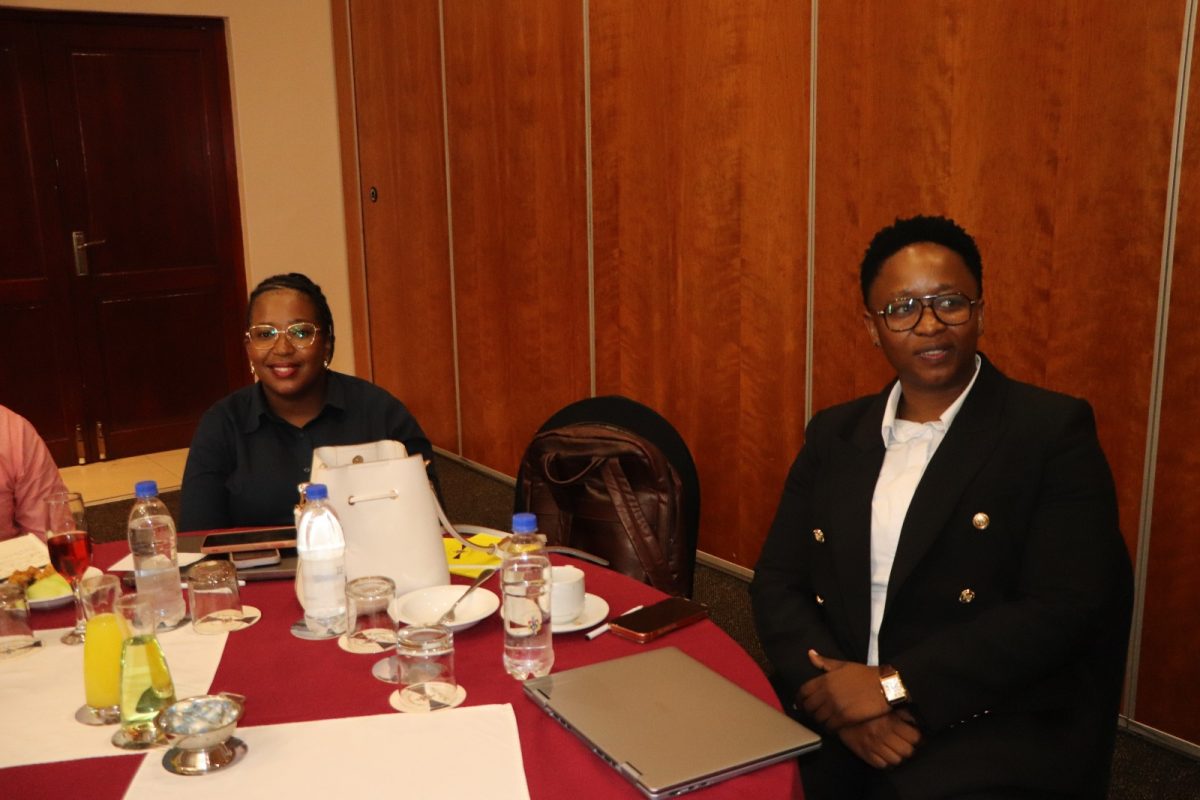
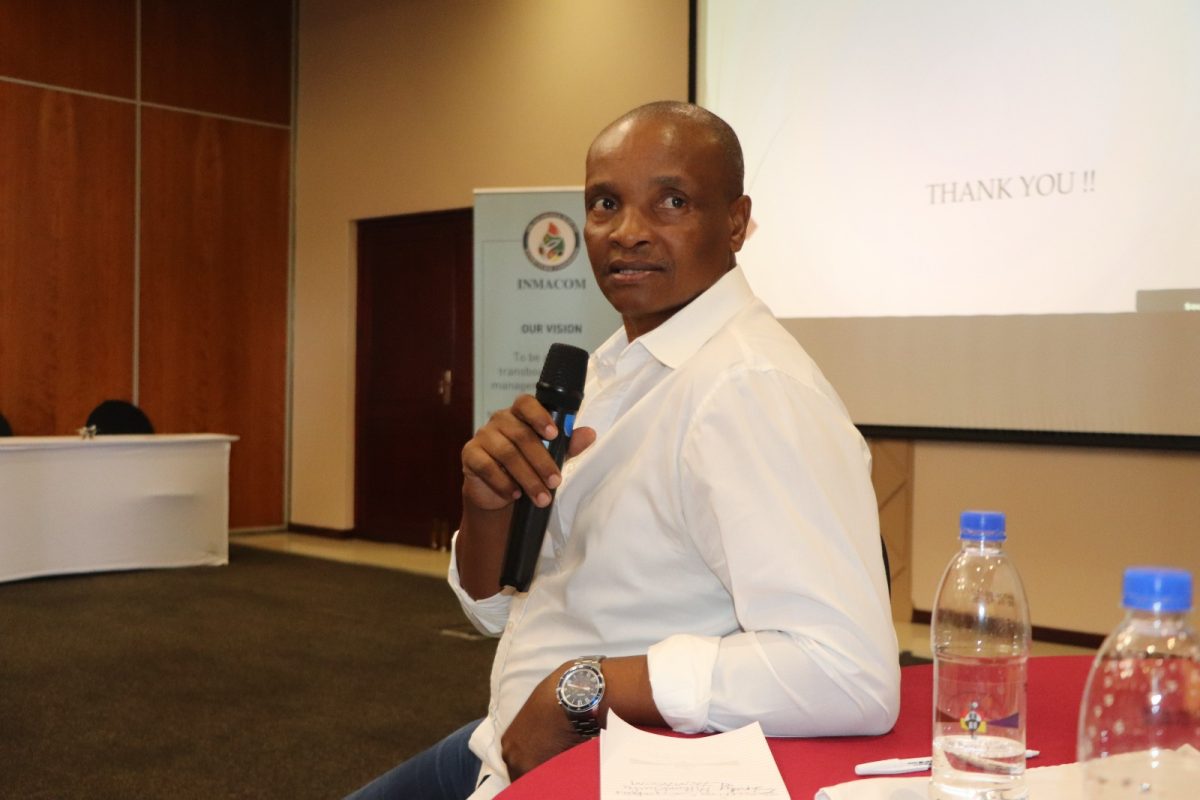
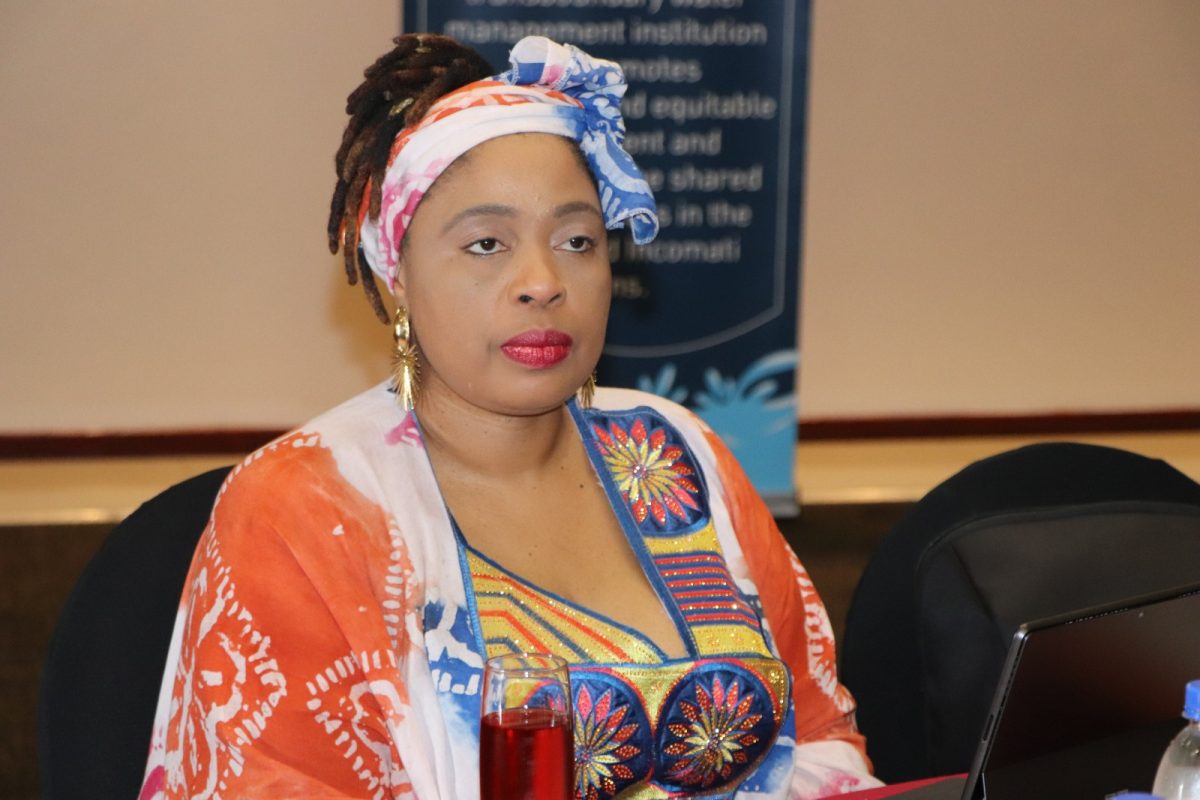
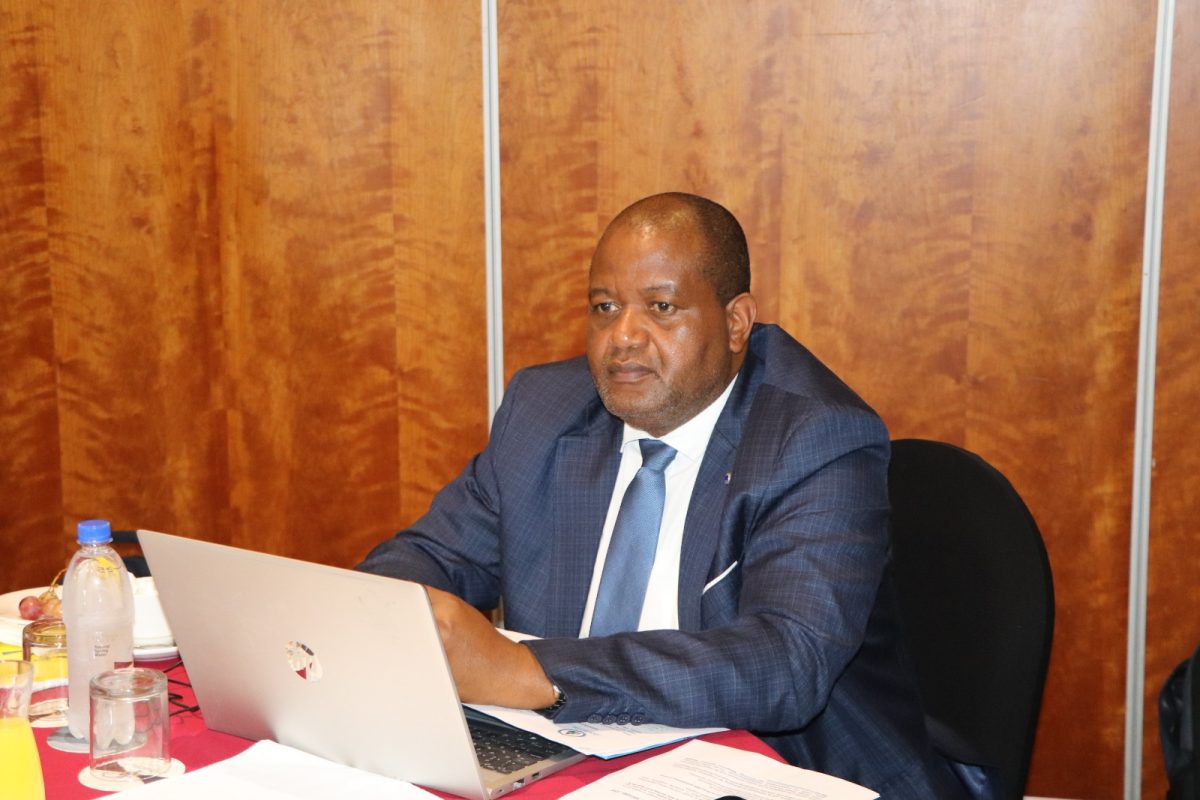
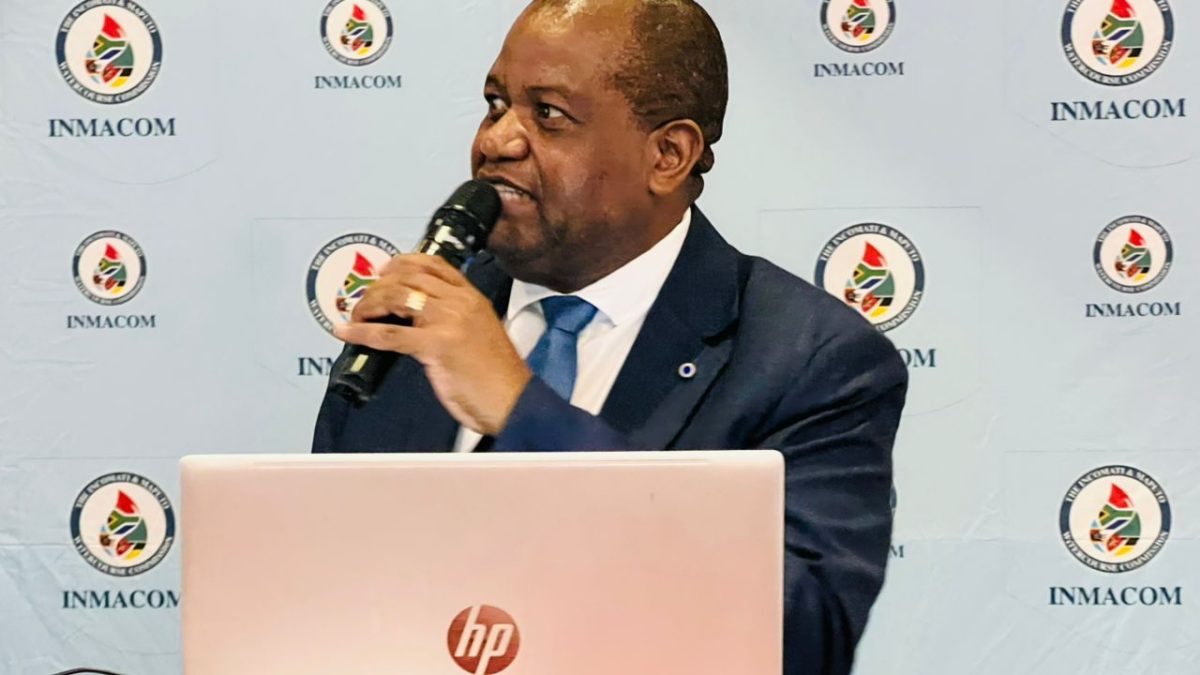
A high-level strategic breakfast meeting held on 10 February 2026 at the Royal Villas in Ezulwini brought together key institutions shaping water governance across the Incomati–Maputo system—a shared river network linking Eswatini, South Africa and Mozambique. For Eswatini, a country whose major rivers cross borders, water security for agriculture depends on cooperation, shared data, and coordinated planning.
The backbone of the economy: sugarcane, irrigation and jobs
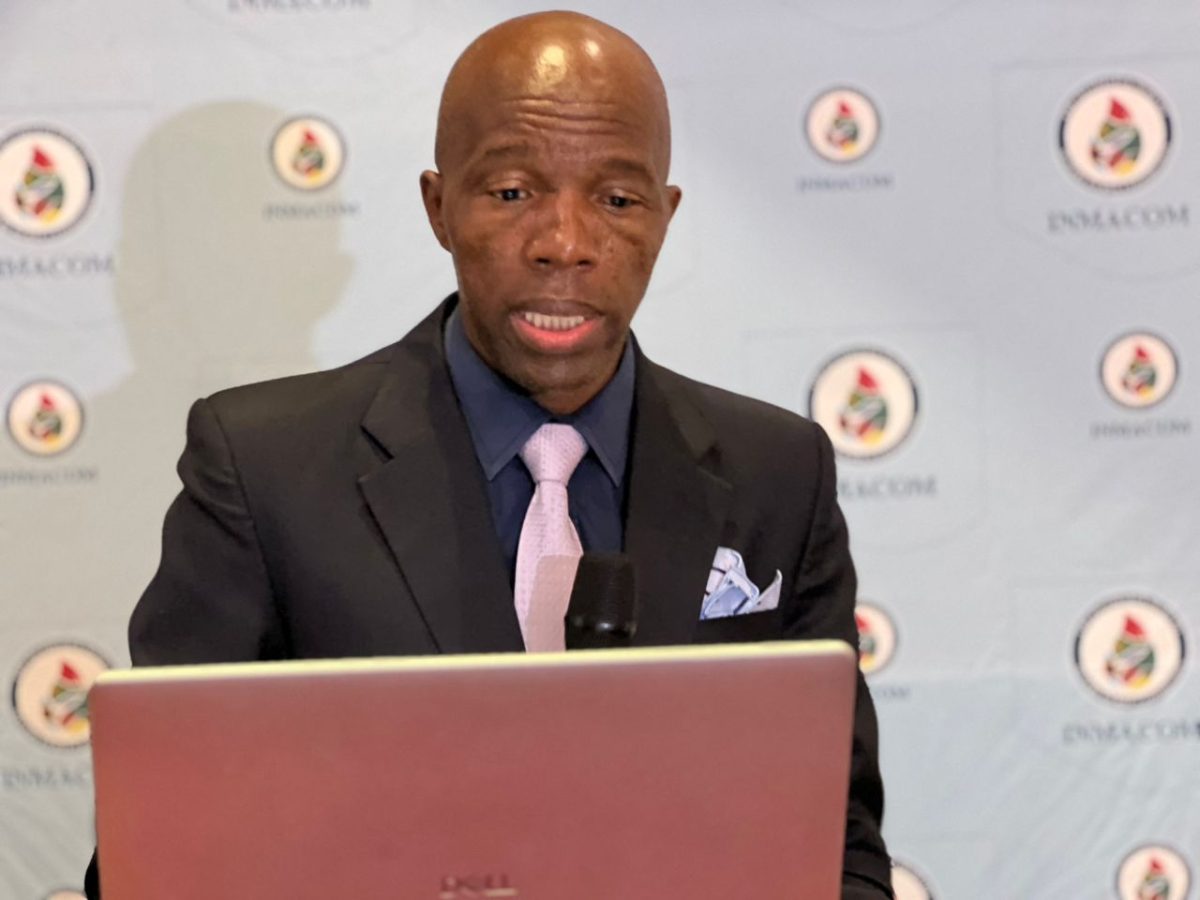
For farmers and agribusiness, water is not a “sector issue”—it is an economic foundation. KOBWA CEO Trevor Shongwe highlighted the role of the Komati Basin Water Authority (KOBWA) in managing the Maguga (Eswatini) and Driekoppies (South Africa) dams as an integrated system, with releases coordinated to meet irrigation demand and downstream obligations.
Explaining how the system is managed, Shongwe said: “We’re running these two dams as a system.” He added that the two member states have committed to minimum downstream releases, noting: “The two member states have committed to a 2.6 cubic meters continuous flow.”
He noted that irrigated sugarcane in the Komati Basin contributes an estimated 4.5% to 5% of Eswatini’s GDP through cultivation and processing, while supporting roughly 20,000 jobs—and underpinning export earnings.
INMACOM: building trust, compliance and shared management
A key focus was the Incomati and Maputo Watercourse Commission (INMACOM)—a transboundary river basin institution established in 2021 to strengthen cooperation among the three countries and support the protection, sustainable management and equitable allocation of shared water resources.
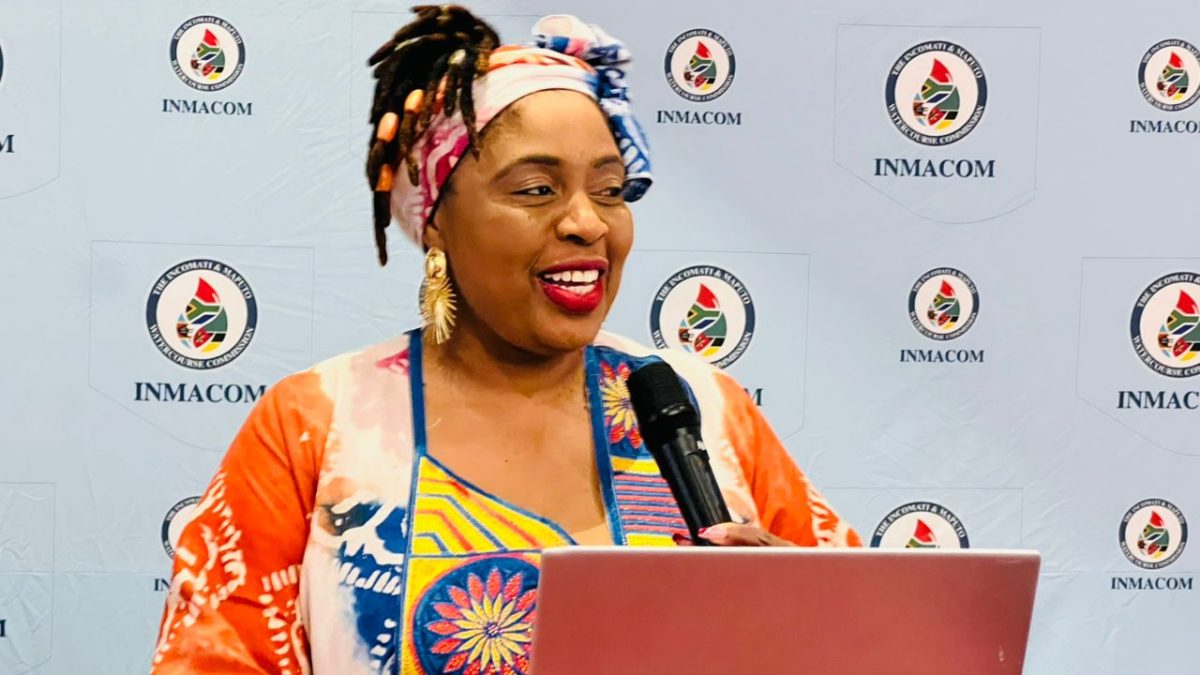
INMACOM Executive Secretary Sindy Mthimkhulu underscored the commission’s mandate, saying: “We want to ensure the protection, sustainable management and equitable allocation of the shared water resources.”
She stressed that water security is not only about volume, but also quality: “When you have water that is dirty or unusable, it’s as good as not having water.”
Mthimkhulu also positioned INMACOM as a bridge for shared visibility across borders: “We also serve as the platform for knowledge and information sharing.”
Protecting farmers from climate extremes: from flood risk to drought signals
With climate pressures rising, the meeting emphasised collaboration between water institutions and the National Disaster Management Agency (NDMA) to strengthen early warning systems.
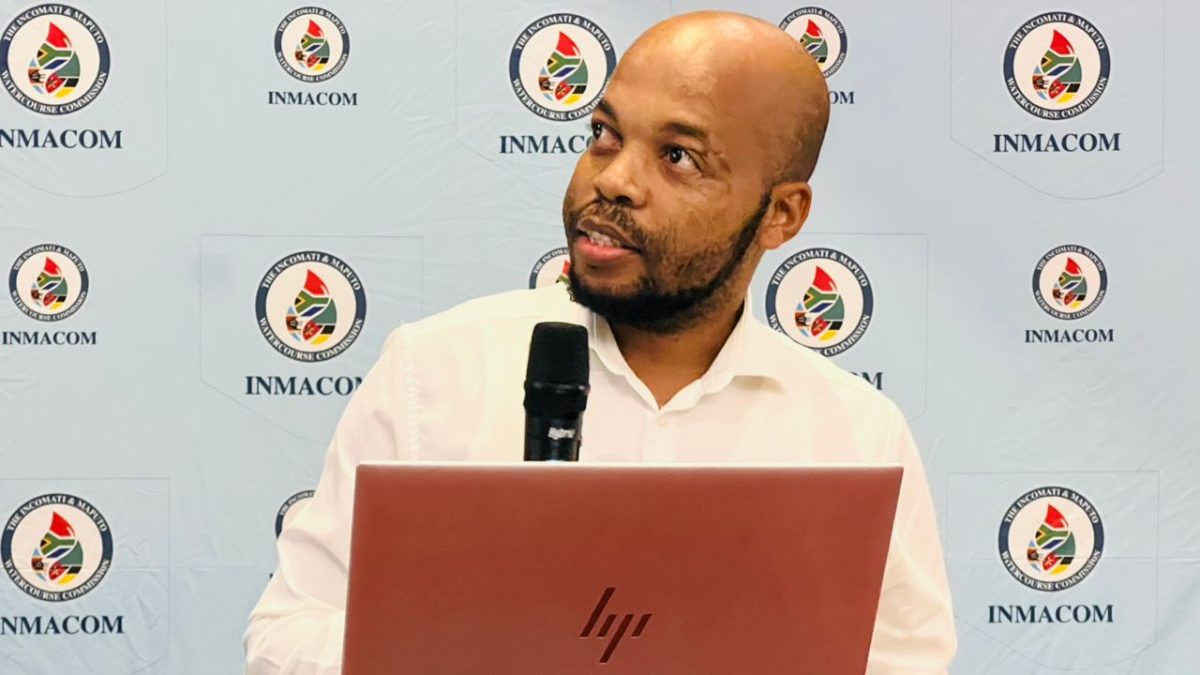
NDMA Communications Manager Magman Mahlalela explained why the relationship between basin institutions and disaster management is essential: “This alignment matters, because floods and droughts are two sides of the same systems.” He added: “A higher river flow signals potential flooding and reduce flows and dry rivers signal potential droughts.”
KOBWA also described the practical value of monitoring stations, modelling and alert levels—tools that support warning systems and help downstream users protect infrastructure before damaging flows arrive. Reflecting this practical impact on the ground, Shongwe noted that alerts help ensure “farmers below are aware of how much water is coming their way… and they’re able to remove the infrastructure from the river systems.”
Government’s message: shared rivers demand shared responsibility
Adding the government voice, Edward Mswane, Senior Water Engineer in the Department of Water Affairs under the Ministry of Natural Resources and Energy, reminded stakeholders that Eswatini’s water reality is shaped by geography: “Our major rivers… originate in South Africa, pass through Eswatini and then end in Mozambique.”
He explained why this makes cooperation non-negotiable: “Because the way water is managed is that you cannot say… ‘because this water is in Eswatini, I will take all of this water.’ No, you can’t do that… you have to think about your neighbour who is downstream.”
Mswane traced the evolution of regional cooperation—from the Tripartite Permanent Technical Committee (TPTC) formed in 1983, to discussions in 2011 to establish a formal river basin organisation, Eswatini’s agreement to host it in 2016, and the eventual establishment of INMACOM in 2021.
On practical governance, he said Eswatini’s government plays an oversight role in INMACOM’s work: “As the department, we have an oversight role.” He added that the three governments support the institution at political and technical levels, noting: “We have the Council of Ministers… the meetings… are held annually,” and that countries also participate in quarterly structures where commissioners monitor progress against plans.
JRBA-PB: turning regional agreements into farm-level access and compliance
Bringing the discussion closer to farmers, JRBA-PB Acting CEO Takhona Dlamini outlined how national water management is operationalised locally through allocation, monitoring and permitting systems.
For farmers, one of the most practical takeaways was the value of water use permitting—not only as a legal requirement, but as a credibility tool for investment and financing. Speaking on why permits matter to business viability, JRBA-PB noted: “It will speak to the banks to say this person is credible…”
The point was simple: compliance and documentation can strengthen a farmer’s case when approaching financiers, while also supporting basin-wide planning on who is using water and how much is being abstracted.

New opportunities: aquaculture and the “nexus” approach
Beyond irrigation, the meeting highlighted emerging livelihood opportunities linked to dam infrastructure—especially aquaculture. KOBWA described pilot work around Driekoppies, with growing interest in Maguga, aimed at shifting communities away from unsafe or illegal fishing practices toward organised, small-business aquaculture models that can improve incomes and local protein supply.
Speakers repeatedly referred to a “nexus approach”—managing water, energy and food together. In practice, that means dams supporting irrigation and industry, enabling power generation in some cases, and creating pathways for food and livelihood projects such as aquaculture.
A unified vision for “Water For Ever”
The Ezulwini meeting highlighted that Eswatini’s agribusiness resilience will increasingly depend on cross-border cooperation, reliable data-sharing, and governance systems that connect national institutions to farm-level realities. With INMACOM coordinating transboundary collaboration—and institutions like KOBWA and JRBA-PB driving operational systems on the ground—farmers and agribusiness leaders are reminded that water security is planned, monitored, and negotiated—locally and regionally—every day.