
BY SIBUSISIWE NDZIMANDZE | JOURNALIST
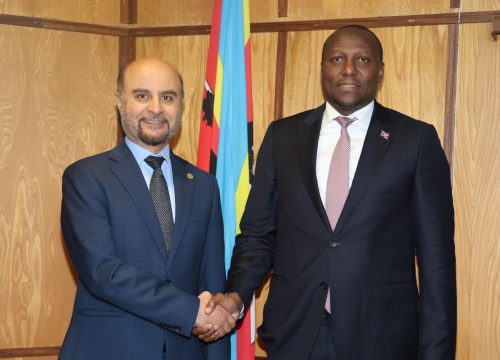
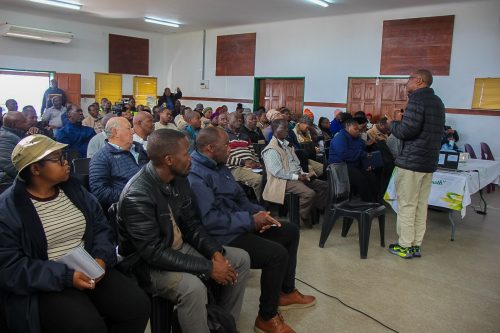
MANZINI - The Food and Agriculture Organization of the United Nations (FAO), in partnership with the Government of the Kingdom of Eswatini, is convening a Consultative Workshop for the Development of the Eswatini Country Programming Framework (CPF) 2026–2030 from 16 to 19 December 2025 at The George Hotel in Manzini.
The workshop is organised in collaboration with the Ministry of Agriculture (MOA), the Ministry of Tourism and Environmental Affairs (MTEA), the Ministry of Natural Resources and Energy (MNRE), and other government institutions. It brings together representatives from government, the private sector, non-governmental organisations, farmer organisations, and development partners.
The CPF serves as FAO’s primary strategic planning instrument for engagement with Eswatini. It guides FAO’s technical cooperation with the country in transforming agrifood systems, strengthening food and nutrition security, and promoting sustainable development. The CPF 2026–2030 builds on the achievements and lessons of the CPF 2022–2025, while aligning with FAO’s Strategic Framework 2022–2031, the 2030 Agenda for Sustainable Development, and global initiatives such as the Hand-in-Hand Initiative, Digital Village Initiative, and One Country One Priority Product.
Background: CPF 2022–2025 Priority Areas
FAO Eswatini’s CPF 2022–2025 set out three priority areas that have guided FAO’s partnership with the Government of Eswatini. These priorities combine international best practices and global standards with national and regional expertise, with a strong focus on enabling the business of agriculture and advancing inclusive, gender-responsive food system transformation.
Priority 1: Enabling the Business of Agriculture
This priority focuses on supporting the Government of Eswatini to create an enabling environment and appropriate systems for agricultural activities to thrive and be profitable. Emphasis is placed on identifying and reducing regulatory and systemic barriers that limit market access and entrepreneurship. The priority supports value chain players including farmers (both small and large), processors, transporters, and MSMEs by strengthening systems that facilitate market integration and business growth.
Priority 2: Inclusive Value Chain Development and Partnerships
Priority 2 centres on supporting government and agricultural sector stakeholders to design and implement inclusive, smallholder-focused and public-private partnerships along agricultural value chains. The objective is to increase investment in the sector while empowering farmers and agribusiness players with the skills, knowledge, and resources needed to improve productivity, strengthen participation in markets, and adopt sustainable agricultural practices.
Priority 3: Sustainable Natural Resource Management and Climate Resilience
This priority addresses gender-responsive management of natural resources, environmental sustainability, climate change mitigation, and disaster risk management. It focuses on strengthening systems that build resilience while ensuring communities including women and youth develop a clear understanding of and capacity to adopt climate-adaptive and environmentally sustainable models.
Objectives of the CPF 2026–2030 Workshop
The consultative workshop aims to review agrifood system challenges, reflect on achievements from 2025, and jointly define priority areas for FAO’s future technical support. Stakeholders will validate FAO’s comparative advantage in supporting national priorities such as climate resilience, sustainable production, inclusive governance, and food system transformation. The process will also inform the development of a 2026 work plan and a resource mobilisation strategy.
Programme Overview
The workshop is structured around multi-stakeholder consultations.
Day One (16 December 2025) focuses on engagement with government institutions and includes presentations on lessons from the CPF 2022–2025, ongoing projects, regional and global initiatives, and plenary discussions.
Day Two (17 December 2025) centres on consultations with the private sector and non-governmental organisations, with discussions on policy gaps, priorities, and opportunities.
Expected Outcomes
Key expected outputs include a draft CPF methodology and a theory of change outlining priority outcomes, outputs, and indicators aligned with FAO’s Four Betters framework: Better Production, Better Nutrition, Better Environment, and Better Life. A consolidated summary of stakeholder inputs will inform the development of an inclusive, results-oriented CPF 2026–2030.
The new framework is expected to contribute to Eswatini’s national priorities on poverty reduction, food security, agricultural productivity, sustainable natural resource management, and the empowerment of women and youth.
(COURTESY PICS)