

The Ministry of Agriculture has officially commissioned the National Market Assessment Exercise, a nationwide study designed to track how Eswatini’s food and non-food markets are functioning and to guide future decisions on food security, pricing, and support to farmers and traders.
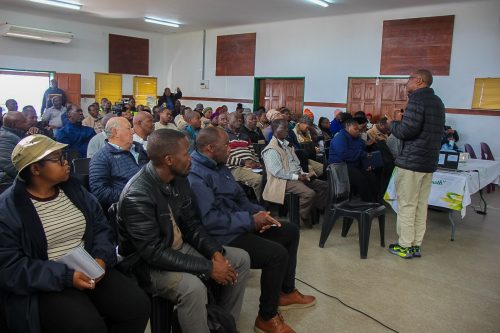
Representing the Honourable Minister of Agriculture, Mandla Tshawuka, Under Secretary Vincent Dlamini launched the exercise at a press briefing in Mbabane. The assessment, which is conducted every five years and was last carried out in 2020, will run from 13–27 November 2025 across all regions of the country.
Over the next two weeks, data collection teams will visit retail outlets, open markets, agro-shops, wholesalers, and selected households to gather information on prices, availability, and movement of key food and non-food commodities. This will provide an updated picture of how markets are linking farmers to buyers, how goods are flowing between rural and urban areas, and where bottlenecks or vulnerabilities exist.
According to the Ministry, the information will be used to support evidence-based decisions that promote food sovereignty, price stability, and fair market access for producers, traders, and consumers. It will also strengthen the country’s ability to respond to economic shocks, climate impacts, and supply chain disruptions that threaten livelihoods.
Dlamini appealed for full cooperation from all market actors and members of the public who will be approached by enumerators.
“Your openness and accurate information will ensure that the results of this assessment truly reflect the situation on the ground,” he said, stressing that the exercise is not an inspection or audit, but a national effort to understand and improve how markets work for everyone.
What the assessment will look at
The National Market Assessment will focus on, among other things:
- Current prices and price behaviour of staple foods, fresh produce, livestock products and essential non-food items
- Availability and physical access, including how regularly key items are stocked and where shortages occur
- Market linkages and trade flows between rural production areas, collection points, and urban markets
- Costs and barriers to participation, especially for smallholder farmers, informal traders and micro-retailers
- Consumer purchasing power and demand trends, including how households are adjusting to changing prices
The exercise is being carried out in collaboration with key development partners, including the Food and Agriculture Organization (FAO), World Food Programme (WFP), UNDP, Red Cross Eswatini, World Vision Eswatini and other government ministries and stakeholders.
For Eswatini’s farmers and agribusiness community, the assessment is more than a statistical exercise – it is a tool to shape smarter support programmes and more predictable markets.
According to the Ministry, the findings will be used to:
- Develop targeted market support interventions – such as market information systems, storage and logistics solutions, or procurement schemes that link smallholders to formal buyers.
- Strengthen early warning systems for food security – by improving the ability to detect stress signals like rapid price increases, local shortages, or market disruptions.
- Inform price monitoring and consumer protection measures – helping government track unfair practices, protect vulnerable consumers, and stabilise markets where possible.
- Support smallholder farmers and agribusinesses – by identifying where value chains are weak, where farmers struggle to access markets, and which incentives or investments could unlock growth.
The Ministry notes that the assessment is aligned with the Eswatini National Agricultural Investment Plan (ENAIP) and broader efforts to modernise agricultural value chains and build resilience to climate change and global shocks.
As data collection teams move across the country between now and 27 November, farmers, market vendors, agro-dealers, millers, transporters, shop owners and consumers are all being urged to participate openly.
By sharing accurate information on prices, stocks, challenges and opportunities, stakeholders help ensure that the final report reflects the real picture of Eswatini’s markets – and that future programmes and policies are grounded in reality, not assumptions.
For Eswatini’s growing agribusiness sector, this assessment is a critical opportunity to make sure their voices and daily realities are captured in the numbers that guide national planning.

—
Agribusiness Media will continue to follow the National Market Assessment Exercise and report on key findings as they become available.
#marketassessment #sustainablemarkets #EswatiniAgriculture #FoodSecurity