SIBUSISIWE NDZIMANDZE | JOURNALIST
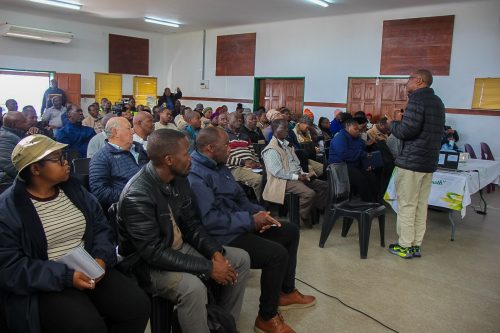
MHLAMBANYATSI — Stock theft, water shortages and limited access to agricultural services took centre stage as the Ministry of Agriculture brought its “Taking the Ministry to the People” initiative to Mhlambanyatsi Inkhundla, engaging farmers directly and responding to the challenges affecting production and livelihoods.
The initiative is also aligned with Government’s Nkwe directive, a call made by His Majesty King Mswati III during the State Opening of Parliament in February 2026, urging ministries to accelerate service delivery and take government programmes directly to the people.
The engagement brought together key agricultural stakeholders, including the Eswatini Water and Agricultural Development Enterprise (EWADE), Eswatini Agriculture Development Fund (EADF), National Agricultural Marketing Board (NAMBoard), National Maize Corporation (NMC) and the Eswatini Dairy Board, all of whom engaged directly with farmers on production, financing, marketing and livestock development issues.
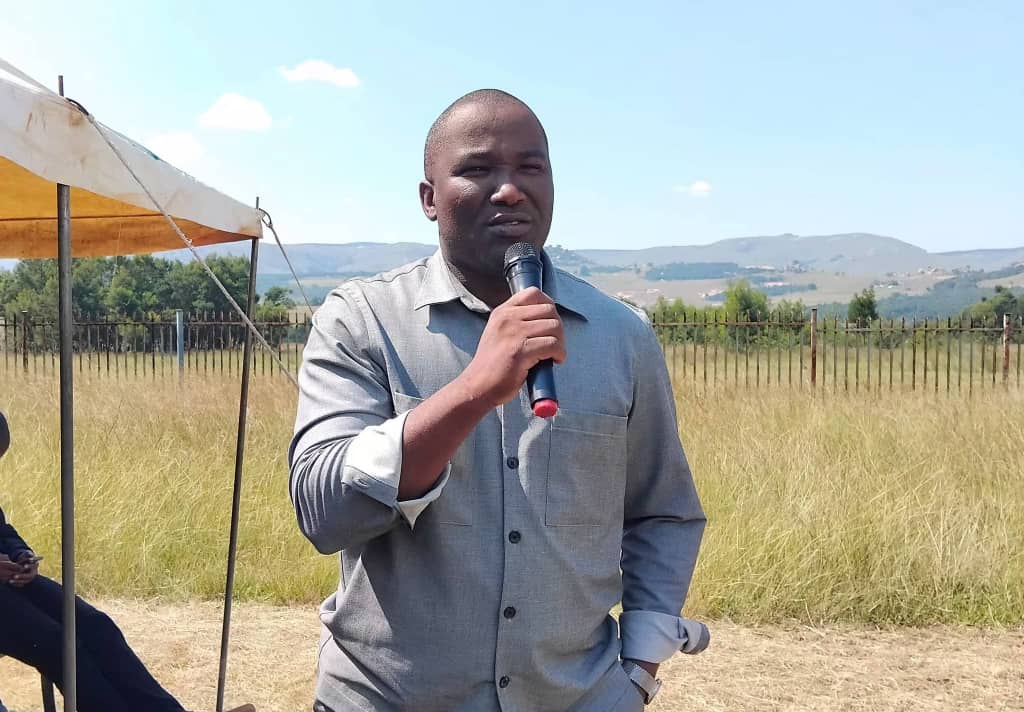
The platform enabled communities to raise field-level concerns, receive technical guidance and access institutional support, reflecting government’s commitment to a more inclusive, responsive and farmer-centred agricultural system.
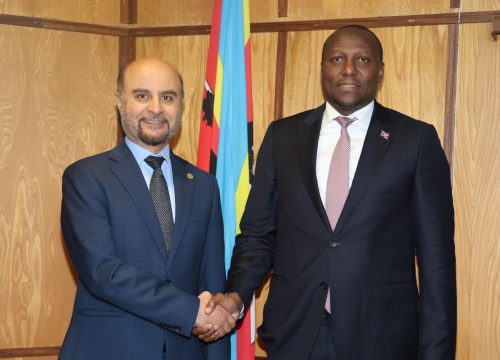
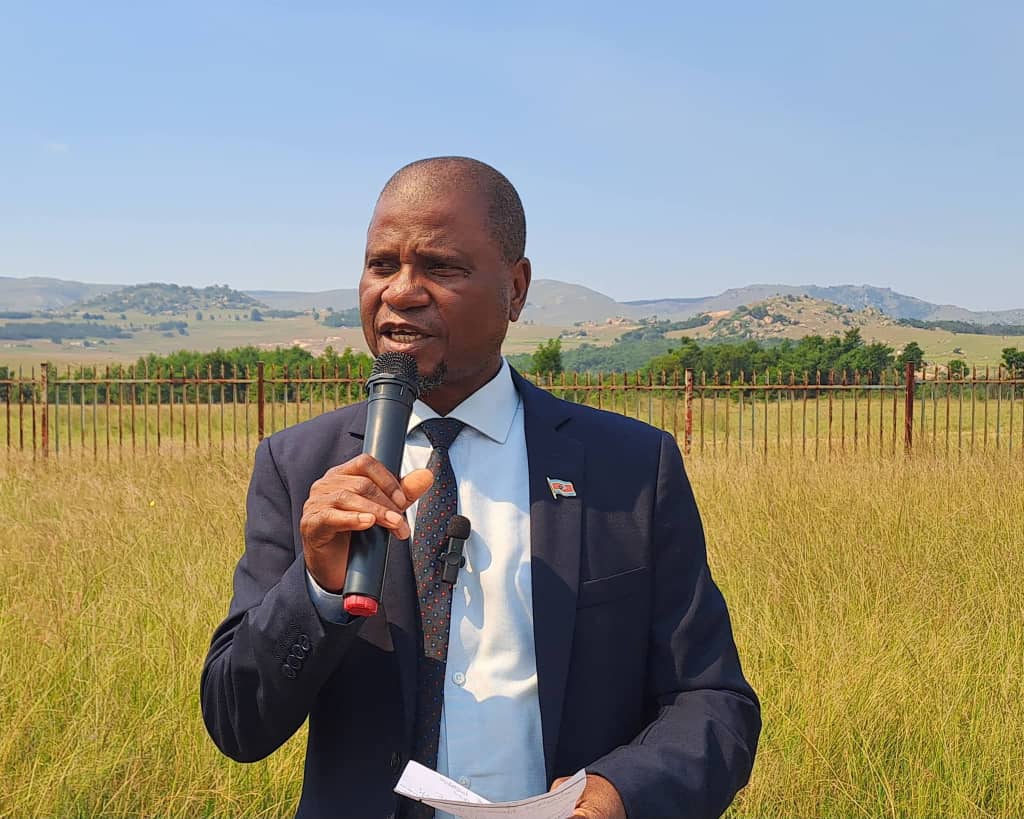
Minister of Agriculture Mandla Tshawuka said the initiative is aimed at improving service delivery by engaging farmers directly at production level.
“We are bringing services to the people so that we understand what farmers are struggling with and close that gap,” said Tshawuka.
“This will help us achieve our key priorities, including food sovereignty and wealth creation.”
Stock theft emerges as a major livestock production constraint
One of the most pressing issues raised during the engagement was the high incidence of livestock theft, which farmers said continues to undermine herd security, asset accumulation and rural livelihoods.
Responding to the concern, the Minister said government is taking steps to strengthen enforcement and deter offenders.
“Fines for those involved in stock theft are set to be increased, with the law currently under review in Parliament to strengthen enforcement,” said Tshawuka.
The scale of the problem is reflected in recent reports, which show that in 2023, about 1,815 cattle worth roughly E15 million were stolen, while between April and June 2024, about 1,325 livestock were stolen, including 582 cattle and 743 goats, valued at approximately E6.5 million.
He further noted that addressing livestock theft requires coordinated cross-border intervention, with government working with South Africa’s Ministry of Home Affairs, alongside National Disaster Management Agency (NDMA) and domestic security forces, to disrupt illegal livestock movement along high-risk routes.
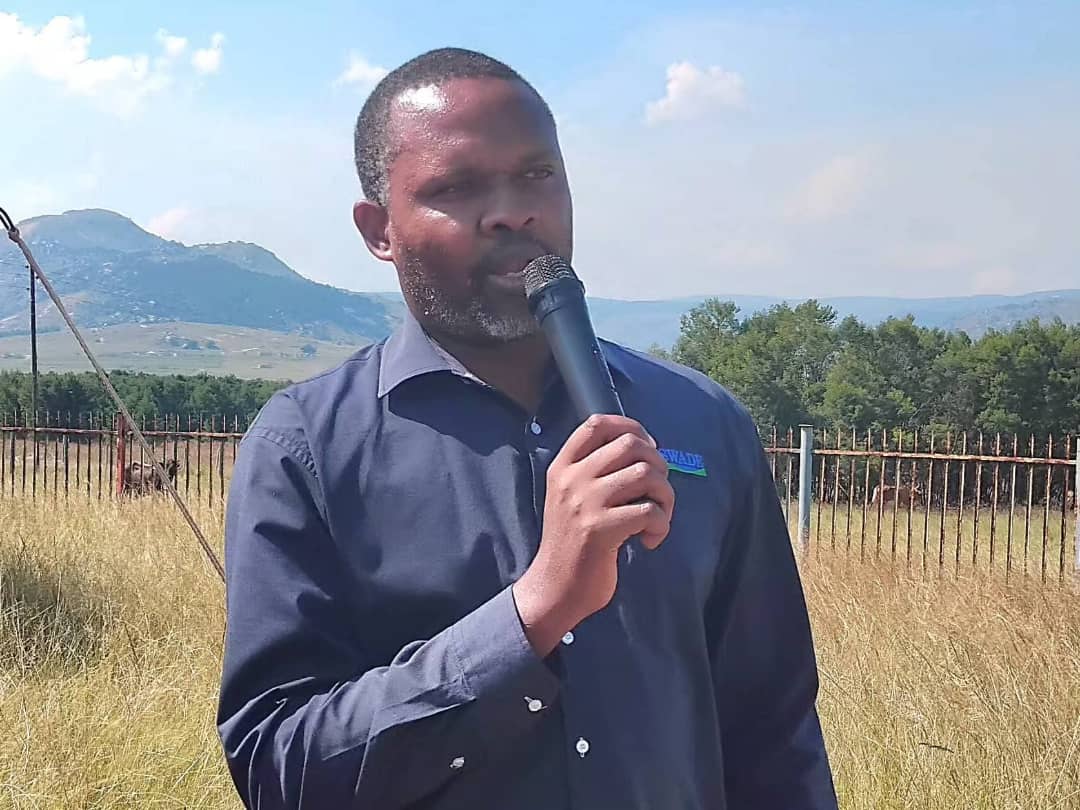
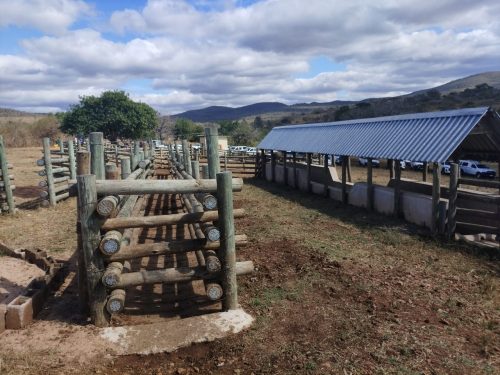
The Ministry, through the Department of Veterinary Services, has also been sensitising farmers on practical livestock protection measures, including the establishment of secure livestock holding areas (gaskits). Chiefs in Mhlambanyatsi have been tasked with identifying land for these facilities, which will enable farmers to keep and feed their cattle within the community, reducing the need to move them to Maphiveni.
Mhlambanyatsi Member of Parliament Bonginkosi Dlamini welcomed the initiative, noting that it brings government closer to farmers while addressing real production challenges on the ground.
Water shortages continue to constrain crop production
Farmers also raised concern over limited access to water, which remains a major constraint to crop production and productivity in the area.
In response, the Minister said the Ministry is working with Micro Projects to improve access to water infrastructure within communities, thereby strengthening crop establishment, field management and yield performance.
“Access to water is critical for agriculture, and we are working to ensure that communities are supported with the necessary infrastructure,” he said.
SAPEMP positioned to drive smallholder commercialisation
On crop production, the Ministry is promoting the Smallholder Agricultural Productivity Enhancement and Marketing Project (SAPEMP), being implemented in collaboration with partners such as EWADE.
The project, valued at E851 million, is designed to transition smallholder farmers from subsistence-oriented production to commercial agriculture through investment in productive infrastructure, improved production systems and stronger market linkages. SAPEMP was approved in 2024 and is scheduled to run through 2031.
During the engagement, farmers were told that the project is being rolled out over several years and is already working with 40 chiefdoms, with the intention of eventually reaching every chiefdom.
Through SAPEMP, farmers are encouraged to organise themselves into production clusters, which can improve coordination, input access, production planning and aggregation for market supply.
This cluster-based approach is expected to improve productivity, strengthen agricultural value chains and create employment opportunities in rural communities.
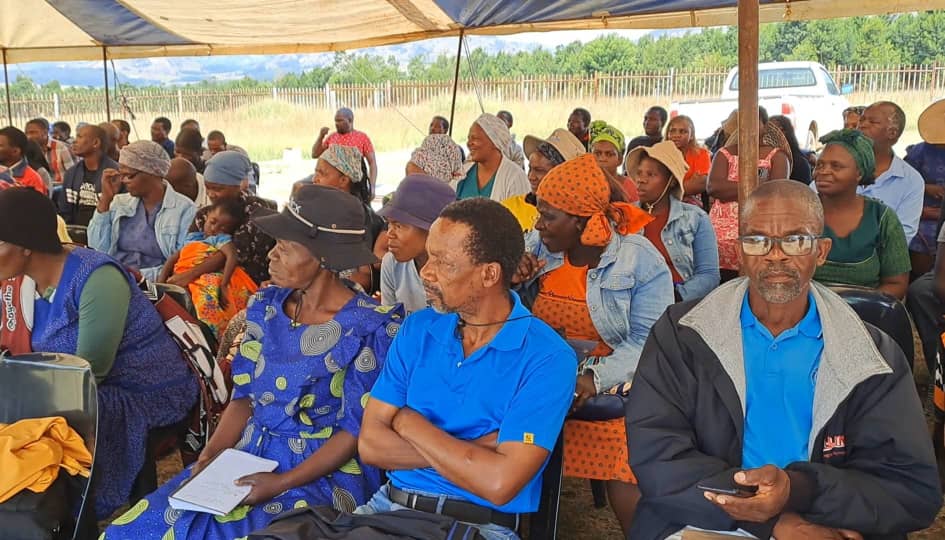
Farmers welcome decentralised agricultural services
Farmers in Mhlambanyatsi welcomed the initiative, describing it as an important step towards improving access to agricultural services and support systems.
Babe Msibi said the community appreciated the Ministry’s visit and the encouragement being given to producers.
“We are happy as a community that the Ministry came to engage with us and encourage us in farming, but the issue of stock theft remains a major concern,” she said.
He also welcomed the decentralisation of services, noting that farmers will now be able to process permits (mapasi) at the Inkhundla, reducing transaction costs associated with travelling to Mbabane.
Mlindazwe Bucopho under Mhlambanyatsi Inkhundla, Njabulo Dlamini, said the initiative has helped farmers understand the range of agricultural support programmes available to them.
“We thank the Ministry for this initiative because it connects us to projects that can support our farming. But the issue of livestock theft is serious because we do not rest,” he said.
Closing the agricultural service delivery gap
The “Taking the Ministry to the People” initiative reflects a broader shift towards decentralised agricultural service delivery, ensuring that rural producers are not excluded from extension support, project opportunities and institutional interventions.
While production constraints such as stock theft and water shortages remain significant, the engagement in Mhlambanyatsi highlights a coordinated effort by government and its partners to provide practical, field-based solutions.
The message from the initiative is clear: supporting farmers, protecting agricultural assets and improving access to productive resources are central to building a stronger, more resilient and more commercially oriented agricultural sector.