
BY: NOSIPHO MKHIZE | JOURNALIST
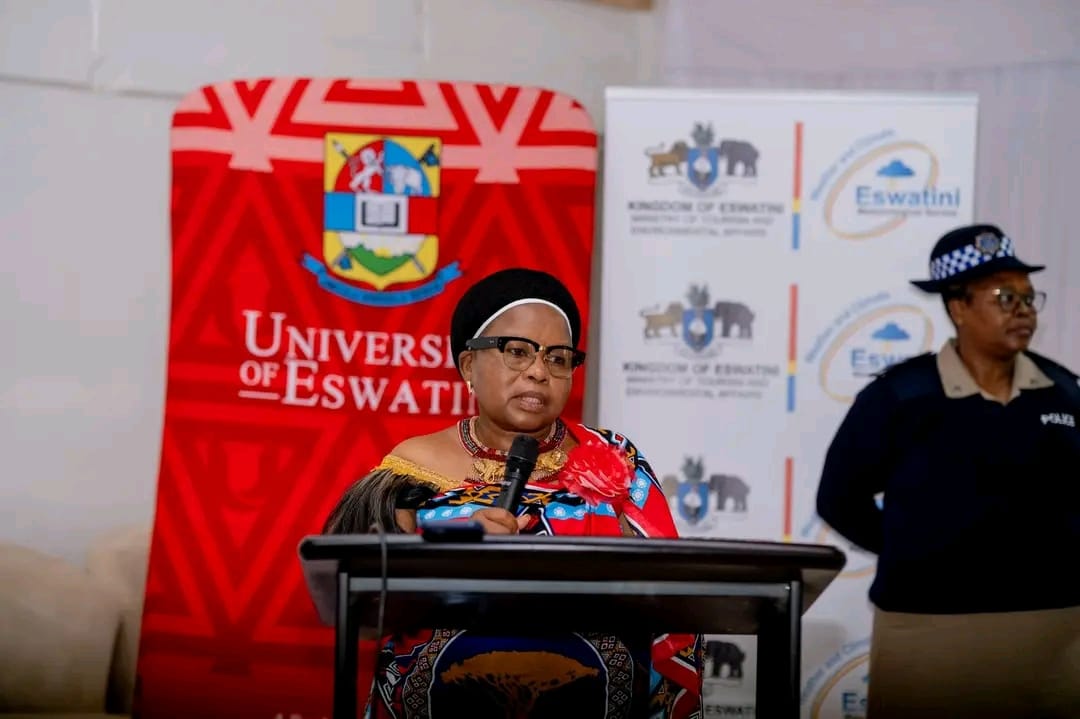
MATSAPHA – Eswatini has launched the Centre for Climate Change and Sustainability Research (C3SR) at the University of Eswatini (UNESWA), a major step expected to strengthen climate research and support climate-smart agriculture as the country faces mounting environmental pressures.
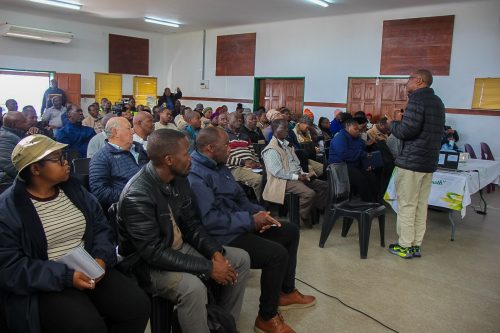
The centre was launched on Thursday, 12 March 2026, at UNESWA’s Kwaluseni campus and is expected to generate research that helps farmers adapt to climate change, improve food security and guide national climate policy.
Minister of Tourism and Environmental Affairs Jane M. Mkhonta-Simelane said climate change was no longer a distant threat, but a present reality already affecting livelihoods and productive sectors, especially agriculture.
“As a country, we are no longer speaking of climate change as a distant threat; it is here, shaping our seasons, our livelihoods and our development priorities,” she said.
“Erratic rainfall, violent thunderstorms and floods are now part of our lived experience.”

Agriculture remains one of the sectors most exposed to climate variability in Eswatini, with many smallholder farmers relying heavily on rainfall for crop production. This leaves farmers vulnerable to shifting weather patterns, water stress and recurring shocks that threaten yields and household incomes.
Mkhonta-Simelane said the new centre would help ensure that climate responses are rooted in science and practical, evidence-based solutions.
“The C3SR represents a bold step to ensure that our climate actions are guided by science, informed by evidence and rooted in local realities,” she said.
“It will transform research into practical solutions that strengthen policies, guide investments and influence sectors such as agriculture.”
She said research produced by the centre should not remain confined to academic reports, but must reach communities, policymakers, investors and the private sector.
“Knowledge must travel beyond reports; it must reach decision-makers, communities and the private sector. It must inform our budgets, shape our infrastructure plans, guide agriculture and influence investment decisions,” she said.
The minister also warned that the cost of failing to act on climate change would be severe.
“We have recently completed a rigorous cost-benefit analysis of our adaptation measures and the findings are clear: the cost of inaction on climate change far outweighs the cost of adaptation,” she said.
“If we fail to act, Eswatini stands to lose an estimated three billion US dollars in economic damages over the coming decades.”
She said the centre would help ensure that climate investments, including those targeting agriculture and land management, are guided by credible local research.
United Nations Resident Coordinator George Wachira, who delivered the keynote address, said the centre could help the country turn climate challenges into development opportunities.

“The Centre for Climate Change and Sustainability Research can play a critical role in translating the climate challenge into a moment of opportunity,” Wachira said.
He said the work of the centre could support climate-smart agriculture, sustainable land management and renewable energy development.
“Responding effectively to climate change requires strong institutions, credible data and evidence-based decision-making that translates science into practical action,” he said.
Wachira also stressed the value of collaboration in addressing the climate crisis, saying the centre would serve as a bridge between research, policy and implementation.
“By bringing together academia, government, civil society and the private sector, the centre will serve as an important bridge between research, policy and action,” he said.
“It will help translate research into practical solutions for communities across Eswatini.”
The centre is also expected to improve climate data and research systems that are critical for early warning systems, crop planning and climate-resilient farming practices.
Minister of Education and Training Owen Nxumalo said universities had a central role to play in solving national development challenges through research, innovation and policy support.
“Universities are not only institutions of teaching and learning; they are engines of research, innovation and evidence-based policy support,” Nxumalo said.
He said climate change required a multidisciplinary response that combines science, technology, policy insight and community engagement.
“Climate change is a multidisciplinary challenge that requires scientific rigour, policy insight, technological innovation and community engagement,” he said.
Nxumalo added that the new centre would strengthen UNESWA’s role in generating knowledge that supports national priorities, including sustainable agriculture and food security.
The establishment of the C3SR is expected to support research into sustainable farming systems, water management, land restoration and climate-resilient crops, all of which are critical to protecting Eswatini’s agricultural sector.
For farmers and agribusiness stakeholders, the centre offers a platform that could help improve productivity while safeguarding natural resources. As Eswatini continues to face climate-related pressures, the launch of the centre marks an important step toward building a more resilient agricultural sector and securing food production for future generations.