
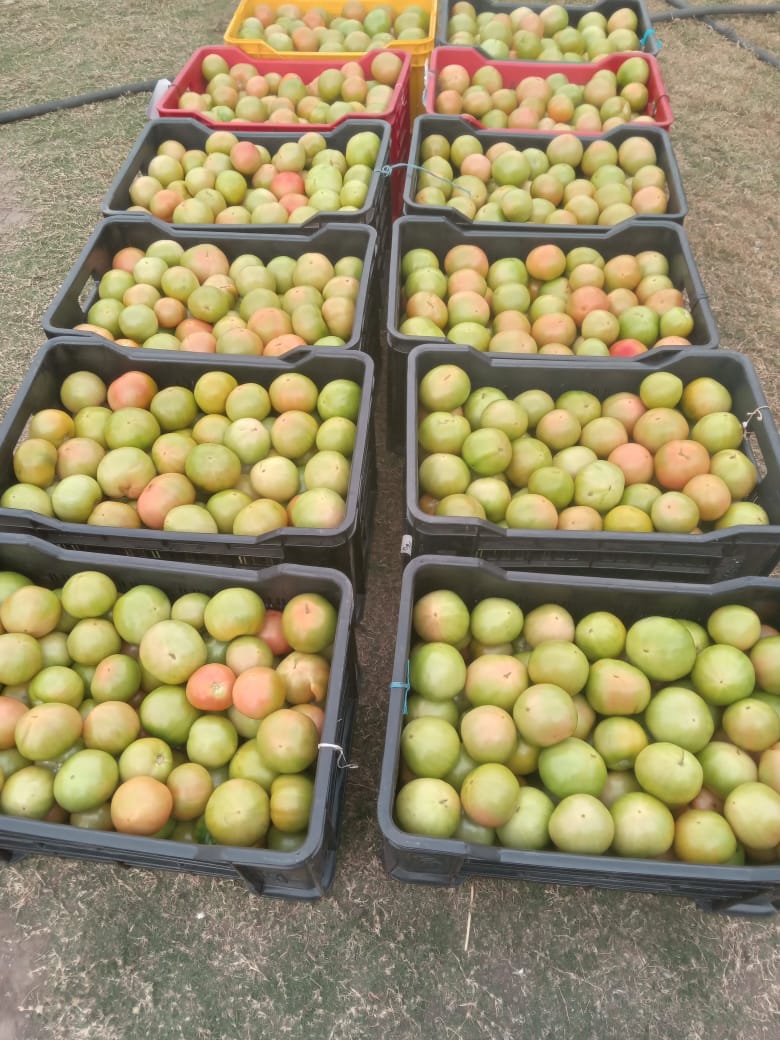
Fresh tomatoes ready for market.
BY SIBUSISIWE NDZIMANDZE | JOURNALIST
MANZINI — In a community where water shortages often limit what farmers can achieve, Welile Hlophe of Sigcaweni East, under Mpolonjeni Inkhundla, has refused to scale down her ambitions, building a thriving horticulture business through resilience, reinvestment and smart production choices.
The horticulture farmer, who produces beetroot, butternut and tomatoes, has steadily built her farming enterprise despite the challenges of limited water availability and rising input costs, currently operating approximately 1.3 hectares under production, with around 6,000 plants across two plots.
Driven by the need to earn a living, Hlophe ventured into commercial farming, gradually growing her enterprise by reinvesting profits back into production, including the purchase of water pipes and irrigation equipment to improve efficiency.
Her journey began in 2012 when she joined a group of 30 farmers. What started as a group-based production system later evolved into an individual farming enterprise after she transitioned to operating independently.
“It was not easy. Water was a big challenge for us,” she said.
For Hlophe, water has been one of the biggest constraints to production. Farmers in her area relied on water abstraction from nearby sources using pumps and shared systems, which were both costly and difficult to manage. At one point, they depended on metered water, with consumption reaching up to 10,000 litres per month, significantly increasing the cost of production.
Another challenge emerged when they were still operating as a group. Through support from Integrated Rural Development (IRD), the farmers received a pump to assist with irrigation. Group members were expected to save money every month after harvest so that the pump could be serviced or repaired when needed.
However, problems arose when some members contributed towards the maintenance fund while others did not. Even those who had not paid still wanted to irrigate their crops when the time came.
This created tension within the scheme, as those who were contributing felt the arrangement had become unfair. It was this experience that pushed Hlophe to make a new decision to leave the group setup and begin farming independently at her home, where she could manage her own production and resources more effectively.
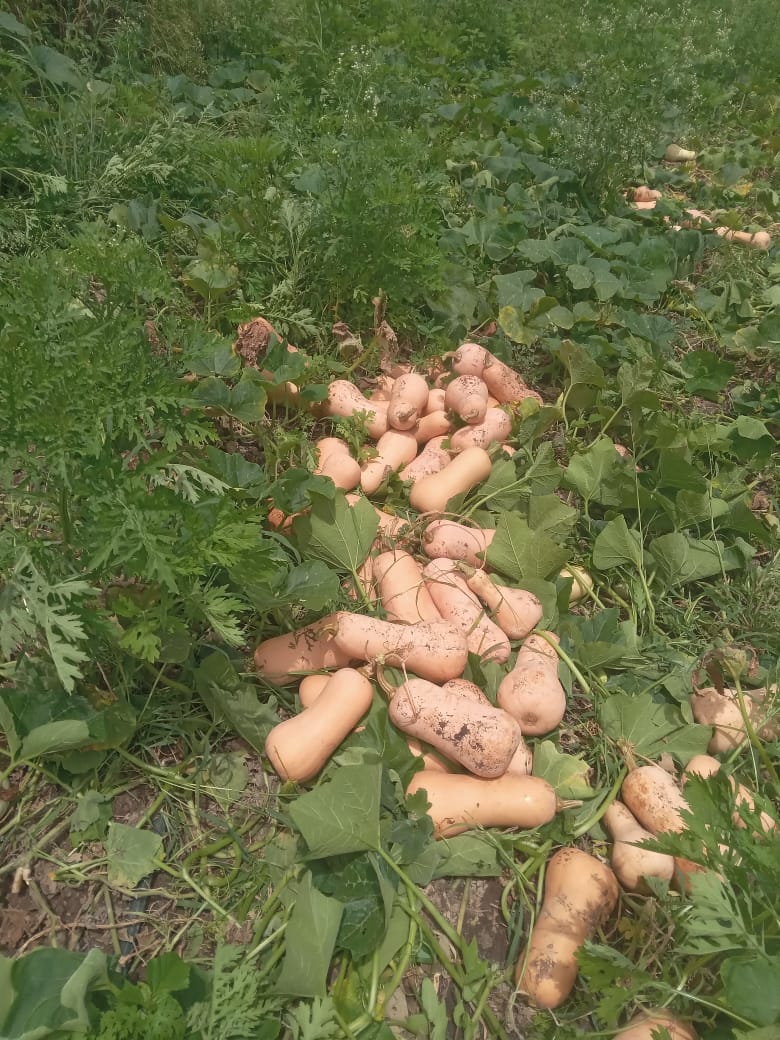
A productive butternut field ready for harvest.
In the early years, irrigation was done manually using pipes, a labour-intensive method that limited field coverage and efficiency.
“We used to irrigate using pipes plant by plant. It was hard work and we could not cover the whole field in a day,” she said.
Despite these challenges, she continued to reinvest in her operation. Using income generated from her produce, she gradually expanded her irrigation capacity by adding more pipes, improving her ability to manage water across the field by drawing it from a nearby river.
To further improve efficiency, she later adopted a drip irrigation system, which has enhanced water-use efficiency and supported better crop performance. The system delivers water directly to the root zone, improving soil moisture management and enabling more uniform crop growth under water-limited conditions.
Like many smallholder farmers, Hlophe initially marketed her produce through informal channels, where price stability and market access were uncertain. Her breakthrough came when extension officers introduced her to the National Agricultural Marketing Board (NAMBoard), encouraging farmers to enter into contract farming arrangements and produce for a defined market.
“We were encouraged to sign contracts so that when we plant, we already know where we will sell,” she said.
This transition marked her shift towards a more market-oriented production system, aligning her cropping decisions with demand.
Although she did not have a formal background in agriculture, Hlophe benefited from training and support from organisations such as Integrated Rural Development (IRD) and Financial Inclusion and Cluster Development (FINCLUDE).
IRD focuses on supporting rural communities with agricultural training, technical support and skills development, helping farmers improve production practices and move towards commercial farming.
FINCLUDE, on the other hand, supports farmers through financial inclusion initiatives, making it easier for smallholders to access funding, inputs and business support services needed to grow their enterprises.
Through these programmes, Hlophe strengthened her knowledge in crop husbandry, input management and production planning, enabling her to operate more efficiently and sustainably.
Today, she practices a crop rotation system, alternating between tomatoes, butternut and beetroot to maintain productivity and ensure continuous market supply.
“When I harvest tomatoes, I plant butternut, and after butternut I plant beetroot,” she said.
This approach supports soil health management, reduces production risk and ensures a steady flow of produce to the market.
Her hard work and consistency have now translated into measurable output. Hlophe supplied 14.53 tonnes of horticultural produce, including deliveries to NAMBoard, earning her second position in Lubombo. She was also awarded an E3,000 input voucher in recognition of her performance.
The achievement highlights how smallholder farmers can transition into commercial-oriented production through persistence, efficient resource use and market alignment.
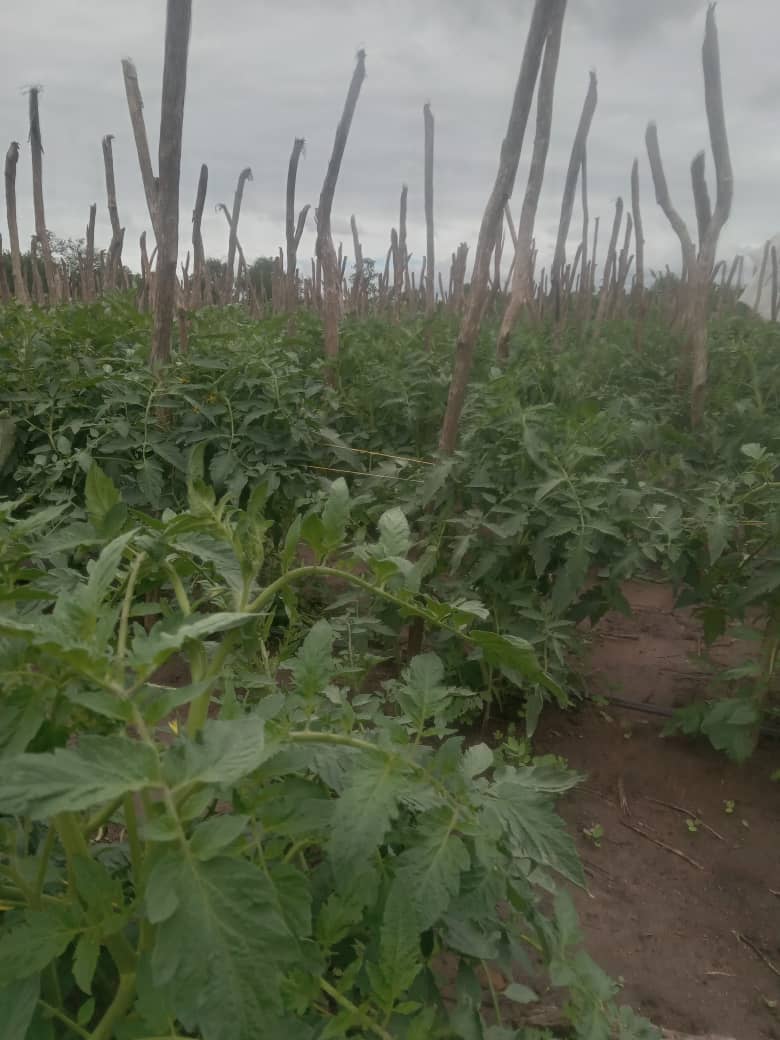
Tomato crop under production.
Looking ahead, Hlophe plans to expand her production area and continue reinvesting in irrigation infrastructure and inputs to improve productivity.
Her advice to fellow farmers is clear: secure the market first, then produce for that market.
Her story is a strong reminder that success in agriculture does not always begin with abundant resources, but with resilience, continuous learning and the ability to adapt.
In Sigcaweni East, where water remains a constraint, Hlophe is demonstrating that resilience, combined with improved production practices, can drive sustainable agricultural success.