

BY AGRIBUSINESS REPORTER
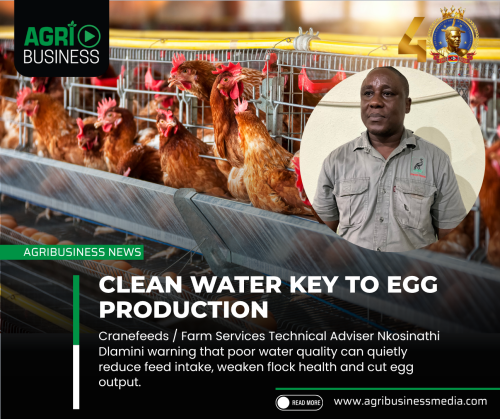
MBABANE – Commercial layer farmers have been urged to treat clean drinking water as a core production input, with Cranefeeds / Farm Services Technical Adviser Nkosinathi Dlamini warning that poor water quality can quietly reduce feed intake, weaken flock health and cut egg output.
He advised that water is one of the most critical nutrients in poultry production and that reduced water intake quickly affects performance.
Speaking during an egg production webinar organised by Agribusiness Media, on Thursay 2 April 2026, Dlamini said many farmers focus on feed but overlook water, yet the two are directly linked. Under normal conditions, healthy birds generally drink about 1.5 to 2 times more water than feed, and consumption rises sharply in hot weather, meaning any interruption in water quality or supply can quickly show in the house.
He said water does far more than quench thirst. It helps move feed through the digestive tract, carries nutrients through the body, supports temperature regulation and helps birds remove waste. That is why even short periods of poor water access can hurt production, while longer deprivation can become dangerous for both young and mature birds.

Dlamini urged farmers to ensure that birds have access to clean water at all times and said water quality should be tested at least once a year. He stressed that the source of water matters, with surface water needing closer monitoring because it is more affected by rainfall, seasonal changes and surrounding activities, while boreholes and deep wells may be more stable but often carry higher dissolved mineral levels.
He said one of the biggest mistakes producers make is assuming that clear-looking water is automatically safe. Water can still carry bacterial contamination or excessive minerals that reduce intake and performance. The presence of coliform bacteria is an indicator that the water source may have been contaminated by animal or human waste, and poor-quality water can interfere with digestion and nutrient absorption and also damage flock health.
Dlamini further warned that water problems are not limited to disease risk. High levels of minerals such as calcium, sodium, magnesium, iron and sulphates can affect taste, reduce palatability, contribute to wet litter and lead to scale build-up in drinker lines and regulators. When water flow is restricted or birds stop drinking freely, feed intake drops and production follows.
He said farmers should pay close attention to water chemistry, especially pH, because it influences both intake and sanitation. A pH range of about 5 to 7 is ideal for poultry water. Water below pH 5 may reduce intake and corrode metal fittings, while water above pH 8 may lower intake and reduce the effectiveness of sanitation programmes.
For producers using private wells or boreholes, Dlamini said routine testing should not be delayed until there is a crisis in the house. Annual checks are recommended for total coliform bacteria, nitrates, total dissolved solids and pH, and immediate testing when the water’s colour, taste or smell changes, after flooding, or after repairs to the system. Those same checks can help poultry farmers identify hidden problems before they start showing up in flock performance.
He also encouraged farmers to keep drinker systems clean and properly maintained, saying water hygiene must go hand in hand with good feeding and house management. Dirty lines, mineral deposits and biofilm build-up can all undermine water delivery, especially in commercial systems where consistency is critical across the laying cycle.
A good feed programme alone will not carry a flock if water quality is poor. For farmers looking to improve egg numbers, shell quality and flock health, Dlamini advised that one of the most practical steps is to make clean, tested water part of routine management rather than an afterthought.
NKOSINATHI DLAMINI CAN BE CONTACTED AT 76025314 (WHATSAPP)