

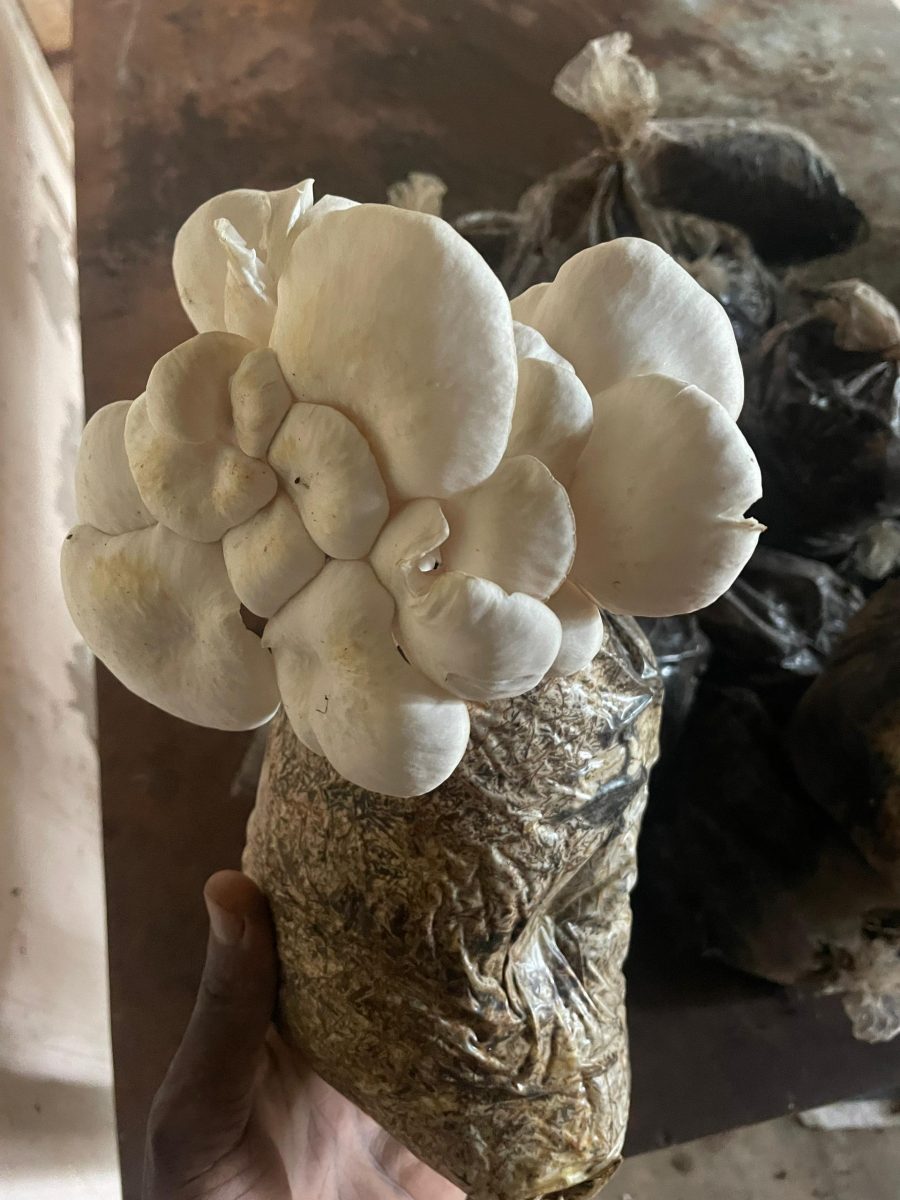
Oyster mushroom sample ready for the market.
BY SIBUSISIWE NDZIMANDZE | JOURNALIST
MANKAYANE – What began as a free training opportunity has grown into a promising agribusiness venture for Meluleki Mkhonta, a young farmer from Velezizweni in Mankayane who is turning oyster mushroom production into a reliable source of income while building a diversified farming business.
Mkhonta, who is studying Environmental Science at the University of South Africa (UNISA), entered mushroom farming in 2021 after attending a free workshop hosted by the Malkerns Agricultural Research Station under the Ministry of Agriculture.
The training equipped him with practical knowledge on mushroom production, from substrate preparation to hygiene management, and he wasted no time putting that knowledge into practice.
“I attended the workshop and gained knowledge, and from there I started farming oyster mushrooms,” he said.
Currently, Mkhonta has 120 mushroom bags in production and has already produced two batches this year, yielding four 20-litre buckets of oyster mushrooms.
A market with a clear gap
Oyster mushroom farming remains relatively underdeveloped in Eswatini despite strong and growing demand. Studies on the sector have previously shown that the country has relied heavily on imports, with more than 95% of mushrooms consumed locally coming from outside the country, highlighting a significant gap for local producers to fill.
This supply gap presents a clear opportunity for farmers like Mkhonta who are willing to produce consistently and meet market demand.
Turning grass into a valuable farming input
Mkhonta explained that mushroom production starts with preparing the substrate, usually straw grass or sawdust.
The grass must first be cut and ground, a process normally done using specialised machines at the research station. However, instead of being limited by lack of equipment, he found a practical solution. He invested in a grass cutter and now cuts grass for community members, earning income while also collecting the raw materials needed for his mushroom production.
“I cut grass for people and in return I also get the grass to use in my farming,” he explained.
His approach reflects how ordinary grass, often seen as waste, can become a valuable agricultural input. In environmental terms, grass is a form of organic biomass. Instead of letting it go to waste, Mkhonta is converting it into a growing medium for oyster mushrooms, turning a common natural resource into food and income.
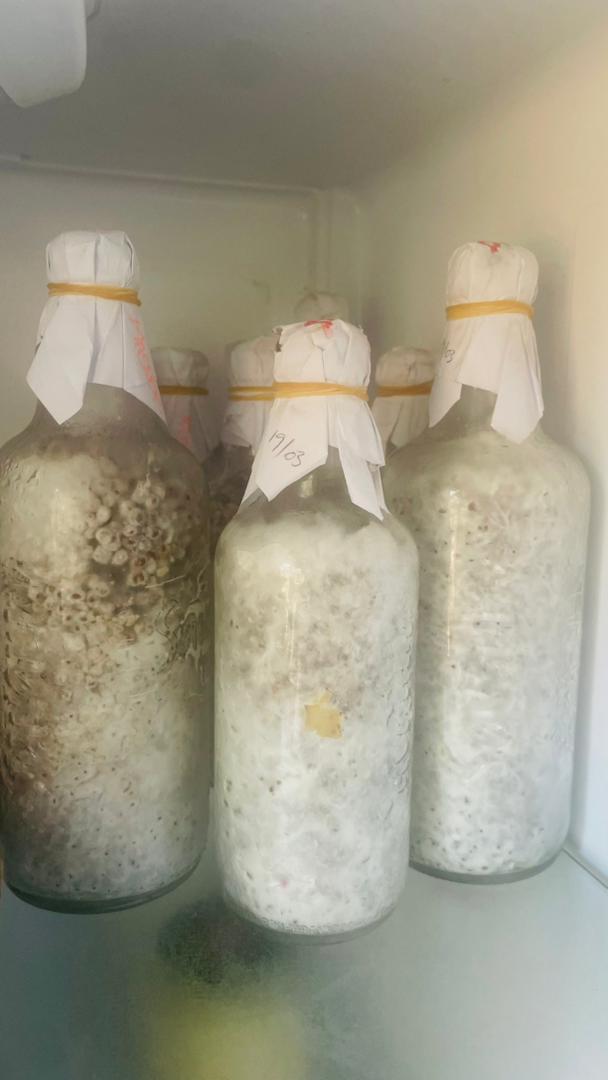
Oyster mushroom spawn.
The grass is left to dry before being mixed with bran to improve nutrient content. In some cases, he uses sawdust, which he mixes with about 2% lime to reduce acidity. In areas such as Big Bend and Simunye, molasses can also be added to enhance the substrate.
Step-by-step production process
Once the substrate is ready, it is packed into 1kg plastic bags, depending on the scale of production.
Sterilisation follows, a critical step to eliminate harmful bacteria and ensure proper mushroom growth. Mkhonta said the bags are boiled at 100 degrees Celsius for four to six hours.
While the research station has specialised equipment for this process, he has built his own system to reduce costs and improve convenience.
After boiling, the bags are left to cool before mushroom spawn is added. The bags are then sealed again and placed in a dark room for incubation.
Within about six weeks, the bags turn white, indicating successful colonisation and healthy growth.
Mkhonta sources his spawn from the Malkerns Agricultural Research Station, noting that one bag of spawn can produce up to 30 bags of mushrooms.
Scaling for consistent supply
His strategy is to produce in cycles to ensure consistent supply, a key requirement for accessing larger markets.
“When you approach big buyers, they want consistency. They want someone who can supply all the time,” he said.
He currently supplies restaurants, including Chinese-owned establishments, as well as local customers.

Meluleki Mkhonta, oyster mushroom farmer from Mankayane, Velezizweni.
Lessons from experience
Mkhonta emphasised that input quality is critical for success. He recalled a loss he incurred after using old hay, which affected his entire batch.
“I once bought hay that was too old and I had to dispose of the whole batch,” he said.
Diversifying and empowering others
Beyond mushrooms, Mkhonta has expanded into tomato production and broilers, building a more resilient farming enterprise.
He is also sharing his knowledge by offering training to others, saying mushroom farming is simple, profitable, and accessible even for people with full-time jobs.
“This is something even employed people can do. It is simple, it has a market, and it makes money,” he said.
He encouraged young people to rethink their approach to education and employment.
“Young people must not only go to school and wait for jobs. The knowledge they gain should be used as a foundation to start businesses and make money,” he said.
A growing opportunity for youth
Mkhonta’s journey reflects the growing potential of high-value crops such as oyster mushrooms in Eswatini.
With low space requirements, relatively short production cycles, and strong market demand, mushroom farming is emerging as a practical entry point for youth in agriculture.
His story also shows the value of circular farming systems, where materials such as grass can be reused productively instead of being discarded. By turning biomass into a substrate for mushrooms, Mkhonta is demonstrating how local resources can be transformed into a viable agribusiness.
His journey shows how access to training, combined with innovation and determination, can turn a simple idea into a sustainable enterprise in a market that is still largely open for local producers.
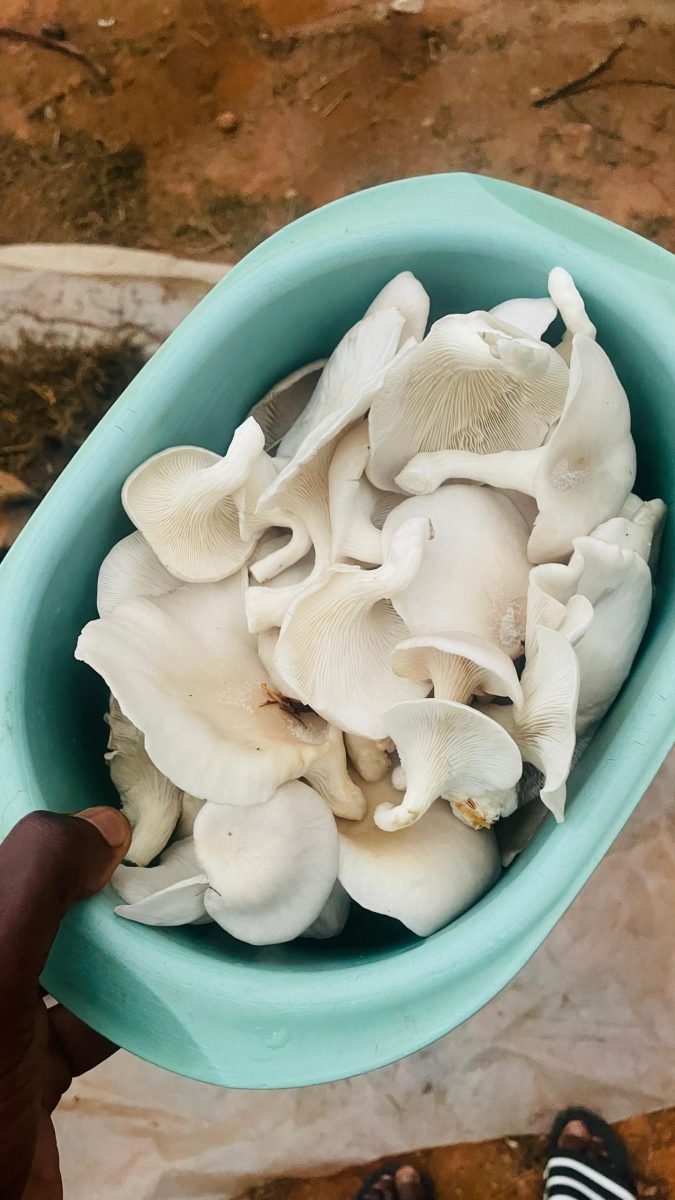
Oyster mushrooms ready for the market.