


BY SIBUSISIWE NDZIMANDZE | JOURNALIST
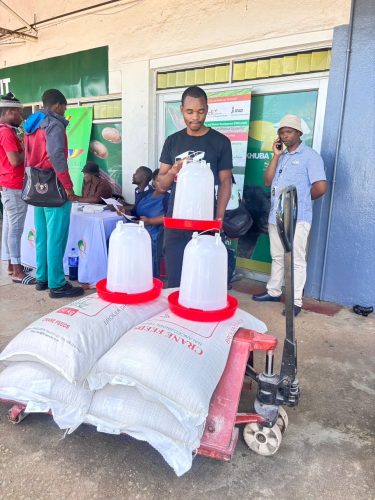
MANZINI — Broiler farmers were today told to “scale up or miss out” at the Broiler Production Farmers Day, where industry players warned that rising demand continues to outstrip supply across Eswatini’s poultry sector.
Eswatini’s 2024 animal production report estimates domestic chicken consumption at 22,205.69 tonnes, against local broiler production of 17,104.04 tonnes, highlighting a production shortfall that continues to be supplemented through imports.
Speaking during the Broiler Production Farmers Day held in Manzini, Mncedisi Simelane, Technical Adviser at Feedmaster Eswatini, said the market for broilers is strong, structured and driven by consistent throughput requirements from processors.
“The market is there. Feedmaster, together with Umbuluzi Farm Chickens, require around 3,000 chickens per hour and approximately 28,000 to 30,000 chickens per day,” Simelane said.
He urged farmers to transition from smallholder production to commercially viable broiler operations capable of meeting off-take agreements.
“Farmers need to upscale their operations. You can start from 500 birds and above, but the goal should be to reach volumes that allow for consistent supply into the market,” he said.
The message aligns with broader global trends, where poultry remains the fastest-growing protein segment. However, stakeholders emphasised that participation in this growth requires scale, consistency, biosecurity compliance and market alignment.
MARKET ACCESS AND COLLECTIVE MARKETING
Simelane also encouraged farmers to adopt collective marketing models, noting that aggregation can improve supply consistency and strengthen access to formal markets.
“If you cannot meet the market alone, join forces with other farmers. As a group, you can supply larger volumes and access better markets,” he said.
He further highlighted the importance of integrating into the broader poultry value chain, including access to feed, veterinary services and reliable market channels, while also urging farmers to expand their operations by tapping into financing opportunities such as loans provided by the Eswatini Agricultural Development Fund (EADF) and the Youth Enterprise Revolving Fund (YERF).
FINANCING OPTIONS FOR FARM EXPANSION
Fanele Dlamini from the Eswatini Agricultural Development Fund (EADF) outlined financing instruments available to support both start-up and expansion phases of poultry enterprises.
He said start-up farmers can access financing ranging from E5,000 to E3 million, while established farmers can access between E5,000 and E5 million for scaling operations.
“EADF funding focuses on key investment areas including irrigation infrastructure, on-farm infrastructure, fencing, equipment and implements, as well as production inputs to support farmers in scaling their operations,” Dlamini said.
He added that loans are structured at an interest rate of 9 percent per annum, making them accessible for agribusiness expansion.
Dlamini also encouraged farmers to develop practical, working farm plans rather than relying on formal documents.
“You don’t need to buy a business plan. Clearly outline your production goals and consult your extension officer to align your plan with technical requirements before approaching EADF,” she said.
DOMESTIC MARKET GAP PERSISTS
The case for scaling up is further supported by Eswatini’s import profile, which indicates continued reliance on external supply to meet domestic demand.
In 2024, the country imported 2,815.83 tonnes of mechanically deboned meat (MDM), 1,284.72 tonnes of processed chicken, and 116.42 tonnes of other chicken products, reflecting a gap between local production and consumption.
Stakeholders say there is significant room for local producers to increase output and capture a larger share of the domestic poultry market.
FARMER RESPONSE ON THE GROUND
For farmers, the insights are already influencing production planning and enterprise scaling.
Celucolo Mavuso, a broiler farmer from Vusweni who attended the training, said the session had helped him better understand market requirements and production targets.
“I currently have a flock of 500 broilers, but this workshop has helped me understand the size of the market and what is required,” Maseko said. “Now I know I need to work towards increasing my flock size and improving my production system to meet that demand.”
His response reflects a shift towards market-oriented production systems, where output is aligned with demand rather than subsistence needs.
TECHNICAL GUIDANCE AND FLOCK MANAGEMENT
From a production standpoint, farmers were also guided on improving flock management practices, housing efficiency and biosecurity protocols.
Penny Mabuza from the Ministry of Agriculture advised farmers to implement structured production cycles to improve performance and reduce disease risk.
“Farmers should allow at least a two-week downtime between batches before introducing new chicks,” she said, noting that this period is critical for cleaning, disinfection and breaking disease cycles.
She also emphasised the importance of ventilation management in poultry housing.
“When opening for the chickens, the curtains should be pulled down like a car window to regulate airflow properly,” Mabuza said.
A SECTOR WITH STRONG COMMERCIAL POTENTIAL
The insights shared during the session point to a sector with strong commercial potential, supported by rising demand, established off-take channels and available financing mechanisms.
However, stakeholders emphasised that unlocking this potential will depend on farmers’ ability to adopt commercial production systems, maintain consistent supply, implement good agricultural practices (GAPs) and integrate into structured value chains.
With a clear domestic supply gap, strong processor demand and growing institutional support, broiler production is increasingly positioned as a viable pathway for youth and smallholder farmers to build sustainable, market-driven agribusinesses.