


BY SIBUSISIWE NDZIMANDZE | JOURNALIST
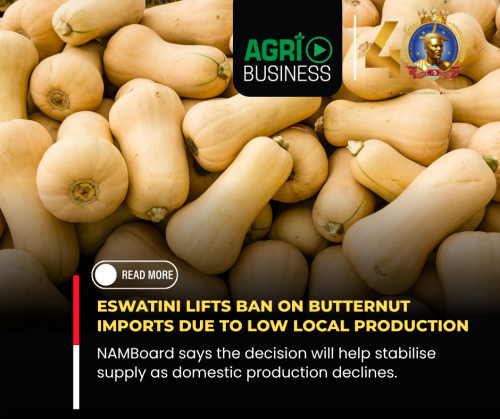
MANZINI – Eswatini has lifted the ban on butternut imports after local production fell short of meeting national demand.
The National Agricultural Marketing Board (NAMBoard) announced that the importation of butternut will resume with effect from 23 March 2026 following a reassessment which found that local supply is no longer enough to satisfy the market.
The decision comes just three months after the country had restricted butternut imports on 22 December 2025, when local production had improved and was considered sufficient to meet domestic demand. That move was meant to protect local farmers and give priority to produce grown in Eswatini.
However, the latest development shows that local production has since declined, forcing authorities to reopen imports to bridge the supply gap and ensure continued availability of butternut on the market.
Butternut remains an important crop in Eswatini’s horticulture sector. According to the Ministry of Agriculture’s 2019/20 Annual Performance Report, it was the top exported vegetable through the Encabeni Fresh Produce Market, with exports of about 82.57 tonnes valued at E291,800.
NAMBoard’s 2019/20 Annual Report also shows that butternut was among the most traded commodities on the domestic market, with around 325 metric tonnes sold at a value of about E1 million. This highlights the crop’s importance for both local consumption and trade.
The reopening of imports shows that while Eswatini has made progress in butternut production, local farmers are still struggling to maintain enough output consistently throughout the year.
NAMBoard said market decisions such as restricting or reopening imports are informed by supply assessments. These are supported by data collected through the Eswatini Horticulture Information System (EHIS), where farmers register their crops, planting schedules and expected harvest volumes.
This information helps the board monitor production trends and decide when local supply is enough to support import restrictions, or when imports need to resume to avoid shortages.
For consumers and traders, the reopening of imports is expected to help stabilise supply. For farmers, it serves as a reminder of the need for more reliable and consistent production to meet market demand.
In the end, the decision reflects the challenge of balancing farmer protection with food security, as authorities work to ensure the market remains supplied even when local production drops.