

BY NOSIPHO MKHIZE | JOURNALIST
MANZINI – As climate change, water scarcity, and land degradation continue to threaten livelihoods across Eswatini, a new funding window is giving communities an opportunity to turn environmental challenges into practical solutions.
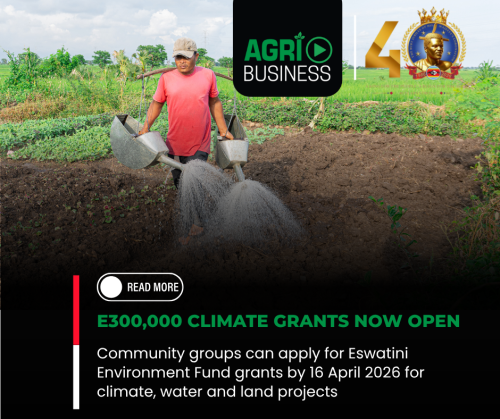
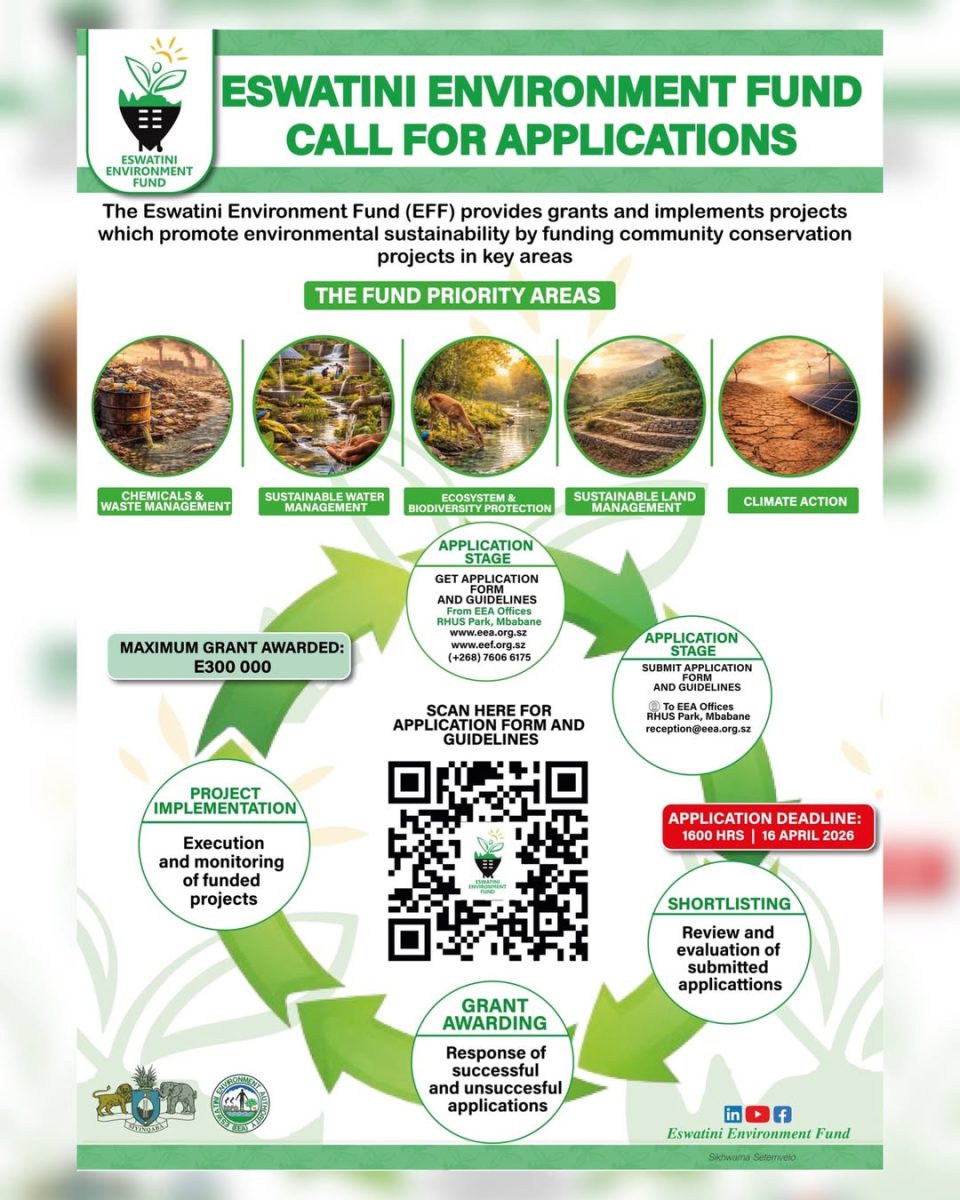
The Eswatini Environment Fund (EEF) has opened applications for its 2025/2026 funding cycle, with grants of up to E300,000 available for community-driven projects that address some of the country’s most pressing environmental challenges.
The opportunity comes at a time when many farmers and rural communities are under growing pressure from erratic rainfall, declining soil quality, and increasing vulnerability to climate shocks. For communities with practical ideas, the Fund offers more than financial support. It provides a pathway for ordinary emaSwati to lead local solutions that protect natural resources while strengthening livelihoods.
The Eswatini Environment Fund is not a new initiative. It is a legal entity established under Section 20 of the Environment Management Act of 2002, with its administration overseen by the Eswatini Environment Authority (EEA). Its operations are further guided by the Eswatini Environment Fund Regulations of 2010.
The Fund exists to mobilise resources for programmes and projects that protect, conserve and restore the environment, while supporting the sustainable management of natural resources and encouraging community participation in these efforts.
Over the years, the Fund has grown into an important grassroots financing mechanism for environmental action in Eswatini. According to data published by the EEF, more than 80 community projects have benefited from more than E10 million in grants. These projects have covered key priority areas, including sustainable land management, chemicals and waste management, ecosystem and biodiversity protection, sustainable water management, and climate change adaptation.
Its impact can already be seen in communities where land restoration, erosion control and water-related interventions are changing lives. One example is the Yonge Nawe Manyeveni Land Rehabilitation Project in the Kubuta constituency, where 14 hectares of degraded land were restored through support from the Fund and partner institutions.
The project included erosion control measures, vegetation restoration, indigenous tree planting and livelihood components such as beehives and fruit trees, demonstrating how environmental rehabilitation can be directly linked to household resilience and income generation.
This year, the Fund is once again focusing on five key sectors that reflect Eswatini’s most urgent environmental pressures: sustainable land management; climate change adaptation and mitigation; sustainable water management; chemicals and waste management; and ecosystem, habitat, and biodiversity protection and sustainable use.
These themes are particularly relevant to farmers, whose productivity and livelihoods depend heavily on healthy soils, reliable water supplies, and resilient ecosystems.
The EEF’s appeal lies partly in its inclusivity. It is not reserved for large institutions or highly experienced grant applicants. Eligible applicants include community-based organisations, non-governmental organisations, schools, youth groups, and other local structures. The Fund’s design reflects the recognition that some of the most practical and sustainable environmental solutions emerge from communities living closest to the problem.
For farmers, this opens up real possibilities. Groups working on small-scale irrigation, catchment protection, wetland restoration, soil conservation, rangeland improvement, waste recycling, or climate adaptation initiatives may find in the Fund an opportunity to move their ideas from concept to implementation.
With grants of up to E300,000 available, the EEF can support projects with the potential to deliver measurable environmental and social benefits at the community level.
The application process requires interested groups to complete the prescribed forms and submit supporting documents, including a detailed concept, local authority approval, and information on beneficiaries and project leadership. The guidelines also state that at least 80 percent of the grant should go directly towards environmental action rather than administration, while in-kind support from communities and stakeholders is encouraged.
Funding, however, is only one part of the process. The Fund places strong emphasis on accountability and implementation, with supported projects expected to demonstrate clear environmental value, realistic planning, and community ownership.
In this way, the EEF is positioning itself not simply as a grant provider, but as a vehicle for results-driven grassroots environmental action. That approach aligns with its broader mission of promoting environmental sustainability at the grassroots level in Eswatini.
For the 2025/2026 cycle, government has allocated E2 million to support innovative environmental solutions through the Fund, with the application deadline set for 16 April 2026, according to a public call for applications notice shared by the Eswatini Environment Fund (EEF) on its official Facebook page. Application forms are available from Eswatini Environment Authority offices and online through the official EEA and EEF platforms.
In a country where environmental sustainability and livelihoods are deeply intertwined, the Eswatini Environment Fund is emerging as an important instrument of hope and action. For farmers, youth groups, and rural communities facing the realities of climate change and natural resource pressure, this is more than a call for proposals. It is an invitation to build practical solutions from the ground up.