


BY: PHESHEYA KUNENE | EDITOR
EZULWINI — Eswatini’s newly enacted Nuclear Radiation and Safety Act No. 17 of 2025 is being positioned as a major new safeguard for the country’s food systems, livestock, land and environment, with government saying the law will regulate radiation use tightly while opening the way for safer and more productive applications of nuclear science in agriculture.
The Act provides for the safe, secure and peaceful use of nuclear and radiation technology, while protecting people, animals and the environment from the harmful effects of ionising radiation.
At face value, it is a safety law. In practice, it could become an agriculture law too.
That is because the legislation creates the legal framework for licensing, inspection, enforcement and oversight of radiation sources and related activities. For farmers, that matters because nuclear techniques are not only about hospitals or laboratories. They are also used in crop improvement, food preservation, pest control, soil analysis and water management. Without clear rules, those benefits can be delayed or misused. With regulation, they can be applied more safely and more confidently.
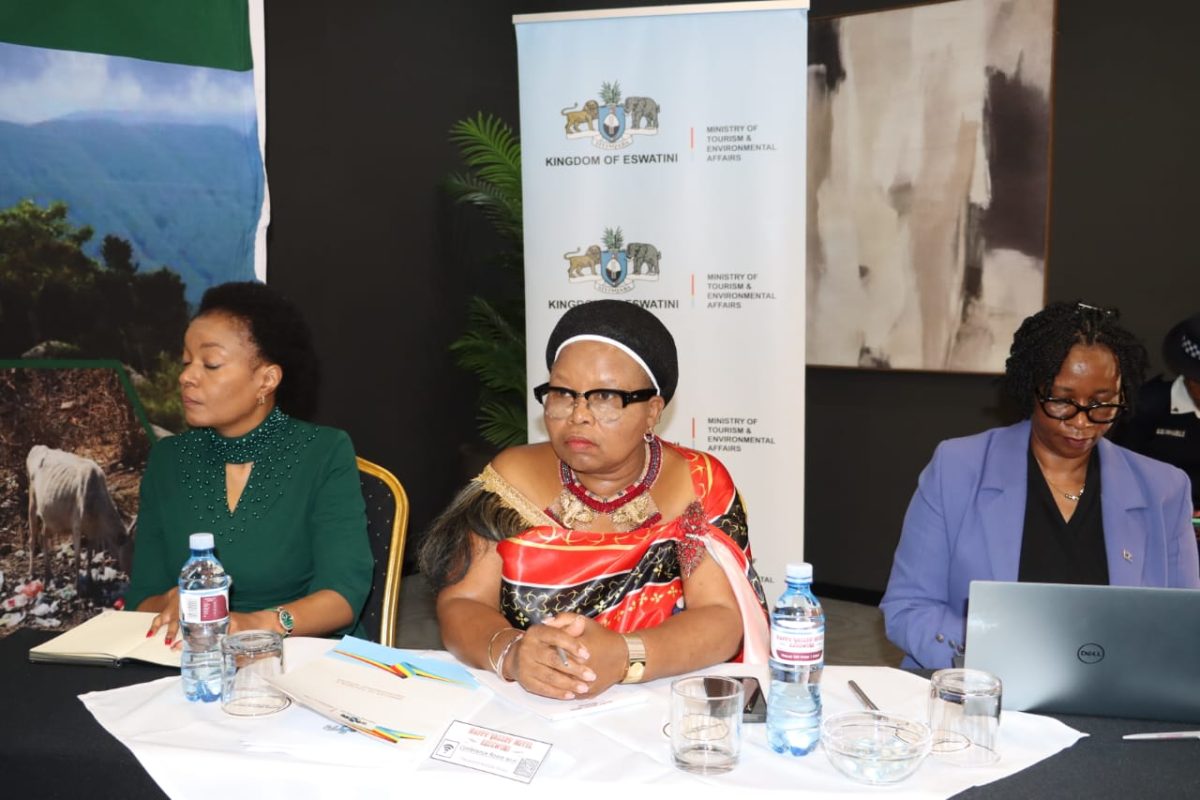
The Ministry of Tourism and Environmental Affairs moved quickly to shape public understanding of the law, convening experts, journalists and government communication officers at Happy Valley Hotel and Resort for a media capacity-building workshop on nuclear and radiation issues. The workshop focused on unpacking the new legislation and strengthening public communication around its purpose, risks and benefits across sectors such as agriculture, healthcare and industry.

Opening the workshop, Minister Jane Mkhonta-Simelane made it clear that government wants the law explained properly, not sensationalised. She urged journalists and communication officers to educate the public with accurate information and said the role of the media was critical in helping emaSwati understand how the Act protects the nation and sectors such as agriculture.
“The Nuclear and Radiation Safety Act is a proactive measure to regulate the use of nuclear materials and radiation sources,” she said.
“It provides a framework for robust licensing, inspection, and enforcement, ensuring that all activities are conducted safely and responsibly.”
She also warned that misinformation could breed fear and hinder progress, adding that the country needed clear and consistent communication so the public could understand why the law was necessary and how it would benefit the nation.
That message lands in a country where agriculture still matters deeply. Recent World Bank analysis says agriculture contributes about 8.1 percent of GDP, while FAO data places the sector at around 12.2 percent of employment. IFAD says about 75 percent of Eswatini’s people live in rural areas and more than 70 percent depend on small-scale agriculture for income and subsistence. In other words, when agriculture is protected and made more productive, the effects run far beyond the field.
That is why the agricultural implications of the law are significant.
One of the clearest opportunities lies in mutation breeding, a nuclear-assisted technique used to develop improved crop varieties. The International Atomic Energy Agency says mutation breeding has been used since the 1930s to accelerate the development of useful agronomic traits in plants. It has helped produce crops with improved tolerance to drought, salinity, pests and disease. For Eswatini, where climate shocks and unreliable rainfall continue to threaten yields, that could be a powerful tool in developing tougher crop varieties suited to local conditions.

That matters especially for maize. According to the World Bank’s 2025 Eswatini Agriculture Sector Review, more than 90 percent of the country’s maize is produced by smallholders, yet the average maize yield in 2024 was only 1.2 tonnes per hectare. That is a low figure for a staple crop on which so many households depend. If nuclear-assisted breeding helps deliver harderier, drought-resilient and better-performing varieties, it could improve productivity where the need is greatest.
Another major application is food irradiation, which can improve food safety and extend shelf life. FAO and technical literature on nuclear applications in food systems show that irradiation can reduce harmful microorganisms, improve preservation and cut spoilage losses. For farmers and agri-processors, that means produce and animal products can stay safe for longer, travel farther and reach markets in better condition. In a country where post-harvest losses and food safety remain serious concerns, that is not a small gain. It is a direct value-chain benefit.
Then there is the soil itself. Nuclear and isotope-based techniques are used internationally to analyse soil fertility, nutrient movement and water use efficiency. These methods help determine how fertiliser behaves in the field, how plants absorb nutrients and how water can be used more effectively. For farmers, that can translate into smarter fertiliser application, stronger soils, higher productivity and less waste. It also means agricultural land can be managed more scientifically at a time when pressure on soils is increasing.
The law also matters for livestock and land protection because it is not only about enabling science. It is about controlling risk. Radioactive materials and radiation sources can be dangerous if poorly managed. They can contaminate land and water, threaten human and animal health and create costly environmental damage. That is why the Act’s licensing, inspection and enforcement powers are so important. They are the guardrails that allow beneficial technology to be used without exposing farmers, consumers or ecosystems to unnecessary danger.

At the workshop, several participants framed the legislation in exactly those terms.
Sandile Nxumalo of Pro Media News said the law was “an important step for responsible communication” and added that journalists now had a duty to explain the science correctly so the public understood how the Act protects food systems, land and the environment.
Magman Mahlalela of NMDA said the law provides “a structured framework” for how nuclear technology can be applied safely in sectors such as agriculture, and said that with proper regulation it can help improve crop development and strengthen food security while ensuring safety standards are upheld.
Nompilo Mncina, a government communication officer, said the Act equips the country with “strong safeguards and regulatory tools,” and added that the responsibility now is to ensure emaSwati understand that the legislation is about safety, innovation and protecting the nation’s future.
For farmers in the room, the issue was simpler and more immediate. Emmanuel Mkhatshwa, a livestock farmer, said: “As farmers we welcome anything that improves agriculture and protects our land and animals. If this technology can help develop stronger crops and safer food systems, then it is a positive step for farmers and the country.”
There was also cautious support from organised agriculture. ESNAU chief executive Tammy Dlamini described the law as a potentially important tool for farmers, especially if it strengthens protection and improves agricultural outcomes, although he said he would share more after studying the Bill in detail.
That note of caution is fair. The Act itself will not suddenly make crops drought-proof or transform farms overnight. Laws do not produce harvests. But they do shape what becomes possible. This one gives Eswatini a rules-based platform to regulate and eventually scale beneficial nuclear applications in food and farming while keeping public safety at the centre.
That could prove timely. IFAD says its current Eswatini strategy is aimed at reducing rural poverty and improving sustainable food and nutrition systems through more inclusive and resilient agricultural commercialisation. In that context, a law that supports safer innovation in breeding, food safety, soil management and environmental protection could become an important part of the country’s agricultural modernisation story.
The bigger picture is this: Eswatini has not passed a nuclear law for symbolism. It has passed one to regulate a field of science that can either be dangerous if neglected or highly useful if managed well. For farmers, the promise lies in better crops, safer food, healthier soils and stronger protection for land and livestock. For the country, the test will be whether the law is implemented firmly, communicated clearly and linked to practical agricultural needs on the ground.
If that happens, the Nuclear Radiation and Safety Act may come to be seen not only as a safety statute, but as a quiet but significant step towards a more resilient food system and a more scientifically equipped agricultural future.