


BY SIBUSISO MNGADI
MOTSHANE — A Hhohho horticulture farmer who broke into NAMBoard’s top three producers says the recognition has cemented farming as her full-time career, as pressure grows on Eswatini’s growers to produce smarter, meet market standards and farm with profit in mind.
Sinegugu Mabuza was recognised on 5 March 2026 during the National Agricultural Marketing Board Farmer Roadshow at Motshane RDA, where she emerged among the region’s top three achieving farmers in horticulture production. She was honoured alongside Njabulo Madlopha and Sjabu Mavimbela, with the winners receiving input vouchers to support expansion and continued production.
For Mabuza, the award was not just ceremonial. “This has motivated me and I will keep pushing in farming because it is now my career,” she said.
Her remarks gave the clearest human face to NAMBoard’s message at the roadshow: Eswatini’s horticulture sector can no longer afford casual farming, poor planning and weak market coordination if farmers are to survive price pressure, losses and rising production risks.
At Motshane, farmers were taken through the hard business side of horticulture — producing for demand, understanding how prices are formed, reducing post-harvest losses, meeting grading standards and complying with formal market requirements. They were also urged to register with NAMBoard and capture their production details under the Eswatini Horticulture Information System, a tool meant to improve sector planning and reduce costly market gluts.
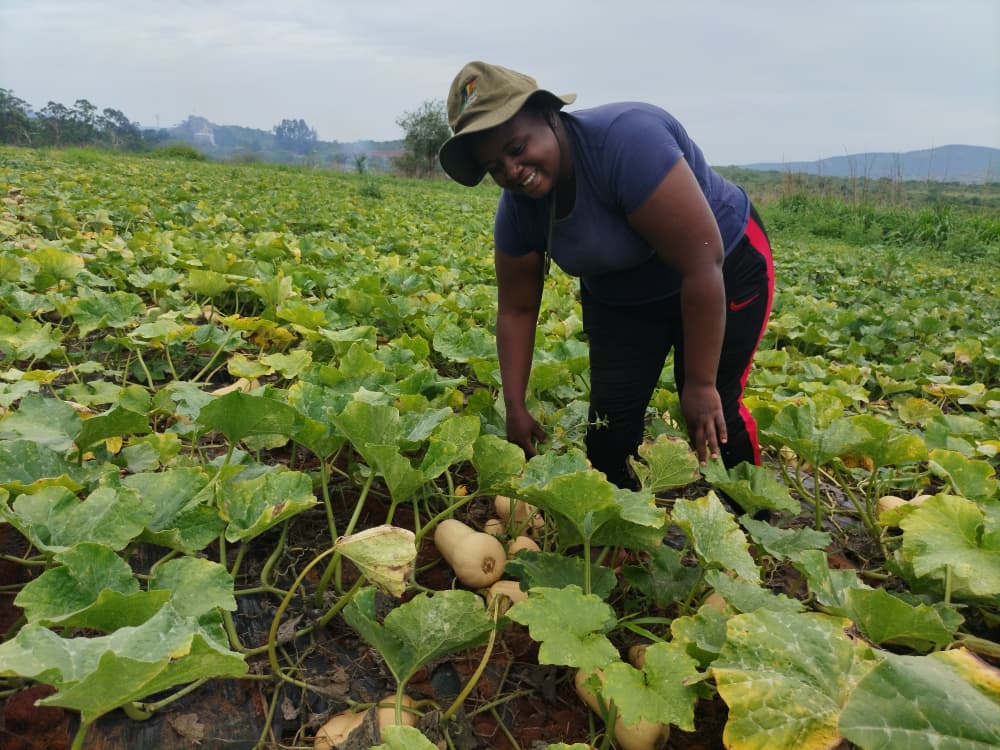
Mabuza’s own farming story helps explain why she stood out.
Mabuza has built her enterprise around butternut and other vegetables using drip irrigation, mulching, shade netting and a borehole-fed water system. She describes farming not as a pastime, but as a business built on planning, discipline and adaptation.
She is now setting her sights on onions, convinced the crop offers a strong commercial opening. “I have applied for the subsidy programme so I can grow onions during the wet period,” she said. “There is always a market for onions and the profit margins are good.”
That expansion plan is also tied to climate resilience. Mabuza says she has already invested in half a hectare of shade netting, a major step for a growing farmer trying to protect quality and manage increasingly erratic weather. “If I get more money, my wish is to at least cover a hectare,” she said.
The Motshane roadshow stressed that farmers who understand the market before planting stand a better chance of avoiding oversupply, distress selling and rejection by buyers. It also reinforced that formal markets are demanding more than volume — they want quality, compliance, consistency and reliable delivery.
Mabuza appears to have understood that shift early.
On her farm, she has combined diversification with climate-smart methods and hands-on management. She has said it is her duty to coordinate everything from market research to production planning, a mindset that increasingly separates commercial-minded growers from those farming blindly.