

BY PHESHEYA KUNENE – EDITOR
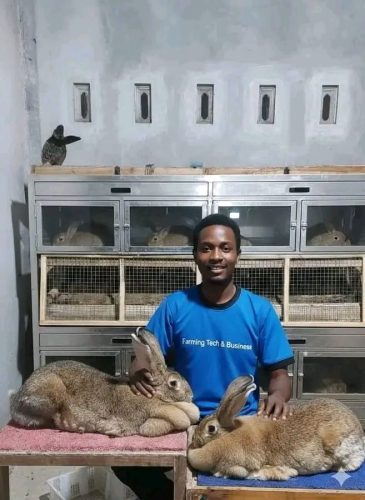
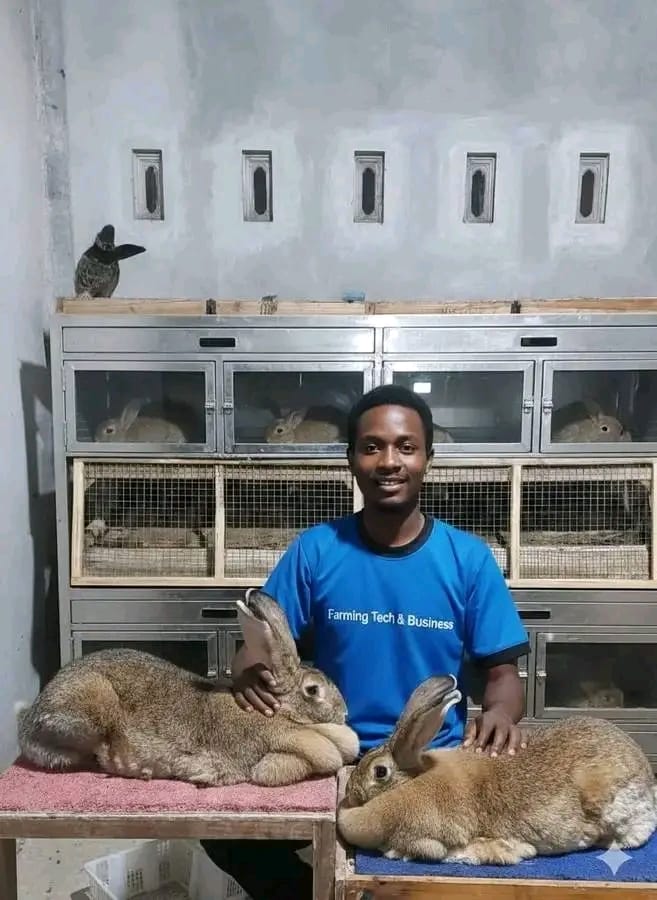
HHOHHO – The morning breaks to the clatter of wire cages and the soft thump of restless rabbits as Kwanele Seyama moves down the line, measuring feed with a practised hand and checking nest boxes like a production manager on a factory floor.
At Emantimandze Rabbit Farm, this is not a hobby. It is a disciplined, income generating system built by a young man who turned one gift rabbit into a structured agribusiness.
Seyama, 31, entered farming during the COVID 19 economic slowdown after receiving a single female rabbit from his sister. What began as curiosity quickly evolved into research, record keeping and breed selection. Three years later, his operation has grown to 108 rabbits, anchored on New Zealand White, Californian, Giant Chinchilla and Dutch lines known for fast growth and high litter performance.
“I realised this could be a business when the first litter came,” he said. “From there I started studying breeding, feeding and markets.”
His production model reflects commercial intent. Three breeding bucks service more than 100 does under controlled mating schedules. Feed is calibrated for meat output, 70 percent hay, 10 percent green forage and 20 percent pellets, while strict daily sanitation and natural deworming with pawpaw leaves keep mortality low.
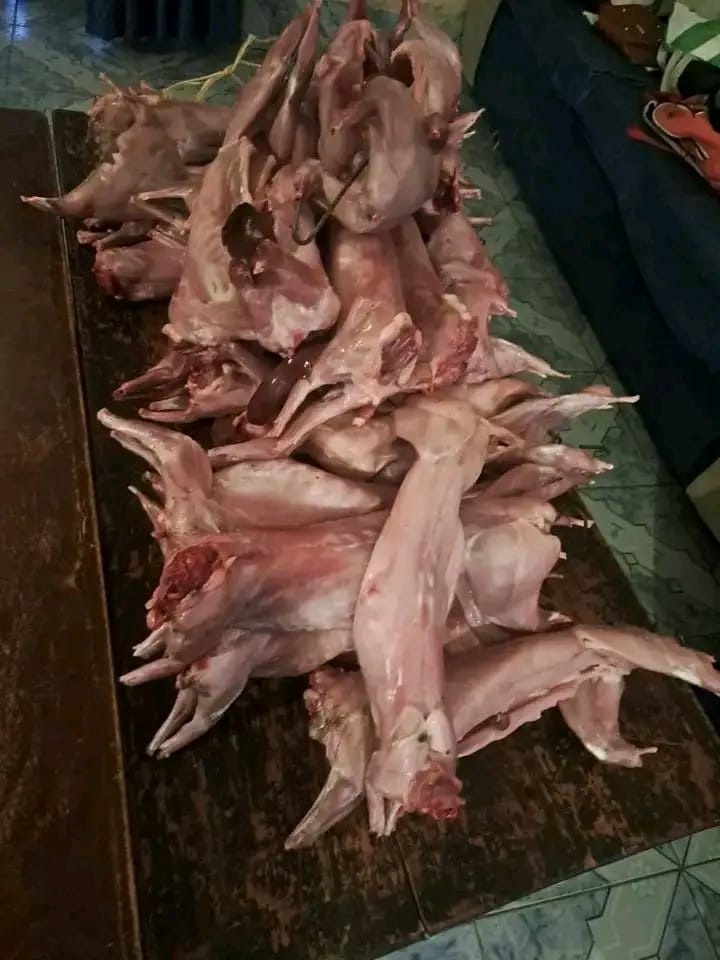
The result is consistent turnover. Seyama sells an average of 30 rabbits per month for meat, pets and breeding stock, generating over E3,500. Additional income comes from rabbit urine marketed as liquid organic fertiliser, a product increasingly sought by crop farmers.
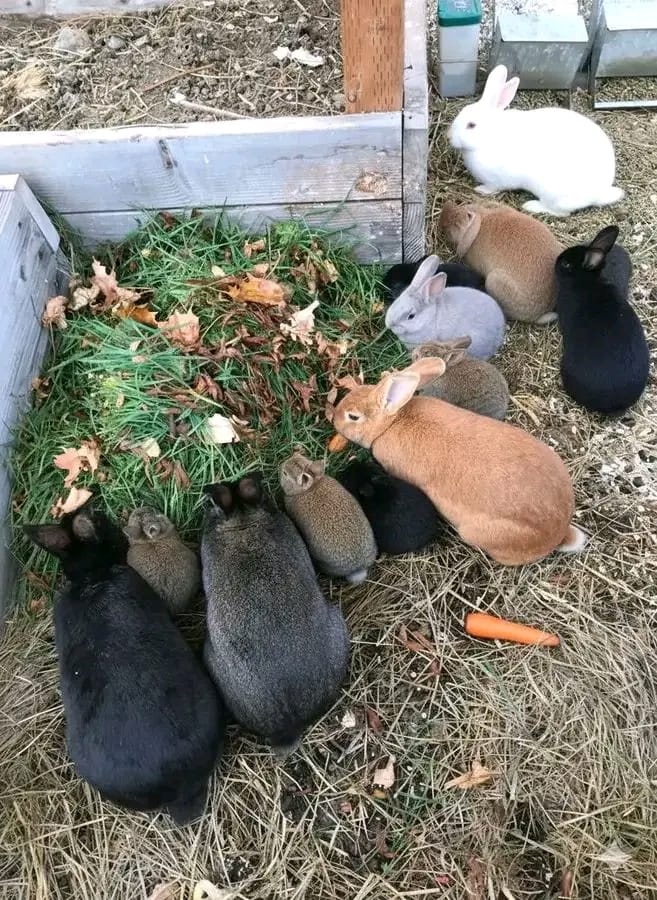
“The demand is higher than my supply,” he said. “My challenge now is scaling cages and equipment.”
Multiple Revenue Streams, One System
Unlike many small livestock ventures that rely on single markets, Seyama runs a diversified model. Live sales supply new entrants into rabbit farming, slaughter stock targets household protein markets and fertiliser products feed into the growing organic crop sector. He is also in talks with retail buyers, positioning rabbit meat for formal market entry.
Regional agricultural development studies identify rabbit production as one of the fastest scaling micro livestock systems in Southern Africa. A single doe can produce up to 40 offspring per year under good management, offering rapid herd expansion and regular cash flow. With youth unemployment above 30 percent in several SADC countries, low capital livestock systems are being promoted as entry points into agribusiness.
Training the Next Wave
Seyama has extended his role beyond producer to trainer, hosting practical sessions on housing design, breeding control, feeding regimes, hygiene and farm record systems. His workshops attract both aspiring and struggling farmers.
“Most losses come from inbreeding, poor cleaning and wrong feeding,” he said. “Once farmers fix those, productivity improves.”
By encouraging breed exchange and market coordination, he is quietly building a network of small producers capable of supplying larger buyers collectively, a model aligned with cooperative value chain development.
Protein of the Future
Nutrition experts continue to promote rabbit meat as a lean, high protein alternative with low cholesterol and efficient feed conversion. Its short production cycle and minimal land requirements make it ideal for peri urban youth and climate constrained farming systems.
With cattle movement periodically affected by disease outbreaks, small livestock such as rabbits are increasingly viewed as buffers for national protein supply and household income stability.
Constraints and Strategic Needs
Despite steady growth, infrastructure remains the main bottleneck. Limited cage space restricts herd expansion and reduces the farm’s capacity to harvest urine and manure at commercial scale. Seyama also identified the need for a pellet making machine to cut feed costs and improve margins.
“Support in equipment would double my production and help supply more farmers,” he said.
Scaling a Rural Enterprise
His long term plan includes increasing breeding stock, securing formal retail contracts, processing manure and urine into branded fertiliser products and establishing a dedicated rabbit training academy.
With start up capital estimated at about E1,000 for basic cages and breeding pairs, rabbit farming presents one of the lowest barriers to entry for young people with limited land and resources.
At Emantimandze, the steady rhythm of feeding, cleaning and breeding is more than routine. It is a business model, a training centre and a proof of concept that modern agripreneurship can grow from the smallest livestock unit.
For Eswatini’s youth searching for viable entry points into agriculture, Seyama’s operation offers a practical blueprint, structured production, diversified markets and knowledge transfer. In the quiet industry of his hutches, a new agricultural economy is taking shape, one litter at a time.