BY: SIKHONA SIBANDZE | JOURNALIST
MANZINI — Horticulture farmers across Eswatini will receive direct, practical guidance on markets, pricing, post-harvest handling and the Eswatini Horticulture Information System (EHIS) as the National Agricultural Marketing Board (NAMBoard) takes its Farmer Roadshows 2026 to all four regions this March.
The roadshows come at a time when NAMBoard is moving to make EHIS registration compulsory for all farmers producing agricultural schedule products. The shift is intended to strengthen market coordination, reduce avoidable losses and help farmers produce with clearer demand signals rather than relying on guesswork.
NAMBoard CEO Bhekizwe Maziya has described EHIS as a protection tool for farmers and a planning tool for the market. “EHIS is about making sure decisions in the sector are based on accurate, timely information,” Maziya said. “When farmers capture what they’ve planted, how much they expect to harvest, where they are, and when the produce will be ready, the market can respond in an organised way and farmers are better protected.”
Roadshow schedule: four regions, one message
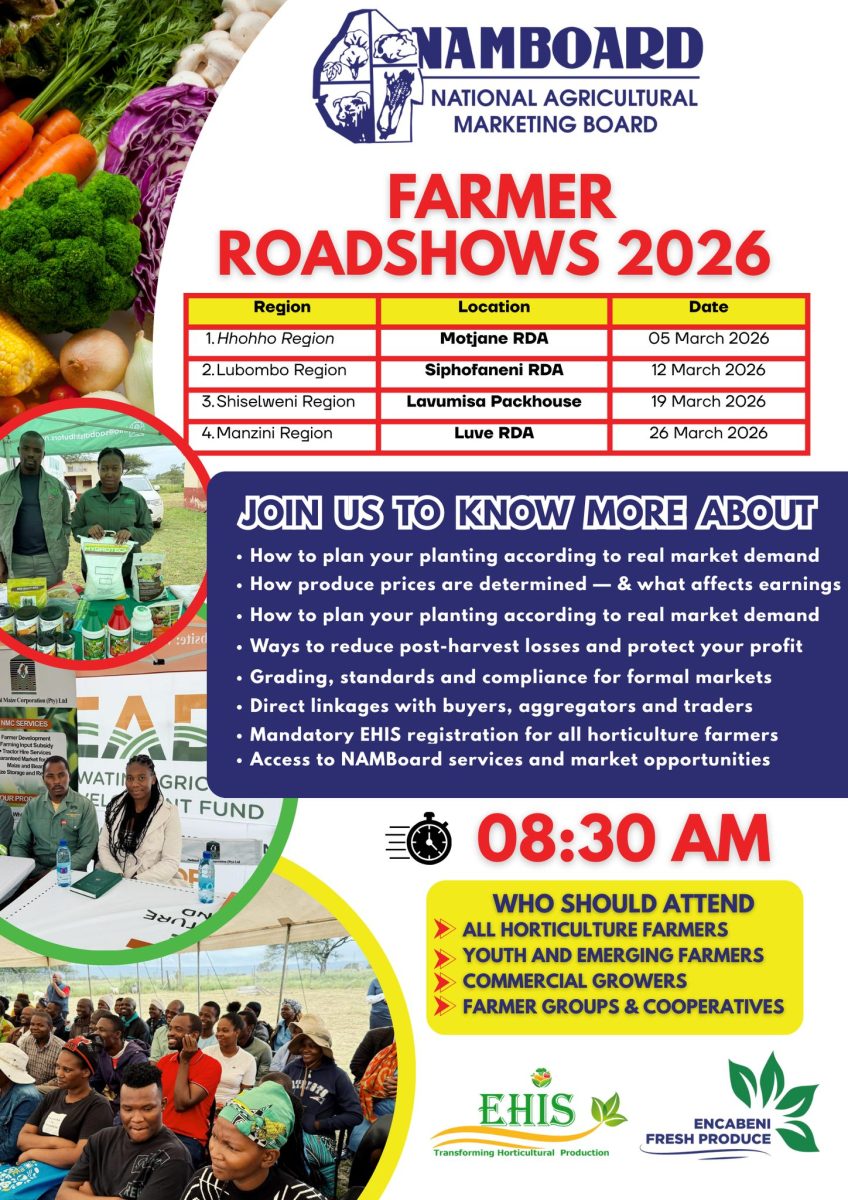
The Farmer Roadshows are scheduled as follows: Hhohho Region at Motjane RDA on 05 March 2026, Lubombo Region at Siphofaneni RDA on 12 March 2026, Shiselweni Region at Lavumisa Packhouse on 19 March 2026, and Manzini Region at Luve RDA on 26 March 2026. All sessions start at 08:30 AM.
What farmers will learn and why it matters
These roadshows are designed to solve practical problems that directly affect yields, sales and profit. Farmers can expect to leave with clearer guidance on how to produce for the market, not just the field, including:
- How to plan planting around real market demand so you avoid harvesting into an oversupplied market and selling at distress prices.
- How produce prices are determined and what drives price differences—quality, grading, timing, packaging, volumes and buyer requirements, so you can position your crop for better returns.
- How to reduce post-harvest losses through better handling, packaging, storage and transport discipline, protecting quality from harvest to delivery.
- How grading, standards and compliance work in formal markets so you reduce rejections and access higher-value outlets such as supermarkets, packhouses and processors.
- How to secure direct linkages with buyers, aggregators and traders to improve coordination, reduce last-minute selling and strengthen market access.
- Why EHIS registration is becoming mandatory and how to register correctly, capture your production details, and update them consistently for stronger market visibility.
- How NAMBoard services and market opportunities can support your business including guidance, coordination support and access pathways for scheduled products.
A central focus is helping farmers plan production according to real market demand. In horticulture, oversupply remains one of the biggest drivers of low prices, especially when many farmers plant the same crops at the same time without visibility of what the market can absorb. Better planning and timing help farmers harvest when demand is stronger and prices are more favourable.
Understanding price: what really determines your earnings
Beyond supply and demand, price outcomes are shaped by quality, grading, compliance, packaging, consistency, volumes and timing. Understanding these drivers helps farmers make better decisions at planting stage, during crop management and at delivery, where meeting a buyer’s standard can be the difference between a premium and a rejected load.
Cutting post-harvest losses to protect profit
Post-harvest losses often erode profits after a good season. Poor handling, bruising, delays, weak packaging, incorrect storage and transport inefficiencies can quietly wipe out income. NAMBoard intends to share practical approaches that protect quality from the field to the buyer and reduce losses before produce reaches the market.
Standards and compliance: the gateway to formal markets
Supermarkets, packhouses, processors and organised traders pay for quality, consistency and predictable delivery. Farmers hoping to access these markets must understand minimum standards and how to meet them in practice. NAMBoard’s outreach will focus on what compliance looks like on the ground and how farmers can avoid common reasons for rejection.
Direct linkages with buyers, aggregators and traders
NAMBoard says the roadshows are meant to strengthen linkages between farmers and buyers, aggregators and traders. Better market connection reduces last-minute selling, improves coordination and allows farmers to plan harvest and delivery more efficiently.
EHIS explained: why the system matters
EHIS is a digital, real-time system that enables farmers to record production details such as crop type, expected quantities, location and anticipated ripening or harvest periods. As participation grows and information is updated consistently, the platform becomes a national visibility tool that helps prevent surprises and market flooding, and supports organised buying and selling.
Maziya has warned that when markets are flooded, farmers often lose bargaining power and profit. “If the production is flooded then the market chooses where to buy and then the prices decline, affecting farmers because they are stranded with the production,” he said. EHIS, he argues, helps the sector see what is coming, where it is coming from and when it will be ready, creating time for both farmers and buyers to plan.
Registration support and farmer concerns
For farmers who have delayed registration due to uncertainty or fear, NAMBoard maintains that the greater risk is operating outside a system designed to improve coordination and reduce avoidable losses. Maziya has acknowledged that some farmers worry registration exposes them, including concerns linked to taxation, but he has repeatedly urged farmers to view EHIS as a protective tool that improves market outcomes.
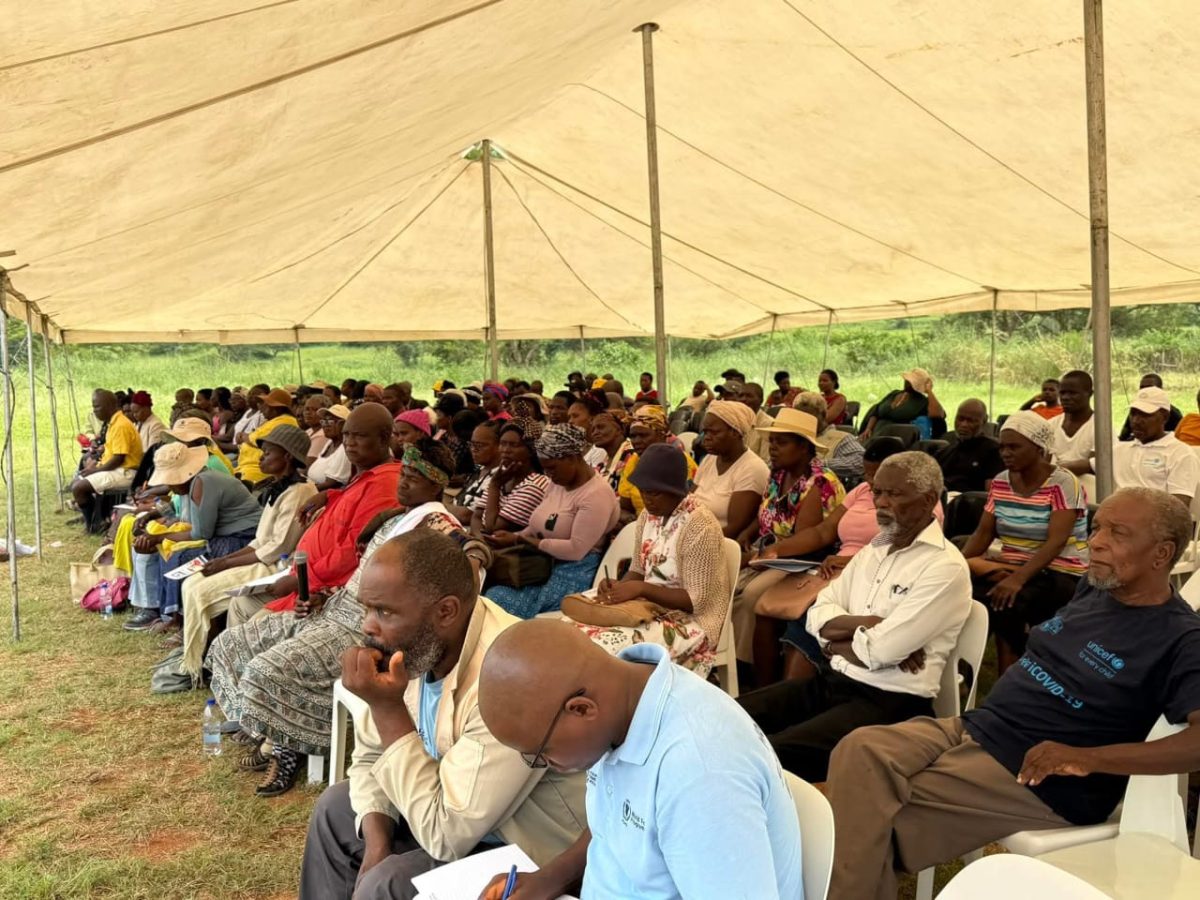
NAMBoard says registration support will be available through its teams and during roadshow engagements, where farmers can be assisted to register and understand what information to capture and how often to update it. The message from the regulator is that the system becomes more powerful as participation increases and as records remain current.
“This system works best when everyone is visible and information is updated in real time,” Maziya said. “When we have quality, accurate data, we can protect farmers from avoidable losses and build a market that rewards production with profit, not regret.”
Who should attend and why you shouldn’t miss it
NAMBoard is encouraging attendance from all horticulture farmers, youth and emerging farmers, commercial growers, and farmer groups and cooperatives. For producers aiming to earn consistently from horticulture, the roadshows offer a timely opportunity to strengthen planning, understand market rules, improve quality compliance, reduce losses, and get ready for a system in which EHIS registration will soon be a requirement rather than a choice.