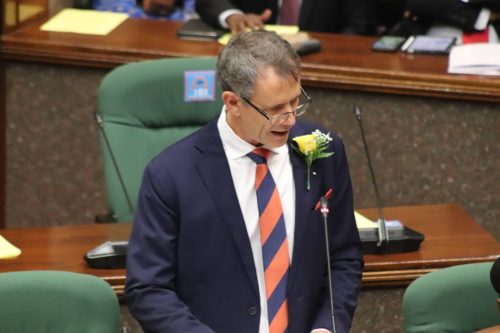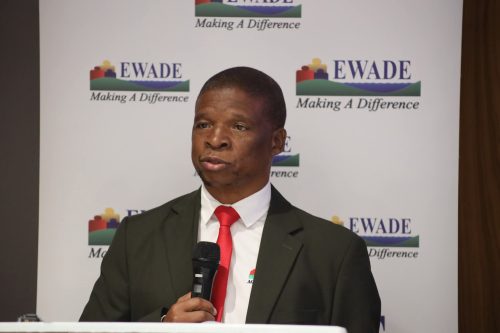
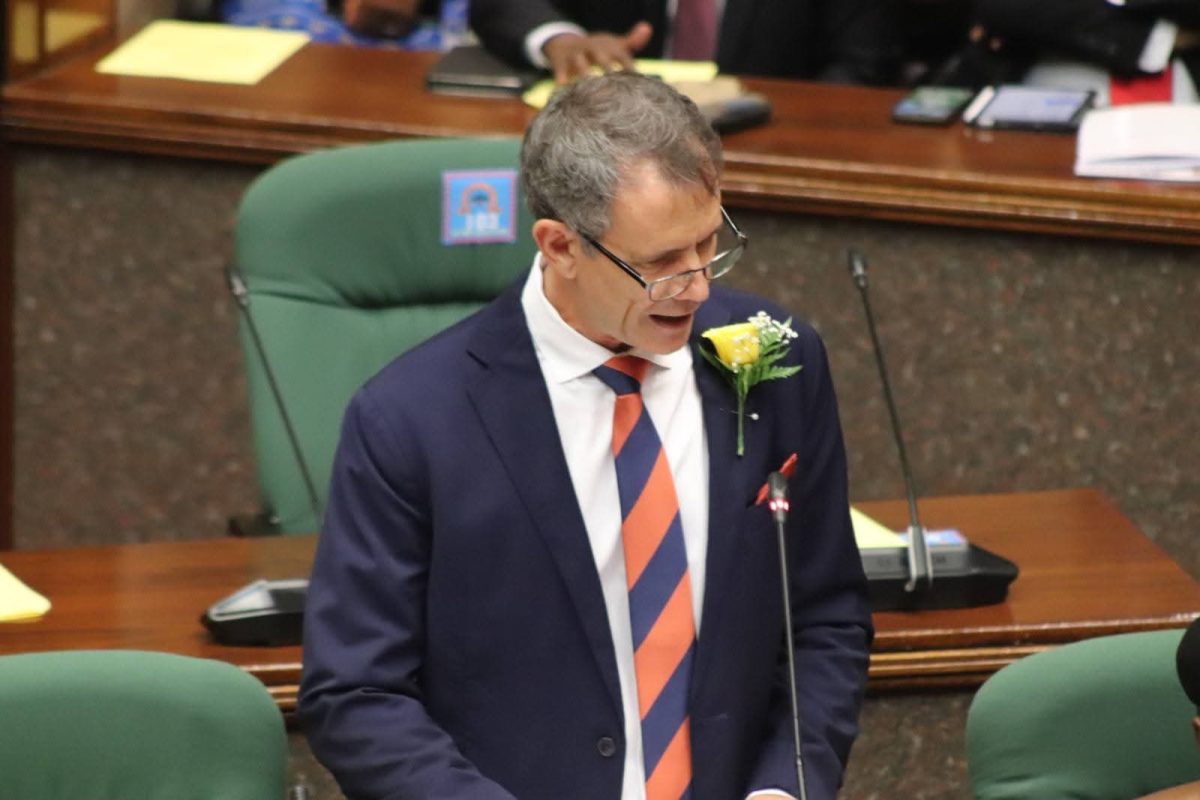
Neal Rijkenberg, Minister for Finance, presents the National Budget Estimates for the 2026/27 financial year during the third session of the 12th Parliament of the Kingdom of Eswatini.
BY SIBUSISIWE NDZIMANDZE | JOURNALIST
LOBAMBA – The agriculture sector has secured a major funding boost in the 2026/27 National Budget, with the Government allocating E2.2 billion to the Ministry of Agriculture a 33 percent increase from the E1.65 billion allocated in the previous financial year.
However, E1.6 billion nearly 73 percent of the total agriculture allocation will go to the construction of the Mpakeni Dam under the Mkhondvo–Ngwavuma Water Augmentation Programme (MNWAP).
Finance Minister Neal Rijkenberg presented the Budget Estimates at the third session of the 12th Parliament in Lobamba, positioning agriculture as a central driver of economic recovery, food security and rural job creation.
Agriculture’s Share of the National Budget
Total government expenditure for 2026/27 stands at approximately E35.6 billion. At E2.2 billion, agriculture accounts for about 6.2 percent of total government spending.
While this represents a significant increase from last year, it remains below the 10 percent target set under the African Union’s Maputo and Malabo Declarations, which commit member states to allocate at least 10 percent of national budgets to agriculture to drive annual sector growth of 6 percent.
Eswatini has not yet reached that benchmark, but this year’s increase narrows the gap and signals stronger fiscal alignment with continental commitments aimed at boosting productivity and food sovereignty.
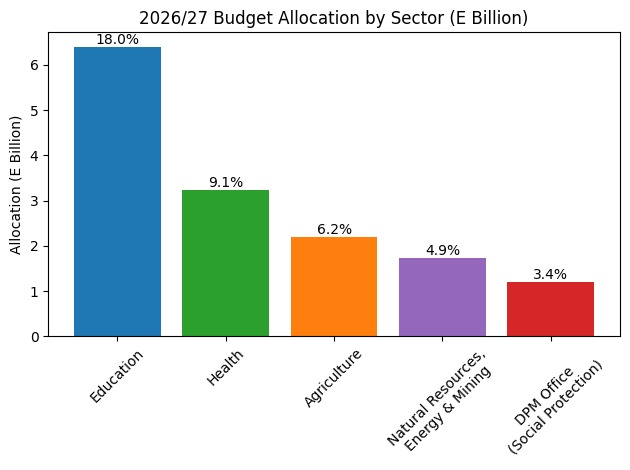
Budget Distribution Overview for 2026/27.
E1.6 Billion to Mpakeni Dam: The Centrepiece of the Budget
The dominant feature of the agriculture vote is the E1.6 billion allocation to the Mpakeni Dam, now over 44 percent complete.
This makes Mpakeni not only the largest agriculture-linked investment this year, but also the single biggest line item within the Ministry’s budget.
Government projects that once fully implemented, the broader MNWAP initiative of which Mpakeni is a flagship component could generate up to 100,000 jobs, largely through expanded irrigation and commercial farming corridors.
To date, more than 1,800 jobs have already been created across dam construction, resettlement works, bush clearing and related agricultural preparation activities. In addition, an apprenticeship initiative is placing 50 young diploma holders at the dam site for hands-on technical training.
The scale of the allocation underscores Government’s belief that irrigation expansion is the fastest route to transforming agriculture from rain-fed vulnerability to climate-resilient commercial production.
Livestock Recovery: Disease Control Funding
Outside of Mpakeni, significant funding is directed toward stabilising the livestock industry following the outbreak of Foot and Mouth Disease (FMD), which disrupted exports and domestic meat markets.
Government has allocated:
- E15 million for rehabilitation of cordon fences to prevent trans-boundary livestock movement.
- E57 million for vaccines to support a national vaccination rollout.
Laboratory capacity is also being strengthened to enable faster local detection of pathogens, reducing reliance on external testing and improving response times.
The likely impact is gradual restoration of livestock market confidence and export potential, particularly critical for cattle farmers affected by movement restrictions.
Farmer Finance and Mechanisation
The Eswatini Agricultural Development Fund (EADF) continues to expand access to capital for farmers and agribusinesses. Government reports that over E22 million has already been disbursed to qualifying enterprises.
An additional E10 million has been injected into the Fund in 2026/27 to scale up support for start-ups and expansion projects. Mechanisation partnerships supported under the Fund aim to raise productivity and competitiveness.
Maize Sovereignty and Strategic Grain Reserves
Food security efforts remain anchored by the Hamba Ubuye Revolving Fund under the Commercial Maize Project.
Over four seasons, the programme supported 402 farmers, cultivated 3,141 hectares and produced 7,634 metric tons of maize. For the current season, 248 farmers received inputs worth over E18 million, cultivating 1,861 hectares with expected production of 7,444 metric tons.
Government, through the National Maize Corporation (NMC), has procured maize at E6,000 per ton for ordinary farmers and E6,300 per ton for contracted farmers, reflecting a 3.4 percent increase from the previous year.
Additionally, 50 hectares of Swazi Nation Land has been secured for the construction of a National Grain Reserve facility.
Smallholder and Youth Programmes
The Smallholder Agricultural Productivity Enhancement and Marketing Project (SAPEMP), valued at E851 million over eight years, aims to uplift 19,600 households and create at least 7,500 jobs through climate-smart agriculture and improved market access.
Meanwhile, the Eswatini Youth Employment Opportunities Project (EYEOP), funded at E486 million over five years, targets 30,000 youth aged 18–35 in crop production, livestock and value-addition enterprises.
A Heavy Bet on Irrigation-Led Growth
While agriculture’s allocation has increased substantially, the concentration of funding toward Mpakeni Dam means the sector’s transformation strategy is heavily anchored on irrigation infrastructure.
At E1.6 billion, the dam consumes nearly three-quarters of the Ministry’s total allocation, leaving the remaining E600 million to cover disease control, farmer finance, food security programmes, extension services and administrative costs.
The success of this year’s agriculture budget will therefore hinge largely on the speed and effectiveness of irrigation expansion under MNWAP.
A Strategic Step — But Below Malabo Target
At 6.2 percent of total expenditure, agriculture remains below the 10 percent continental benchmark. However, the 33 percent increase signals stronger prioritisation in a sector widely seen as critical to reducing import dependency, generating rural jobs and improving national food resilience.
For farmers, the message is clear: agriculture is back at the centre of fiscal policy and Mpakeni Dam is the Government’s biggest bet on transforming the sector.
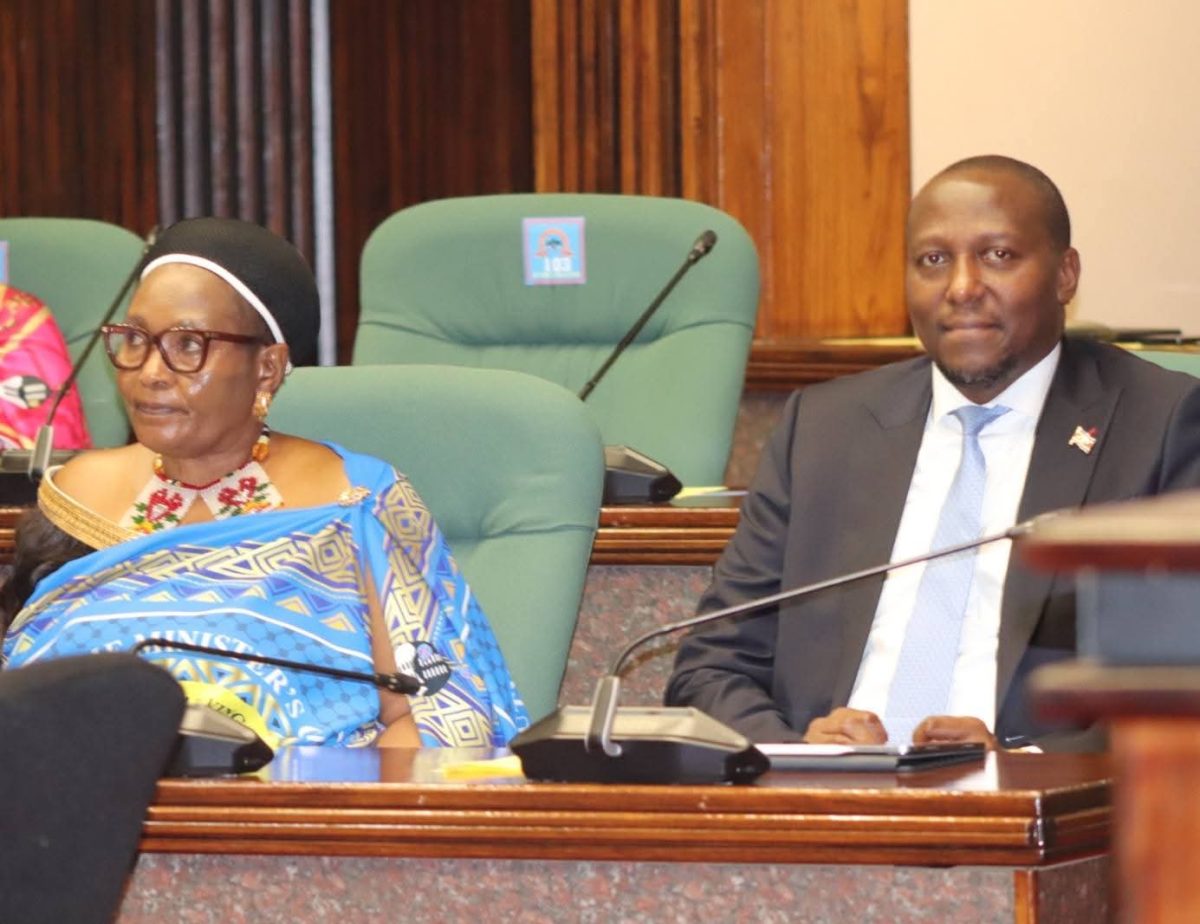
(L-R) Deputy Prime Minister (DPM) Thulisile Dladla and Prime Minister Russell Dlamini at the budget presentation.