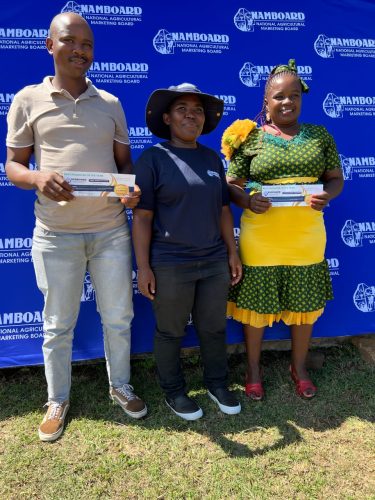
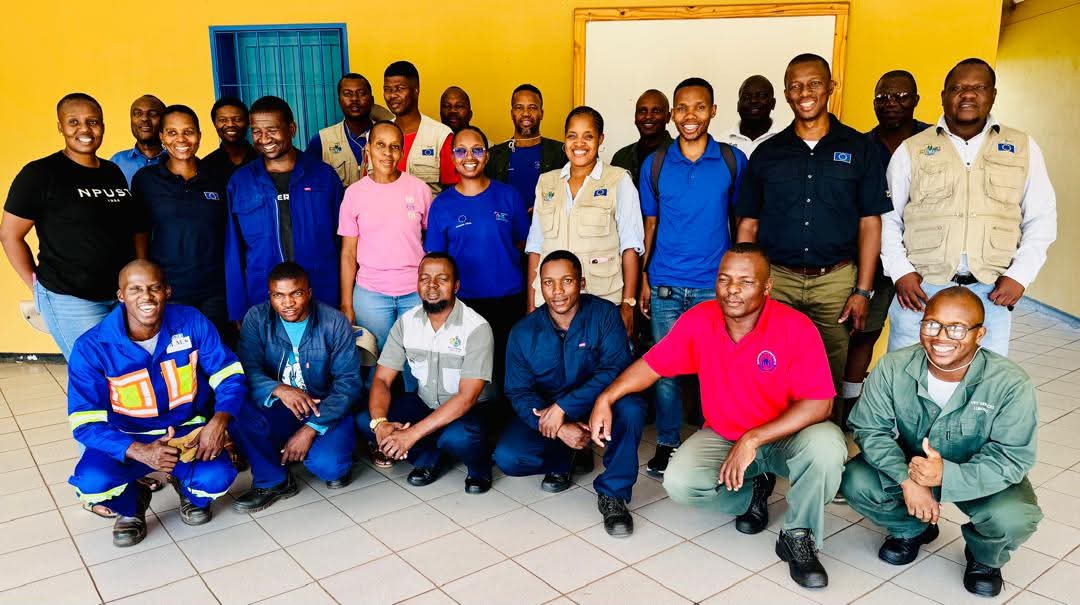
Participants pose for a group photo after completing the artificial insemination training held at Mpisi Veterinary and Farmers Training Centre. (Photo Credit: EU in Eswatini)
BY SIBUSISIWE NDZIMANDZE | JOURNALIST
MANZINI – Eswatini’s beef industry, which enjoys preferential access to the European Union (EU) market under the Economic Partnership Agreement (EPA), is poised for renewed growth as stakeholders invest in modern breeding systems to raise productivity and export volumes. In recent years, Eswatini has exported approximately 1,000 to 1,200 metric tonnes of beef annually, primarily to the EU under duty-free quota arrangements a high-value market that demands consistent quality, traceability and reliable supply.
Despite this market access, production constraints including limited access to improved genetics and high breeding costs have restricted the country’s ability to fully utilise its export potential. Strengthening breeding systems is therefore seen as critical to expanding local beef output and improving competitiveness in premium markets.
Against this backdrop, a practical artificial insemination (AI) training was held on Thursday, 12 February 2026 at the Mpisi Veterinary and Farmers Training Centre. The initiative, supported by the European Union and implemented by the International Trade Centre (ITC) in partnership with the Ministry of Agriculture, brought together 25 frontline livestock extension officers and veterinary professionals for hands-on instruction in artificial insemination.
Driving production growth through artificial insemination
Artificial insemination is being positioned as a strategic tool to expand local beef production. By equipping extension officers with practical AI skills, the programme aims to improve farmers’ access to superior genetics without the high costs and risks associated with maintaining breeding bulls particularly on Swazi Nation Land, where quality bulls and consistent veterinary services are often limited.
“This training was a huge boost for me,” said Menzi Jele, a Livestock Extension Officer who participated. “Being trained in artificial insemination gives us practical tools to support farmers better. It helps reduce breeding costs and improve the quality of the national herd.”
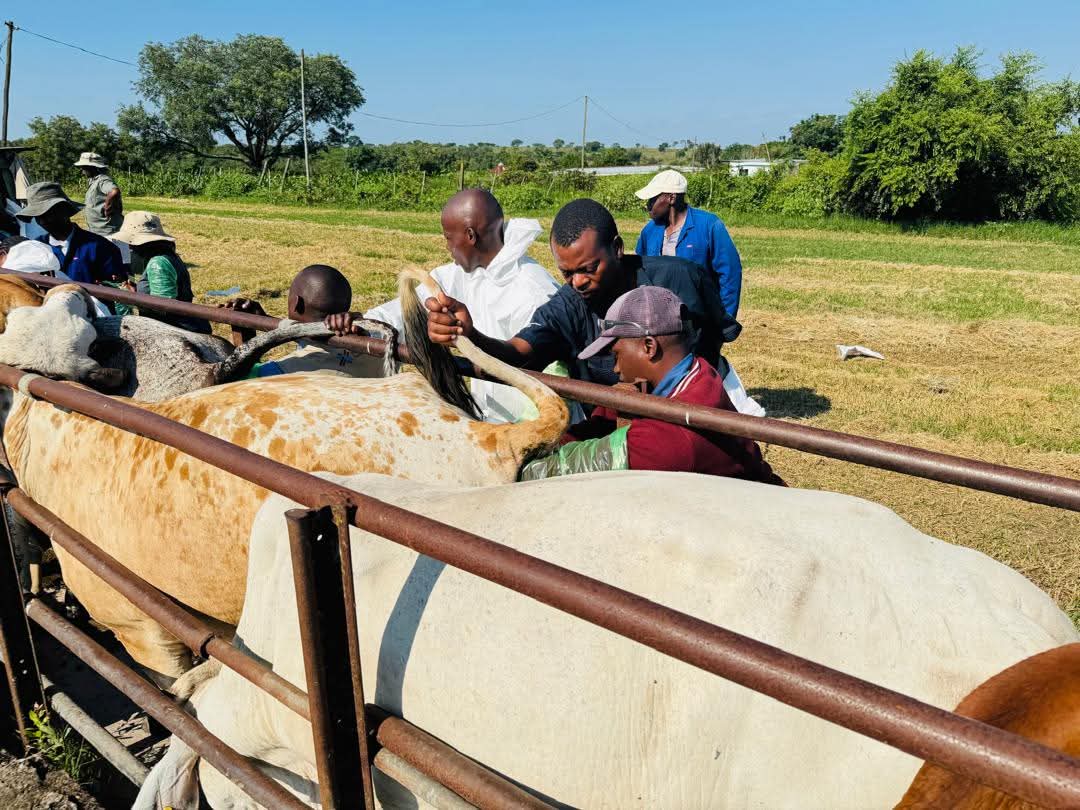
Livestock extension officers and veterinary professionals conduct a practical artificial insemination session during training. (Photo Credit: EU in Eswatini)
For many farmers, breeding remains one of the most expensive and unpredictable aspects of cattle production. The cost of feeding and managing bulls, exposure to disease, injuries, and inconsistent genetic performance all affect profitability. AI offers a cost-effective alternative, enabling farmers to access tested genetics while improving conception rates and herd quality over time.
Supporting export competitiveness
Improved genetics and better-managed breeding cycles contribute directly to stronger animals, better growth rates and more uniform carcass quality key requirements for meeting EU market standards. AI also allows farmers to better plan calving seasons around feed availability, helping stabilise production even during dry periods.
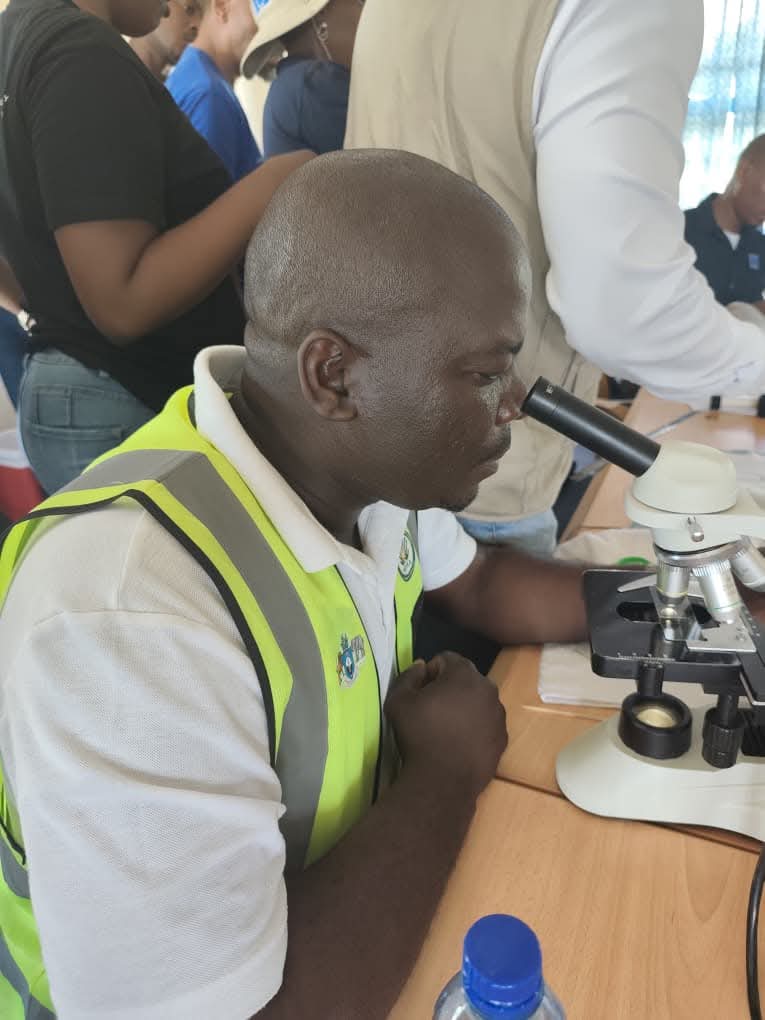
An official examines samples under a microscope during an artificial insemination training session at Mpisi Veterinary and Farmers Training Centre. (Photo Credit: EU in Eswatini)
Cynthia Dlamini, another participant in the refresher training, highlighted the scalability of the approach.
“One bull cannot inseminate many cows in a day, but with AI, the scale is completely different,” she said.
As herd quality improves nationally, the livestock sector becomes better positioned to increase export volumes and capture greater value from existing EU market access. Strengthened local production also supports processors, traders, feed suppliers and veterinary service providers who depend on consistent throughput.
The AI training forms part of the Eswatini Livestock Value Chain Development Programme (ELVCDP) under the broader “Eswatini: Promoting growth through competitive alliances” initiative supported by the EU and implemented by ITC in partnership with the Government of Eswatini.
By investing in artificial insemination skills and frontline capacity, stakeholders aim to build a more productive, resilient and export-ready beef industry one capable of lowering breeding costs for farmers while expanding Eswatini’s footprint in high-value international markets.