
BY SIBUSISIWE NDZIMANDZE | JOURNALIST
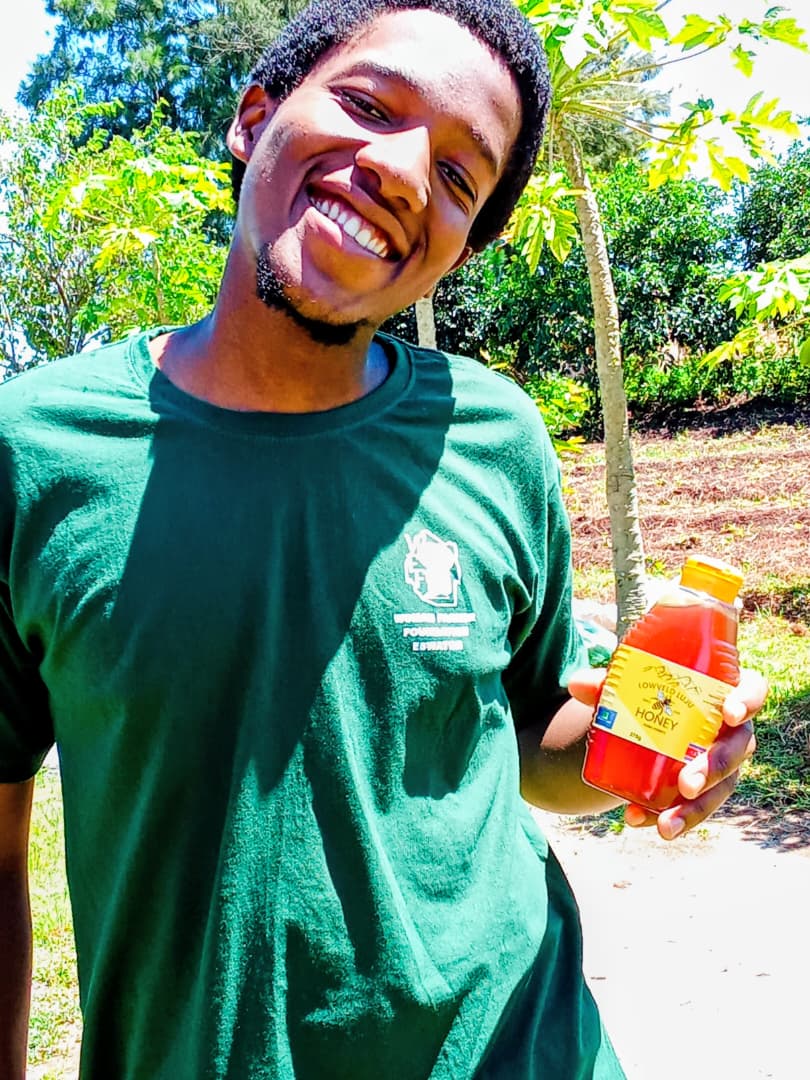
MANZINI – When storms destroyed his bean crop, Siphesihle Dlamini did not give up on farming; he changed direction. Instead of planting again, he invested in bees in 2024. Today, his 20 beehives in Mzilikazi form a growing apiary that produces pure, natural honey. He is already supplying local restaurants and households in Siteki, responding to the rising demand for trusted local products and proving that sometimes the sweetest success comes from starting over.
Dlamini is the founder of Opulent Farms. His entry into apiculture, the farming of bees, came after heavy rains damaged his bean fields. Rather than return to a crop vulnerable to storms, he chose an enterprise he believed had strong market potential.
“I saw that there is money in honey,” he said. “Customers complain that some honey on the market contains too much syrup. I wanted to produce pure, natural honey.”
A Growing National Opportunity
Eswatini’s honey industry remains small compared to its potential. The country produces about 35 tonnes of honey per year. However, in 2023 alone, Eswatini imported approximately 28 tonnes of natural honey, mainly from South Africa, while exports were negligible.
When local production and imports are combined, this suggests that around 63 tonnes of honey were available to the domestic market that year. In simple terms, nearly half of the honey consumed in the country came from imports.
This supply gap presents a clear opportunity for local beekeepers to increase production and reduce reliance on imported honey.
For Dlamini, that gap is not just a statistic; it is a business opportunity.
He also believes that the Lubombo region is well suited for beekeeping due to its natural vegetation and flowering plants. According to him, the area offers favourable conditions for nectar flow and is affordable for farmers who want to establish apiaries away from densely populated communities.
Establishing the Apiary
Beekeeping requires careful planning. One of Dlamini’s first concerns was site selection. For safety reasons, beehives must be located at least 400 metres away from homes and public spaces. He secured land in Mzilikazi that met this requirement and established his apiary there.
To keep startup costs low, he built traditional hives using wooden pallets. Each hive measures about 60 centimetres by 40 centimetres by 30 centimetres. He saved costs because buying a commercial hive costs about E1,500. This approach allowed him to expand gradually without heavy capital investment.
Each hive houses a bee colony consisting of a queen bee, worker bees and drones. A strong and healthy colony is essential for productivity.
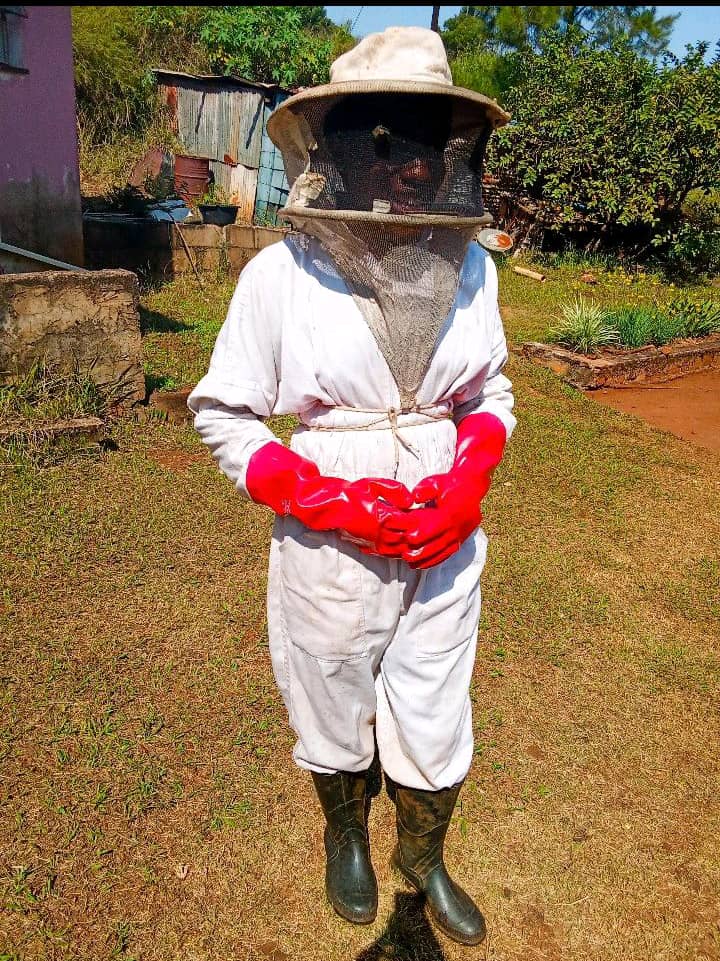
To manage his hives, Dlamini uses essential beekeeping equipment, including a bee suit for protection, a smoker to calm the colony during inspection, a hive tool and a bee brush.
Understanding the Production Cycle
Beekeeping follows a natural agricultural cycle. After a colony is established, it takes about three months before honey is ready for harvesting.
Production depends heavily on the nectar flow season. In Eswatini, this typically peaks during spring, especially after July, when flowering plants provide nectar that bees collect and convert into honey inside the honeycomb.
Under favourable conditions, one hive can produce up to 20 litres of honey per harvest cycle. However, Dlamini says climate change is affecting flowering patterns and reducing nectar availability.
Managing Risks in the Apiary
Like other livestock enterprises, beekeeping comes with risks. In his apiary, common threats include ants, spider webs, termites, wildfires and theft.
Regular inspection is essential. Dlamini emphasises that beekeepers must frequently check their hives to ensure there are no spider webs forming around or inside the hive entrances, as webs can trap bees and weaken colony activity. Keeping the surrounding area clean helps prevent ants and termites from invading. Regular monitoring also allows the beekeeper to assess brood development, queen activity and overall colony strength.
Although bees do not require daily feeding like cattle or poultry, the enterprise demands discipline and careful hive management.
“You must be ready to be stung, or wear proper protective clothing,” Dlamini advises young farmers.
He further advises young people who want to start beekeeping to prepare themselves properly and not underestimate the work involved. According to him, youth should understand hive management, be patient during the three-month production cycle and explore the full honey value chain. “Beekeeping has money,” he said. “The demand is very high if you do it seriously.”
Supplying the Local Market
Opulent Farms packages honey in 375g and 500g squeeze bottles and markets it as pure, wild honey. He is currently supplying local restaurants and households in Siteki.
While he is not yet supplying major retail chains due to volume requirements, he plans to expand production by increasing the number of productive colonies.
He is exploring funding opportunities through the Eswatini Agricultural Development Fund (EADF) to scale up his apiary and move further along the honey value chain. Beyond raw honey, beekeeping can also produce beeswax, propolis and pollen, which are used in cosmetics and health products.
“There is money in beekeeping if you explore the full value chain,” he said. “The demand is high.”
Expanding the Value Chain
Beyond supplying raw honey, Dlamini has bigger ambitions for Opulent Farms. He hopes to launch Opulento Scents, a product line that will include beeswax-based aromatherapy candles and lip balms.
He says the idea is to move beyond selling honey alone and explore value addition using beeswax, one of the natural by-products of beekeeping. The planned lip balm will be packaged in a brown tube made from craft paper, as part of his effort to promote environmentally friendly products.
“We want to promote eco-friendly products,” he said, explaining that sustainability is an important part of his long-term vision.
However, turning this vision into reality has not been easy. One of the main challenges he faces is sourcing the eco-friendly packaging materials, particularly the craft paper lip balm tubes, which are imported from China. Limited capital remains a major constraint in scaling up production and securing consistent supply.
Despite these financial challenges, Dlamini remains determined to expand along the honey value chain and diversify his product offering.
A Climate-Smart Enterprise
Beekeeping is increasingly viewed as a climate-smart agricultural activity. It requires little land, does not depend on irrigation and supports pollination of crops. Bees play a vital role in pollinating fruits, vegetables and other crops, contributing to improved farm yields.
For Dlamini, shifting from storm-damaged bean fields to managing a productive apiary reflects the kind of resilience modern agriculture demands. His 20 hives may be modest in number, but they represent a growing sector with national significance.
As Eswatini works to strengthen local food production and reduce import dependence, beekeeping could offer farmers a practical pathway to diversify income and tap into a market that remains far from saturated.