
BY: SIKHONA SIBANDZE | JOURNALIST
NHLANGANO – As Eswatini faces more frequent climate shocks, erratic rainfall, heat waves, hailstorms and cold snaps, the Ministry of Agriculture (MoA) is promoting local mushroom production as a practical climate-smart option that can strengthen household nutrition while creating a reliable income stream for farmers.
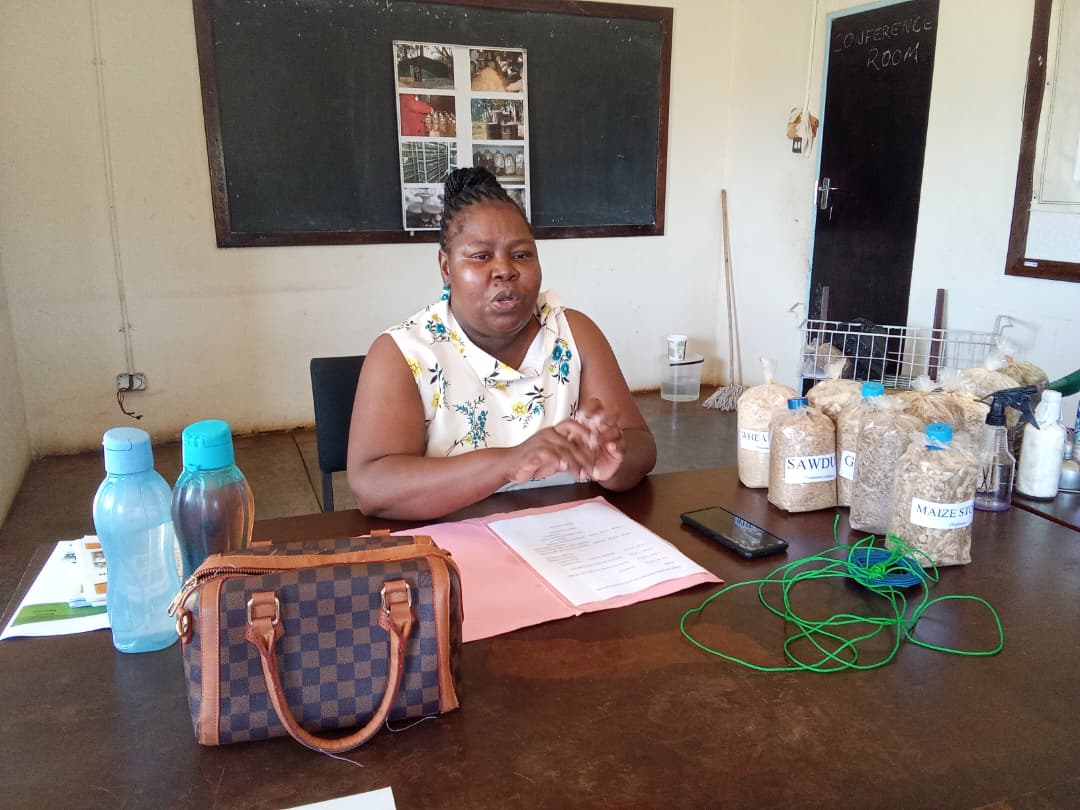
The push was reinforced through a hands-on training workshop held at Mahamba Zombodze (Matimatima) Rural Development Area (RDA) near Nhlangano, where farmers were taught about mushroom types, ideal growing conditions, proper structures, fruiting, and harvesting.
Phumaphi Dlamini, an expert from the MoA Mushroom Unit, told farmers that mushroom farming stands out because it can be done indoors, reducing exposure to weather extremes.
“Mushroom farming is practical because you can produce indoors even when the weather is unpredictable. But success starts with the basics, especially the substrate and hygiene,” Dlamini said during the session.
Unlike most field crops, oyster mushrooms are grown in controlled spaces, meaning production is far less exposed to climate variability. They also convert agricultural “waste” into food, turning residues such as sugarcane bagasse, grass straw and maize residues into a high-value crop.
A market that’s ready, yet still undersupplied
Research on Eswatini’s mushroom value chain has long shown that despite local production efforts, the country remains a net importer of mushrooms consumed locally, mainly because local volumes and supply consistency are still too low to fully meet demand.
Market signals continue to show opportunity for farmers who can supply consistently. For the week 8–14 February 2026, NAMBoard’s published buying price lists oyster mushrooms at E70 per kilogram. On the same week’s Manzini market selling list, oyster mushrooms (500g) appear as “UNAVAILABLE,” an indicator that supply gaps still occur in formal channels.
“Substrate is the foundation”
At the Nhlangano workshop, MoA trainers emphasised that the most common cause of failure for new growers is contamination, often linked to poor substrate preparation and weak hygiene control. Dlamini said farmers must treat substrates as the “foundation” of production because it is the material mushrooms grow on and feed from.
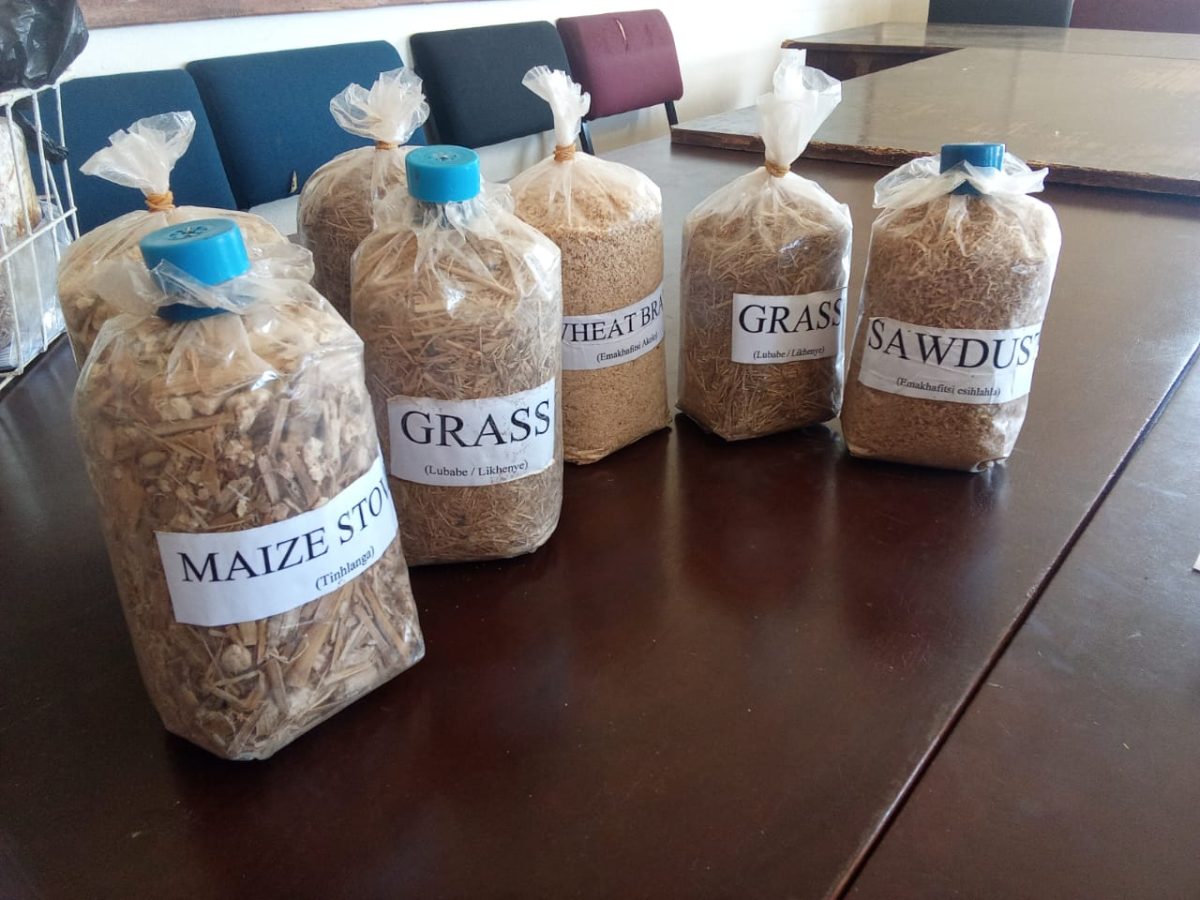
“Substrates are the materials mushrooms grow on and feed from. Common substrates include wheat straw, maize stalks, sawdust, bagasse, banana leaves, and other dry crop residues,” she explained.
She stressed that sterilisation is non-negotiable for farmers who want predictable yields.
“Proper sterilisation of substrates is critical before planting mushrooms. It helps prevent contamination, promotes healthy growth, and leads to better yields,” she said.
Some farmers said the practical demonstration made them understand why many beginners struggle.
“We didn’t realise contamination can destroy everything even when you have good spawn. The sterilisation part is an eye-opener, it’s where many of us have been going wrong,” one participant said after the demonstration.
Why oyster mushrooms are the best starting point
While many mushroom types exist, oyster mushrooms are widely regarded as the easiest to start with because they grow on many local substrates and do not require expensive infrastructure. The Ministry’s oyster mushroom guide notes that oyster mushrooms can be produced from a wide range of agricultural waste materials and that existing structures can be modified to meet required conditions.
Different oyster types perform best at different temperatures. For example, some common oyster varieties perform well within these ranges: about 18–22°C for black oyster and about 20–28°C for grey and white oyster, making it possible to plan production around season and housing conditions.
How farmers can set up production
The basic setup: two rooms, simple controls
A functional oyster mushroom operation needs two controlled spaces:
- Incubation room: where the mycelium colonises the substrate.
- Fruiting/growing room: where mushrooms form and are harvested.
MoA experts emphasise that the growing room becomes critical after spawn run and that management of this space determines productivity. Poor room management can reduce yields even when the substrate is good.
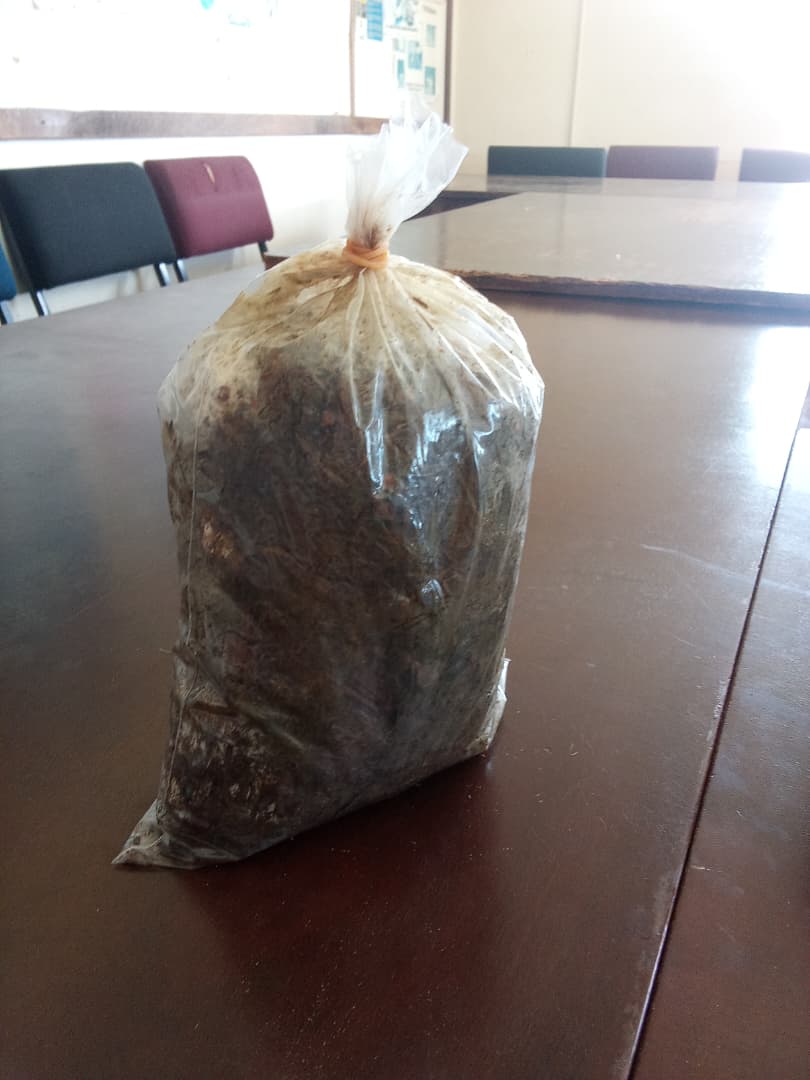
Starter equipment can be basic. MoA lists items such as clean water, bleach for hygiene, a mixing surface, chopping tools, sterilising equipment, string/rubber bands, a watering can with a perforated nozzle, and containers plus a scale for harvesting and sales.
Substrate choice: start with what you have, optimise as you grow
Mushrooms feed on the substrate, so choosing the right material is a profit decision. Common substrates include bagasse, straw, sawdust and grass. MoA’s guide suggests combinations such as:
- 90% sugarcane bagasse + 10% wheat bran
- 90% grass straw + 10% wheat bran
- 45% grass straw + 45% maize + 10% wheat bran
Bran supplementation boosts nutrition in the substrate, supporting stronger colonisation and higher yields when managed properly.
Sterilisation
Contamination (moulds and competing fungi) is one of the biggest reasons new growers fail. The goal is to reduce “competitors” before introducing spawn. A well-documented commercial method is aerated-steam pasteurisation at about 65°C for 1 hour, followed by cooling using clean filtered air.
Small-scale farmers can adapt the principle using a drum and hot-water or steam system. What matters is that the substrate is treated and cooled properly before spawning.
Spawning
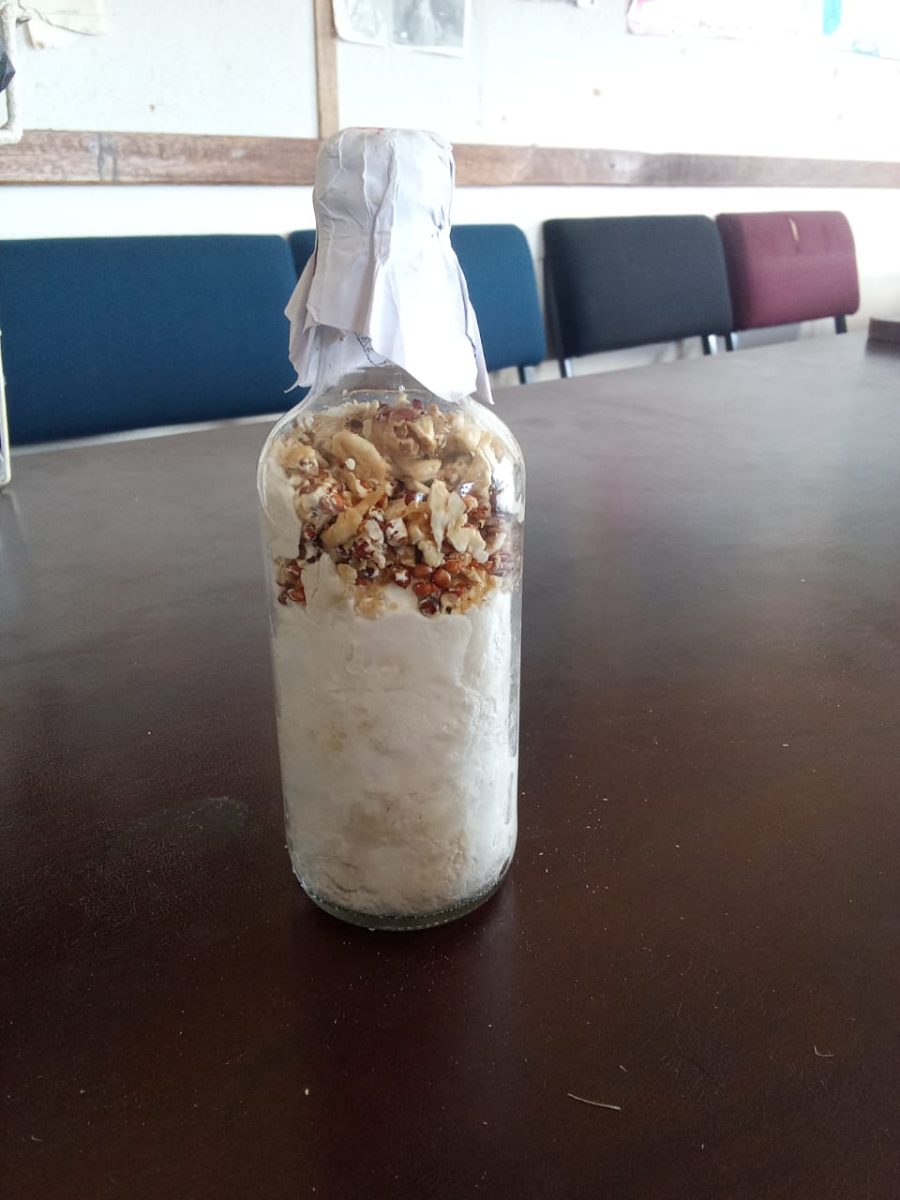
Spawning is the stage where a farmer mixes mushroom spawn (seed) into a clean, cooled, pasteurised/sterilised substrate and packs it into bags or containers for incubation—in simple terms, “planting” mushrooms by introducing living mycelium into the material it will colonise.
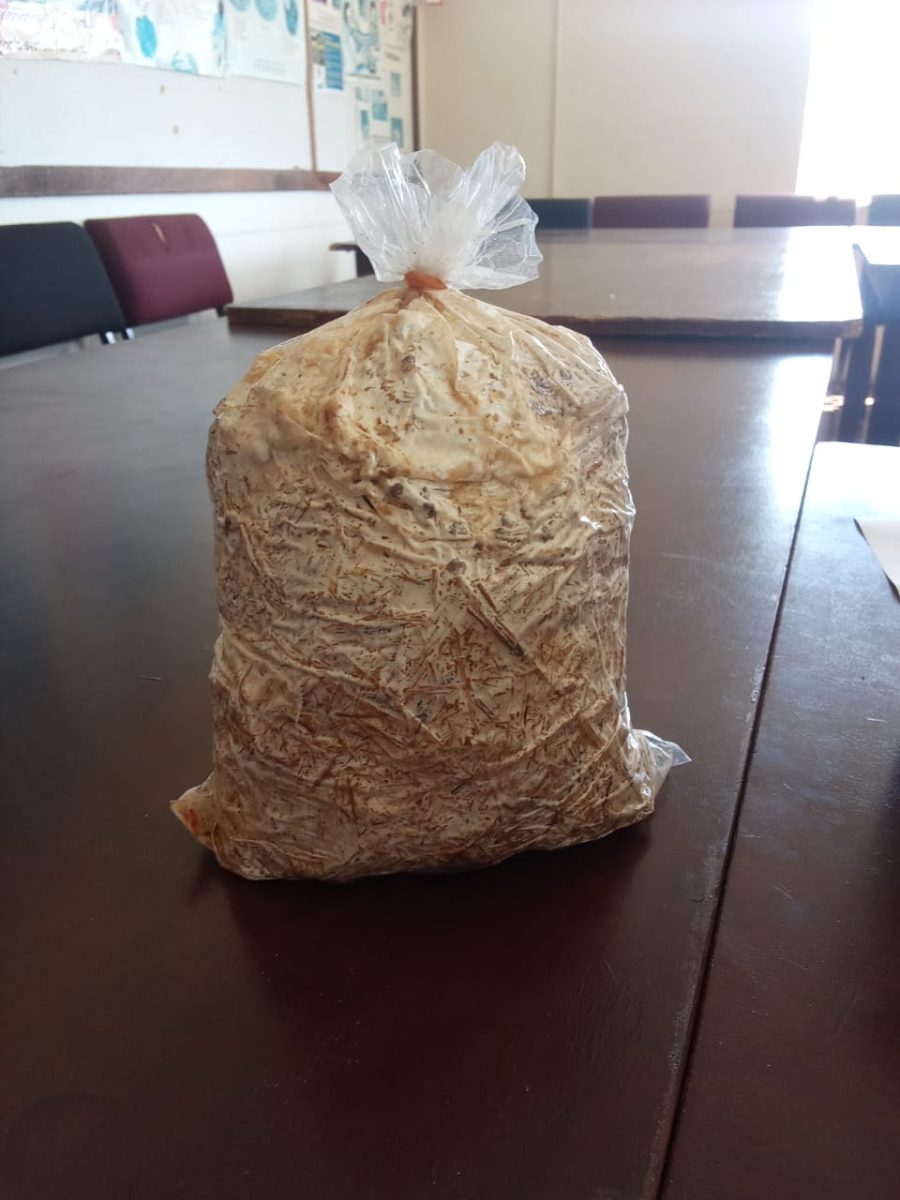
Key rules include:
- Cool first, then spawn: hot substrate kills mycelium.
- Work clean: prevent moulds and bacteria entering the bags.
- Mix evenly: improves speed and uniformity of colonisation.
- Pack and seal: label and move to incubation.
In Eswatini, MoA provides support through its Mushroom services. The MoA Client Service Charter indicates the ministry produces and sells planting material (spawn) and impregnated bags, with the service listed at E335.00.
Incubation
During incubation, the goal is full colonisation. A key management rule from production manuals is: don’t open the bags and don’t spray water during mycelial growth. High humidity and ventilation are generally unnecessary at this stage. Under controlled systems, bag incubation is commonly done around 23–25°C (substrate temperature) for roughly 12–14 days, depending on strain and management.
Fruiting
Once colonisation is complete, fruiting is triggered by adjusting the environment:
- Humidity: fine mist spraying (not heavy wetting).
- Light: helps initiate primordia (pinning); about 200 lux for 8–12 hours during primordia formation.
- Temperature: many oyster types fruit well within 18–28°C, depending on strain.
With good management, harvesting can begin about 3–4 weeks after spawning in many systems.
What the numbers can look like for a farmer
Yields vary by strain, substrate quality, hygiene, and how well humidity and ventilation are controlled. But benchmarks help farmers plan. Using NAMBoard’s posted buying price of E70/kg, a farmer consistently delivering:
- 100 bags × 1.5 kg = 150 kg per cycle
- 150 kg × E70/kg = E10,500 gross per cycle (before costs)
Quality, shelf life, and selling without losses
Mushrooms are perishable, so post-harvest handling is part of the production system. Shelf life can be as short as about two days in normal conditions, extending with refrigeration. For farmers targeting formal buyers, consistency and freshness are everything—cooling and fast delivery improve both quality and bargaining power.