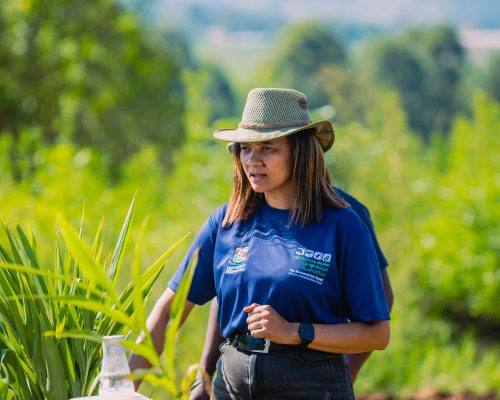


National Agricultural Marketing Board (NAMBoard) CEO, Bhekizwe Maziya. Photo Credit: NAMBoard)
BY SIBUSISIWE NDZIMANDZE | JOURNALIST
MANZINI — Eswatini’s horticulture farmers will soon have no choice but to register on the Eswatini Horticulture Information System (EHIS), as the National Agricultural Marketing Board (NAMBoard) moves to make the platform mandatory for all producers of agricultural schedule products.
NAMBoard CEO Bhekizwe Maziya says the shift is meant to ensure every farmer is captured in the system, strengthening market visibility through accurate, real-time farm records.
“EHIS is about making sure decisions in the sector are based on accurate, timely information,” Maziya said.“When farmers capture what they’ve planted, how much they expect to harvest, where they are, and when the produce will be ready, the market can respond in an organised way and farmers are better protected.”
Mandatory registration to improve visibility and coordination
EHIS is a digital, real-time platform that enables farmers to record key production details including crop type, quantity, location, and expected ripening or harvest time. Maziya said compulsory registration will improve the quality and completeness of data, allowing the system to work at full potential.
He noted that the goal is not simply to build a database, but to create a working system that supports informed planning across the value chain and ensures farmers are known and supported as part of the regulated market for scheduled products.
A direct bridge between farmers and buyers
A key feature of EHIS is that it strengthens farmer-to-buyer visibility. Buyers using the platform can identify which farmers have specific produce, where they are located, and communicate directly with them without NAMBoard having to facilitate every transaction.
Maziya said this direct access is important in a market where timing determines profit, and where farmers often suffer when produce reaches the market without prior coordination
Why accurate records matter for farmers
Maziya emphasised that farmers who produce for profit need market certainty. With accurate, up-to-date records in EHIS, markets can plan purchases ahead of time, while farmers can make better decisions about what to plant and when to harvest.
He said EHIS also improves the regulator’s ability to understand national production patterns who is producing what, where, and in what volumes so that decisions across the sector are informed by real activity on the ground.
Reducing losses caused by market flooding
Maziya said one of the biggest risks in horticulture is oversupply, where the market becomes flooded and prices drop, leaving farmers stranded with unsold produce.
“If the production is flooded then the market chooses where to buy and then the prices decline, affecting farmers because they are stranded with the production,” he said.
He noted that EHIS supports early market intelligence by showing what is coming, where it is coming from, and when it will be ready giving both farmers and buyers time to plan.
Addressing fears around registration
Maziya acknowledged that some farmers have been reluctant to register, often due to concerns about visibility and taxation. However, he stressed that EHIS exists to improve coordination and protect farmers from avoidable losses linked to poor planning and late market information.
“Some farmers fear registration because they think it exposes them for taxation,” he said. “But being outside the system can cost farmers more in the long run, because they miss out on the protection that comes with timely market information.”
How farmers can register
Farmers can register and update their production details using a mobile phone via the EHIS website (www.ehis.co.sz), by engaging NAMBoard directly, or through NAMBoard roadshows where farmers can be registered on the spot.
Maziya said NAMBoard will continue scaling up registration drives to ensure both emerging and established farmers producing scheduled products are captured in the system.
Towards national integration
Looking ahead, Maziya said EHIS was designed with a long-term national vision: integration with the broader Agriculture Integrated Information System. Under this plan, once a farmer registers on EHIS, they would also be captured within the national agriculture database strengthening planning and coordination beyond the market.
“The intention is integration so that when a farmer registers, that information also supports national planning,” he said. “Government should be able to see how many farmers have planted a particular crop and respond with better support and coordination.”
A call to farmers: register early, update consistently
Maziya urged farmers to register and consistently update their production information, saying the system becomes more powerful as participation increases and information remains current.“This system works best when everyone is visible and information is updated in real time,” he said. “When we have quality, accurate data, we can protect farmers from avoidable losses and build a market that rewards production with profit, not regret.”