



BY SIBUSISIWE NDZIMANDZE | JOURNALIST
MANZINI - Low productivity in agriculture is less about effort and more about access. Many farmers operate with limited production information, weak market connections and inadequate finance, technology and productive assets, factors that directly constrain output and profitability. Closing these gaps leads to more efficient farms, stronger market participation and improved income prospects, particularly for young farmers seeking sustainable livelihoods.
In Kenya’s Homa Bay and Kisumu countries, Practical Action has demonstrated how farmer-centred interventions can deliver tangible results. By strengthening producer groups and cooperatives, the organisation supports farmers to adopt improved production practices, better post-harvest handling technologies and aggregation systems that improve produce quality, reduce losses and increase bargaining power in the market.
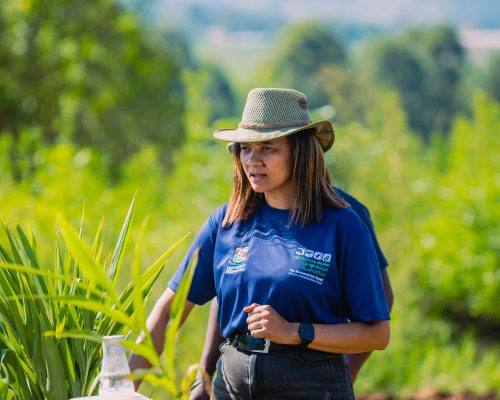
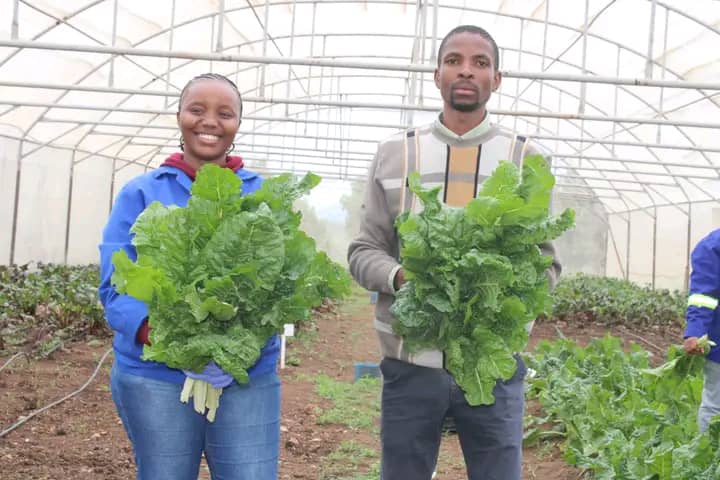
These benefits were echoed by Ellis Dlamini, a youth agripreneur and chairperson of the Velezizweni Youth Multipurpose Cooperative, during a farm visit attended by local and international sponsors. The visit focused on inspecting youth-led agricultural demonstrations aimed at showing how improved farming methods translate into higher productivity, better quality produce and increased income for farmers.
Velezizweni Youth Multipurpose Cooperative
The Velezizweni Youth Multipurpose Cooperative was established in 2024 in the Velezizweni area near Mankayane in Eswatini. Formed by young farmers, the cooperative was created to respond to persistent challenges facing smallholder producers, including low productivity, high costs and limited access to markets. Its core objective is to help farmers work collectively, share resources and adopt business-oriented farming practices that improve returns.
Since its formation, the cooperative has focused on cooperative production, skills development and on-farm demonstrations aimed at helping young farmers improve yields, reduce post-harvest losses and access markets more effectively.
Addressing the theme “What strategies can be applied to make agriculture more appealing?”, Dlamini emphasised that treating farming as a business directly benefits farmers by improving profitability and sustainability.
“We should promote farming as a business to attract young people and increase women’s participation in agribusiness,” he said.
According to Dlamini, agribusiness benefits farmers beyond job creation and food security by strengthening household incomes and contributing to broader economic and social development. With limited opportunities in the formal economy, agriculture offers farmers especially youth a realistic and less saturated pathway to build enterprises, create employment and retain value within rural communities.
The shift toward agribusiness has accelerated since the COVID-19 pandemic, which exposed the vulnerability of wage employment. For many farmers, agriculture is increasingly seen as a reliable and resilient source of income when supported by skills, markets and technology.
Improving farmer outcomes also depends on moving beyond raw production. Dlamini stressed that value addition allows farmers to earn more from the same produce while reducing post-harvest losses. Building farmer capacity in emerging agribusiness models, including circular-economy principles, helps farmers lower input costs and improve sustainability. The adoption of productive-use energy technologies further benefits farmers by enabling processing, storage and aggregation at farm and cooperative level.
“Many young people have the potential to excel in agriculture,” Dlamini said. “What they need is an enabling environment that allows farmers to access resources, innovate and grow their enterprises.”
Practical Benefits for Farmers in Eswatini
In Eswatini, farmer-centred benefits are already emerging through collaboration with the Velezizweni Youth Multipurpose Cooperative. The cooperative approach benefits farmers by reducing production costs, improving access to inputs and creating shared platforms for learning and marketing.
Through partnerships with regional organisations such as the People Together Organization, the cooperative has supported pilot initiatives including a sunflower farming project at Lwandle. For farmers, the pilot introduced an alternative income crop with commercial potential, supported by seed provision, hands-on training and mentorship.
The sunflower pilot has benefited farmers by:
- Introducing an alternative income crop
- Improving practical farming skills through demonstrations
- Strengthening business planning and market awareness
- Expanding farmer networks through regional partnerships
Local and international sponsors have also contributed financial and technical support during farm inspections and demonstrations, directly benefiting farmers through improved production standards and access to advisory services.
The initiative has shown that when farmers receive the right support, knowledge, inputs, technology and market linkages they can improve productivity, increase incomes and participate more effectively in agricultural value chains.
As agriculture continues to evolve, placing farmer benefits at the centre of youth-focused interventions is critical. With the right support systems in place, agribusiness can deliver lasting gains for farmers, strengthen food security and drive inclusive economic growth making agriculture not only more appealing, but more profitable and resilient for those who depend on it.