





BY PHESHEYA KUNENE - EDITOR
MANZINI — Eswatini has intensified its drive to strengthen environmental governance.
On Monday, government and international experts met to refine the country’s forestry legislation. The reforms aim to protect forests, wetlands and natural resources that underpin the nation’s agrifood system.
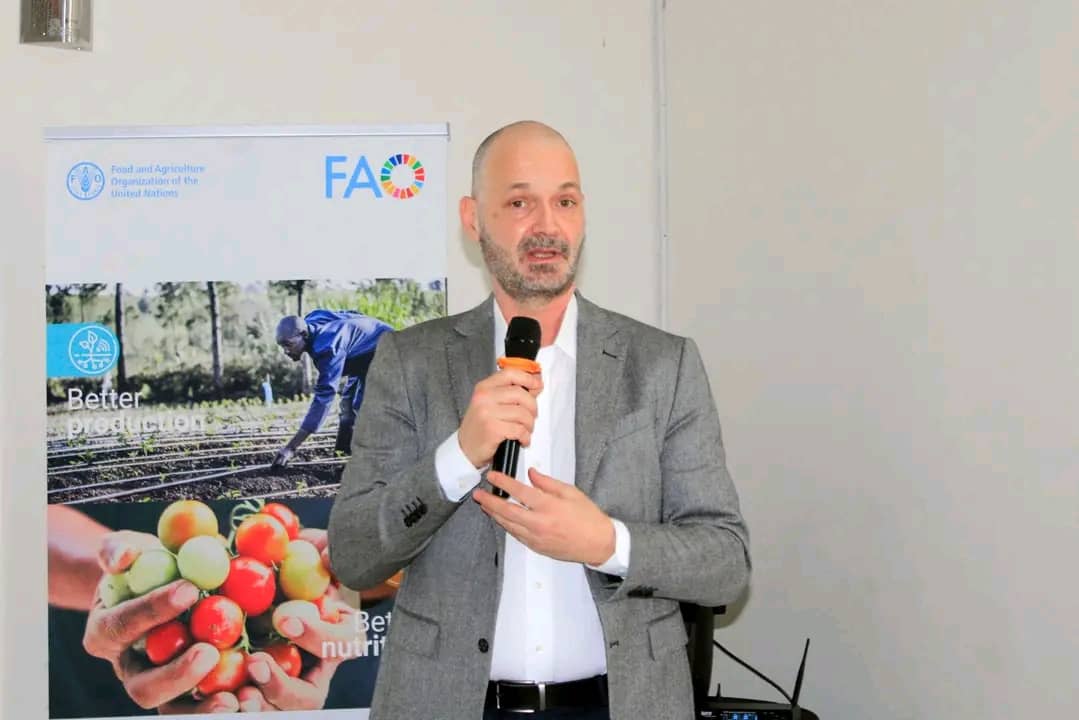
The Food and Agriculture Organization of the United Nations, working with the Ministry of Agriculture, the Ministry of Tourism and Environmental Affairs and the Ministry of Justice, convened a high level consultative workshop under the programme Governing for Sustainable Agrifood Systems.
The session validated a comprehensive forestry legal and capacity assessment and underscored the urgency of modernising the framework that regulates the country’s ecological assets.
Revisiting the Architecture of Natural Resource Law
Delegates conducted an in depth examination of the draft Forestry Bill, identifying gaps that continue to expose wetlands, river catchments and vulnerable landscapes to degradation. The exercise culminated in a validated National Legal Report which outlines targeted recommendations to strengthen governance and align domestic legislation with global commitments including the United Nations Framework Convention on Climate Change and the Convention on Biological Diversity.
A Strategic Tool to Guide Legislative Reform
A pivotal moment came when FAO Development Law Consultant Eugenio Francesco Dandrea introduced the ForestLEX Plus tool, an advanced platform designed to support countries in conducting structured legal diagnostics. He noted that the tool enables objective self assessment, allowing governments to pinpoint legislative deficiencies, prioritise reforms and enhance the coherence of natural resource laws.
Beyond its technical merit, the tool represents a practical solution for building legislative systems that protect the natural assets on which farmers rely for water, soil fertility and climate stability.
Government Reaffirms Its Commitment
Principal Secretary in the Ministry of Agriculture, Sydney Simelane, affirmed government’s resolve to pursue the recommendations arising from the process. He emphasised that the forthcoming reforms will be crafted to reflect national development ambitions, international obligations and the lived realities of communities who draw both livelihood and identity from forest resources.
His assurances reinforced a critical principle. Effective forestry governance is inseparable from rural wellbeing and food security.
Direct Implications for Farmers
For the agricultural sector, the reform agenda carries significant implications. Forests and wetlands form the essential ecological infrastructure that sustains farming. When they deteriorate, crop performance weakens, livestock suffer water stress and farming communities encounter unpredictable and often costly production challenges.
Well executed reforms are expected to deliver meaningful benefits, including stronger protection for wetlands, revitalised catchments that support irrigation, clearer forest tenure arrangements for both communities and private landholders, improved enforcement against illegal exploitation and enhanced opportunities for agroforestry which strengthens both climate resilience and household income.
From Policy to Enforceable Protection
Eswatini’s approach distinguishes itself by recognising that progressive policies require an equally robust legal engine. The partnership between state institutions and the FAO Development Law Service has produced a reform process grounded in technical rigour, legislative clarity and institutional coherence.
For farmers, this translates into more predictable ecological conditions, better managed landscapes and a legal environment that supports innovation and sustainable production.
A Strategic National Opportunity
Forestry reform is more than an environmental aspiration. It is a strategic national investment in the stability of the agrifood sector, the protection of rural livelihoods and the resilience of communities facing intensifying climate pressures. Every protected wetland, every rehabilitated forest block and every clearly articulated legal provision contributes to a more secure agricultural future.
Eswatini now has a credible opportunity to position itself as a regional leader in environmentally grounded agricultural governance. What is required is consistency, implementation and a steadfast commitment to enforcement.
Strong laws cultivate strong forests and strong forests sustain strong farmers. The workshop has charted the course. What follows will determine the nation’s resilience for decades to come.