
BY PHESHEYA KUNENE - EDITOR
MANZINI - Efficiency has become the silent heartbeat of modern poultry farming. In Eswatini, where every grain of feed counts and every drop of water shapes production outcomes, the adoption of automated feeding and drinking systems is quietly redefining the boundaries of farm management.
Beyond convenience, automation has emerged as a tool of precision, consistency, and profitability, a quiet revolution within the coop.
- PRECISION THAT PAYS
In poultry production, timing is everything. Automated feeders ensure birds receive the right portions at the right intervals, eliminating the guesswork and irregularities of manual feeding. This precision reduces feed waste — which often accounts for up to 70 percent of production costs — while promoting uniform growth among flocks.
Farm management studies from South Africa’s KwaZulu-Natal region reveal that farms using automated systems record up to 25 percent less feed wastage and 10 to 15 percent higher broiler weight gain compared to traditional methods. For Eswatini farmers, this means not only healthier birds but also measurable savings and improved market competitiveness.
- CONSISTENCY IN WATERING, CONSISTENCY IN RESULTS
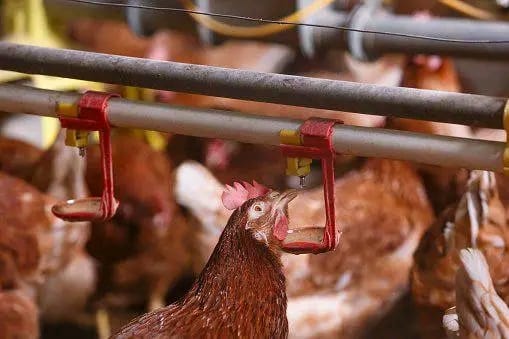
Clean, constant hydration is vital for bird health, particularly in Eswatini’s warm climate. Automated drinking systems maintain steady water flow, reducing disease risk and ensuring all birds, from the smallest chick to the largest layer, stay hydrated.
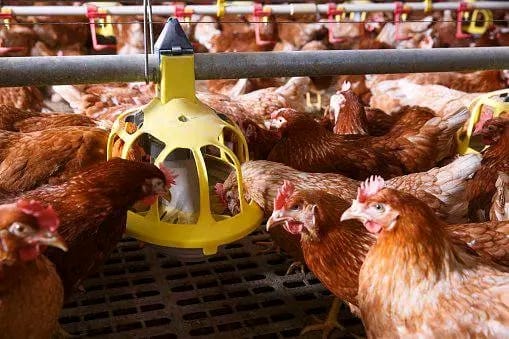
Simple systems such as nipple drinkers or float-valve drinkers prevent contamination while conserving water, a crucial advantage for farmers in water-scarce regions. Consistent hydration supports digestion, temperature regulation, and egg quality, the foundation of reliable poultry performance.
- LESS LABOUR, MORE MANAGEMENT
Automation allows farmers to reclaim time once consumed by repetitive manual tasks. Feeding and watering that once required hours can now be managed in minutes, freeing farmers to focus on monitoring flock health, biosecurity, and marketing.
Local poultry producer Themba Dlamini from Malkerns explains, “Automation gave me back control. Instead of carrying buckets, I now spend my mornings observing flock behaviour and analysing data. It’s made my farm more predictable, and more profitable.”
- HYGIENE AND DISEASE PREVENTION
Manual feeding often exposes birds to contamination from spillage and human handling. Automated systems, by contrast, deliver clean feed and water directly to birds, reducing the risk of bacterial infections and coccidiosis. This improvement in hygiene translates to lower mortality rates and higher feed conversion efficiency, essential in meeting market demand without escalating input costs.
- AFFORDABILITY THROUGH INNOVATION
While full automation may seem out of reach for smaller producers, technology has become increasingly modular. Farmers can start small, installing gravity-fed feeders, simple timers, or basic drinker lines, before scaling up as profits grow. Cooperatives and youth agripreneur groups can also share equipment to spread costs, creating community-driven access to innovation.
- A FUTURE OF RESILIENCE AND PRECISION
According to NamBoard and local agribusiness experts, Eswatini’s poultry industry is shifting toward precision-driven production. As feed prices fluctuate and consumer demand rises, automation presents a pathway toward stability, enabling farmers to produce more with less, less waste, less labour, and less uncertainty.
Across the world, nations like the Netherlands and India are already integrating artificial intelligence and sensors into poultry houses, tracking feed intake and bird behaviour in real time. While Eswatini may be taking its first steps, the direction is clear, toward smarter, data-informed farming.
CONCLUSION
Automation is not a luxury; it is a necessity wrapped in innovation. For Eswatini’s poultry farmers, adopting automated feeding and drinking systems is not merely about convenience, it is about unlocking control, improving productivity, and ensuring that every investment in feed and water returns in measurable value.
When precision replaces repetition and technology partners with intuition, farming transforms from routine to strategy, and that, perhaps, is the true promise of modern poultry production.